Brian Patten – Armada

DartfordMuseum
Dartford Library

All my life I have been a voracious reader and I will read anything anywhere, whether it’s words on a passing T-shirt, graffiti on buildings, anything: as soon as my eyes light on text, I’ll read it. As a youngster, one of the great joys of Christmas was the knowledge that I would receive five or six new books as presents, particularly from the parents of family friends. Coral Island by R. M. Ballantyne was one of my favourites: I loved the descriptions of the tropics and the exotic names of the different fruits and vegetables, yams, breadfruit, papayas, and so forth. Published in 1857, it was a text that William Golding drew on quite heavily when writing The Lord of the Flies.

Naturally these Christmas books did not last forever: they were soon devoured and I would be off in search of more. So I have always been a big fan and a great user of the public library system in this country. I grew up visiting the libraries, particularly in Bexley Village, and I got to know all the librarians immediately, or should I say, they got to know me as I pestered them week after week for new books.

Armada
Brian Patten, Armada (1996)

Anyway, a couple of weeks ago, while others were off sunning themselves in foreign climes and enjoying the local vintages, I found myself with time on my hands in the mediaeval town of Dartford. The sun was out and the beautiful displays of flowers in the park were in full bloom, so I sat there and topped up my tan for about thirty minutes. But being a busy busy busy sort of person, I couldn’t sit there all afternoon, so I decided to enter the pubic library which is adjacent to the park. I love to peruse the shelves in these libraries to see what sort of selection they have, whether any of my favourite authors are included or excluded. Dartford is, after all, a funny old town: there you can cross paths with a Chinese man with long straggly dreadlocks wearing a Nirvana T-shirt and take it completely in your stride.

Anyway, into the library I go and I run my eyes across several shelves until I come across a book of poetry, Armada, by Brian Patten, not a poet I usually have had much time for in the past. Truth is, in the early days of the famed Liverpool poets, I went to hear him read in a small venue in Oxford, and he was so shy that after reading one poem he stood up and stumbled out (he’d clearly had one or two pints) leaving his audience mystified and disappointed. Poor man! I’m more sympathetic these days but back then, I thought it was the end. Still, always prepared to give him another chance, I take the slim volume to a desk and sit down and start to read the poems. Five minutes into the process, a man comes up to me and leans on the desk so I get the full benefit of his 40 per cent breath (this is 3.30 in the afternoon). He tells me he’s a local historian and is going to give a lecture on the history of the area on the following afternoon, would I like to go. There was, of course, only one answer to that.

Back to the poetry. Not a fan of the jokey Liverpool stuff, I am pleasantly surprised by what I am reading and I plough on and I’m genuinely moved by the unsentimental nostalgia that Patten evokes for the vanished neighbourhood where he grew up. With my loyal readers in mind, I jotted down a couple of quotations from the text to give a taste, but I would highly recommend the book to anyone who spots it in their local library.


By the time I got to where I had no intention of going
Half a lifetime had been passed.
I’d sleepwalked so long. While I dozed
Houses outside which gas-lamps had spluttered
were pulled down and replaced,
And my background was wiped from the face of the earth.

from “Betrayal”

*

One by one the souls of these houses and their tenants
have been undone by the fingers of bankers.
Among the debris where the religion lady wept
now only a sprinkler weeps.

from “Neighbourhood Watch”

Stop Press – Jonah author found in Bromley

From our Editor-in-chief

Dr Van Helsing
An artist’s impression of Dr Van Helsing

We have just received news that the author of the saga of Jonah and Anna-Belle has been found safe and well in South-East London. At around 7 p.m. this evening, following a tip-off from a member of the public, Sgt. Quentin de Link of the Metropolitan Police discovered our author sleeping under a railway viaduct just outside Bromley South Station. He was hungry and thirsty and totally disoriented according to Sgt. de Link.

When we spoke to the sergeant a short while ago he made the following statement: I approached our man very cautiously though he seemed to me to be in a state of very deep sleep, perhaps dreaming in some Freudian way, I could not say. I shook him gently by the shoulder not wishing to alarm him. He sat up and rubbed his little green eyes and just stared at me. When I asked him what he was doing in Bromley he replied, and I wrote it down in my notebook lest I forget it: “Who is Bromley?” 

Tonight we have also been in touch with Dr Van Helsing, the eminent Dutch psychiatrist who has been treating our author at a secure NHS facility in Whitby. Dr Van Helsing assures us that the patient will be returned to Whitby first thing tomorrow and that treatment will resume immediately and in the words of the good doctor “with a vengeance”.

We promise to keep our readers informed with up-to-the-minute bulletins.

More to follow tomorrow.

P.S. Readers new to this roman-fleuve will have to follow the “Jonah Anna-Belle” thread in order to know what on earth is going on!

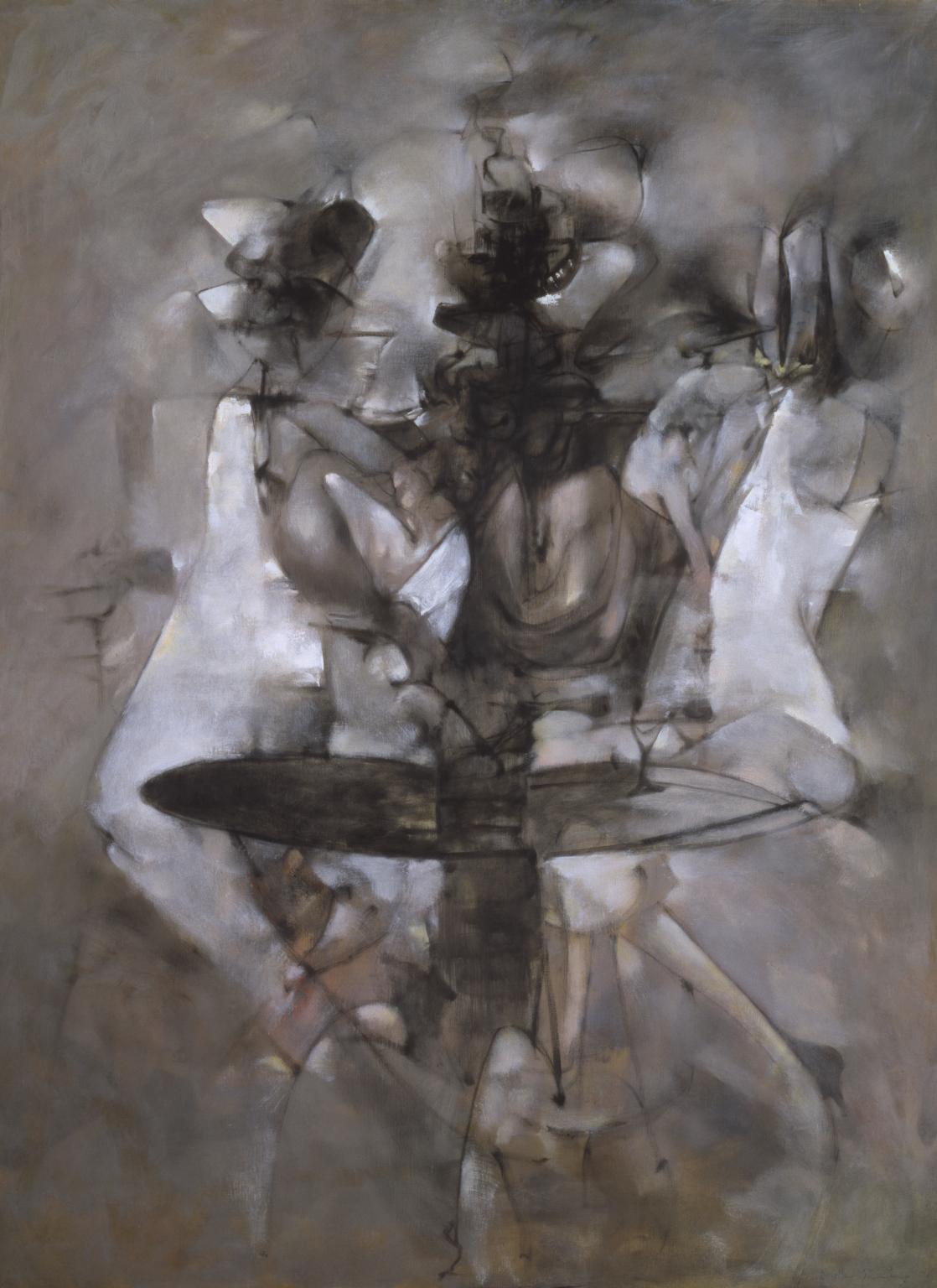
Dorothea Tanning, A Mi-Voix 1958

A Mi-Voix 1958 Dorothea Tanning 1910-2012 Presented by William N. Copley 1959 http://www.tate.org.uk/art/work/T00298
Dorothea Tanning, À Mi-Voix (1958) oil on canvas

London has some of the finest publicly owned museums and art galleries in the world and it is all too easy to take them for granted or to dismiss them as mere tourist attractions. Access to these great institutions is currently free, and so it should be. These facilities are great learning resources for children and for adults. Art is an essential human activity and has probably been with us for as long as we have had language. The representation of consciousness, of feelings and ideas is fundamental to our sense of identity, whether it be in words or images. That we are complex beings is to be applauded: it is this complexity which generates great drama, great music, great poetry and great art. We are the only species in nature to ask questions about what we observe in the external world and what we endeavour to understand when we look introspectively into our hearts.

Traipsing round Tate Modern last Sunday, wet through to my soul, and disappointed that the Pollocks I had gone to see were not currently on display there, I needed a piece of art to raise my spirits, and I found several. In particular I was struck by the ethereal beauty of a painting by Dorothea Tanning, À mi-voix, a title which in English means ‘in a low voice’, almost a whisper. This beautifully executed canvas took my breath away, and there is so much that I could say about it, but I won’t go into detail. Suffice it to say that at its heart I see two figures, male and female, bound by a central spinal column, expressing a love that is so delicately intimate it need not be shouted from the rooftops. But maybe that’s just me! Don’t take my word for it, go and see for yourself.
DTbyInverarity
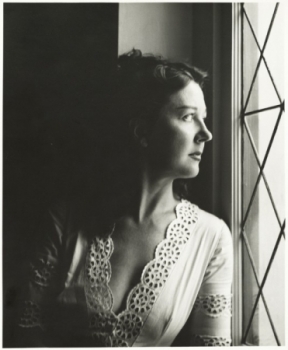
Dorothea Tanning

Artist and writer Dorothea Tanning was born in the United States in 1910 and trained as a painter in Chicago. She was associated with surrealism early in her career and she was married to fellow artist Max Ernst for thirty-four years until his death in 1976. Among her friends were Man Ray, George Balanchine, Truman Capote, Virgil Thompson, and Igor Stravinsky. Throughout her life she was always busy busy busy, into everything: painting, printmaking, sculpture, set and costume design, and her work was exhibited in the Guggenheim Museum, the Metropolitan Museum of Art, Tate Modern, and the Philadelphia Museum. In the late 1990s Dorothea turned to writing poetry and two of her poems are presented below. She also wrote an autobiography entitled Birthday (1986) and in 2004 published a novel Chasm: A Weekend. In an epigraph to one of her poetry books she quotes Montaigne : “it’s hard to be always the same person.” She died in 2012 at the age of 101.

For more information see http://www.dorotheatanning.org/life-and-work.php


All Hallows’ Eve

Be perfect, make it otherwise.
Yesterday is torn in shreds.
Lightning’s thousand sulfur eyes
Rip apart the breathing beds.
Hear bones crack and pulverize.
Doom creeps in on rubber treads.
Countless overwrought housewives,
Minds unraveling like threads,
Try lipstick shades to tranquilize
Fears of age and general dreads.
Sit tight, be perfect, swat the spies,
Don’t take faucets for fountainheads.
Drink tasty antidotes. Otherwise
You and the werewolf: newlyweds.

*

Sequestrienne 

Don’t look at me
for answers. Who am I but
a sobriquet,
a teeth-grinder,
grinder of color,
and vanishing point?

There was a time
of middle distance, unforgettable,
a sort of lace-cut
flame-green filament
to ravish my
skin-tight eyes.

I take that back—
it was forgettable but not
entirely if you
consider my
heavenly bodies . . .
I loved them so.

Heaven’s motes sift
to salt-white—paint is ground
to silence; and I,
I am bound, unquiet,
a shade of blue
in the studio.

If it isn’t too late
let me waste one day away
from my history.
Let me see without
looking inside
at broken glass.

Dorothea Tanning
 

Augusto Monterroso – a fable and a tale

Augusto-Monterroso
Augusto Monterroso (1921-2003)

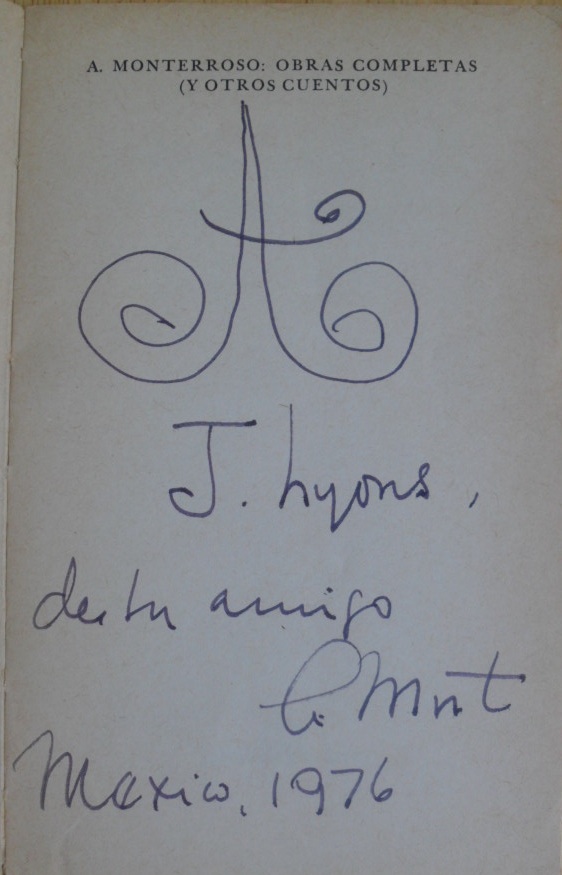
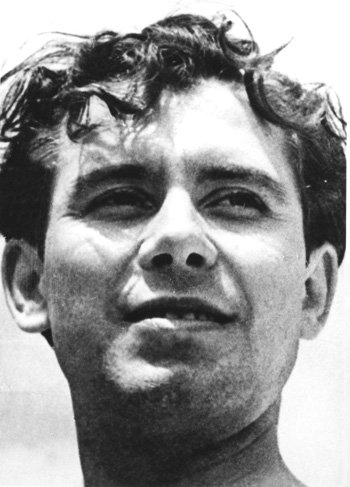
One of the most delightful writers I met in Latin America was Augusto Monterroso. A Guatemalan, he lived for much of his life in Mexico, where he taught in the UNAM university. Before leaving London, I had been given the telephone number of a Nicaraguan poet, Ernesto Mejía Sánchez, and I called him as soon as I got to Mexico City. We agreed to meet one lunchtime at Sanborn’s café, which was where all the artists and writers usually met. At that time Mejía Sánchez was going through a difficult patch in his life, and the conversation was rather strained and dull until Augusto Monterroso turned up. He had with him copies of three of his published works and in each of them he wrote a very individual dedication to me. “I hate to burden you,” he said as he handed them to me. “But you can chuck them into the Atlantic when you fly back to London if you like.” Naturally, I held onto them, still have them today, and they are among my most prized possessions.

mont_dedicAugusto, was extremely warm and jovial and the conversation soon became filled with laughter and great stories and even managed to draw poor Mejía Sánchez out of himself. Monterroso’s writings tend to be short pieces, fables and short stories but always with a humorous and satirical slant. The Colombian Nobel Prize Winner, Gabriel García Márquez said of one of his works: “This book should be read with your hands in the air: its danger is based on its sly wisdom and the deadly beauty of its lack of seriousness”. With a sense of humour very much in tune with that of Julio Cortázar, it was no surprise that when the latter died in 1984, his apartment in Paris was ceded to Augusto Monterroso.

Years after that meeting in Mexico, I was asked by Index on Censorhip to translate a story by Monterroso, entitled “Mister Taylor”. This was a satirical tale about the export of shrunken Guatemalan heads to the American market where they had become fashion accessories. The tone, of course, was very much that of Jonathan Swift’s “A Modest Proposal”. In a subsequent book, Augusto touchingly singled out this publication with these words: “I’ve just received a copy of Index on Censorship from London where I story of mine, “Mister Taylor”, translated by John Lyons, has just appeared. Most surprising!” The circle was thus complete!


The frog who wanted to be a real frog

There was once a frog who wanted to be a real frog, and every day she struggled to be so. First she bought a mirror into which she gazed for hours hoping to see her longed-for authenticity. Sometimes she thought she’d found it and sometimes she did not, depending on the mood of that day or hour, until she grew tired of this and put the mirror away in a trunk.

Finally she thought that the only way to be sure of her own worth was through the opinion of others, and she began to do her hair and to dress up and undress (when she had no other option) to see if others approved of her and recognised that she was a real frog.

One day she noticed that what they most admired about her was her body, especially her legs, so she started to do squats and jumps in order to have to better legs, and she felt that everyone applauded her.

And so she continued to push herself harder and harder, and was willing to go to any length to get others to consider her to be a real frog, she even allowed her thighs to be ripped off for others to eat, and as the others devoured them she was still able to hear bitterly when they said, “Excellent frog. Tastes just like chicken.”


The mirror that could not sleep

There was once a hand mirror which when left alone with no one looking into it, felt absolutely dreadful, as though he didn’t exist, and perhaps he was right; but the other mirrors laughed at him, and when at night they were put away in the drawer of the dresser they slept soundly, oblivious to the neurotic’s worries.

Translations by John Lyons


Wet wet wet – and a poem

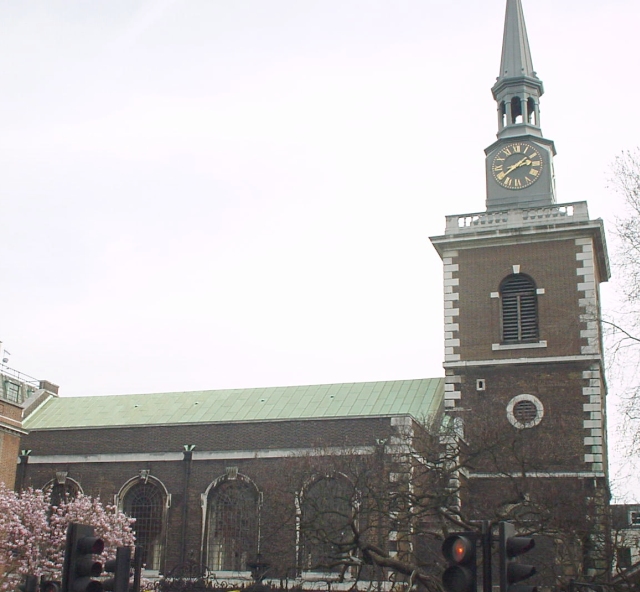
St_James_Church_PiccadillyOff to St James Church, in Piccadilly, to see the font where the poet William Blake was christened. Had other plans but the torrential rain put a stop to that. Rain proof jacket proved not to be rain proof, so soaked through. Decided I’d better prepare for the Bank Holiday monsoon by stocking up on a few DVDs, so traipsed up to FOPP in Shaftesbury Avenue. Truffaut’s Les 400 coups, Godard’s Vivre sa vie, and Vittorio de Sica’s Bicycle Thieves. Should keep me from being too busy busy busy!

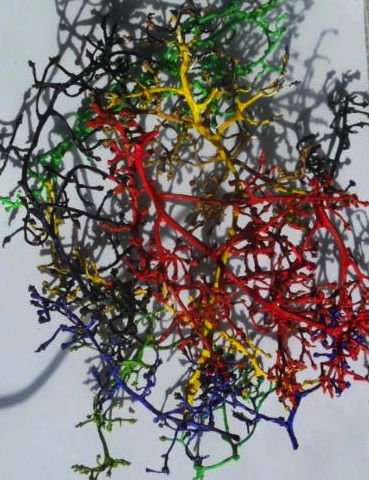
Came home dripping wet! Painted a few grape stems, had dinner and called it a day. Win some, lose some. C’est la vie!

vines
Poor man’s Pollock

Unquiet soul

We are unquiet souls, born
not to silence, but to rhythm,
to the steady beat of life
first heard in our mother’s womb,
the rush of her blood, the rise
and fall of her heart rate
as she agonises over her ecstasies;
we are born to sound that plays
upon the drum that travels
through bone to our very hearts;
the voice of the wind
in the chimney, or the crash
of waves on the pebbled shore,
the call of owls or the far cry
of the cockerel speak to the core
of our being since we are cousins
to the world. That birds speak
in song should be a lesson to us,
pure music to our ears, and all life
imitates life, the synchronicity
of tempers and temperaments,
and though we may dance
to the tune of silicon, it is of scant
importance, the dance is the thing,
movement, the thrust of one leg
forward, then another, the rejection
of stasis. Beauty that is movement,
the orchid that blooms unseen
in the forest, unseen by whom?
The blush of beauty that stirs the heart,
the hush of lovers’ confidences,
their thrusting tongues and limbs,
hands that respond to liquid language
poured into the lobe from lovelorn lungs.
We are born to bear fruit, to divide
and conquer, to join forces, to respond,
unquiet souls until the grave.

John Lyons

Stop press – Jonah author absconds

belmarsh
Secure facility

Unconfirmed reports are coming in that the author of the saga of Jonah and Anna-Belle has absconded from the secure NHS facility in Whitby where he had been receiving treatment from the eminent Dutch psychiatrist, Dr Van Helsing. This is most alarming if it proves to be true.

Seems that when staff went to our man’s room at around 9.30 this evening to take him his cocoa, they found the room empty, and discovered a note he had apparently left on his bed.

If all is true we know only too well where he will be heading.

Dear dear me! Where will this all end?


The Editor would like to wish all those readers who have been holidaying on the Continent recently and will be returning to this green and wet but still pleasant land this weekend, a safe and comfortable journey home. Your loyalty has truly been appreciated.

Manuel Altolaguirre – five poems in translation

Manuel Altolaguirre

I was in Mexico in 1976, en route to the rainforests of the Yucatan to visit the ruins of Mayan cities as part of my doctoral research before travelling on down to Nicaragua. In Mexico City I stayed for a few days in a house in the magical neighbourhood of Coyoacan. It was in this part of the city that artists Diego Rivera and Frida Kahlo lived, and where Trotsky set up home in exile and where eventually he was assassinated. Their homes were now museums and within walking distance of the beautiful house where I was staying. That house had once been home to the Spanish poet Manuel Altolaguirre (1905–1959) who had come there in exile in 1939, at the end of the Civil War in Spain. Altolaguirre had been active on the Republican side of the war and was friends with many of the leading poets of the day, including the Chilean poet, Pablo Neruda and Spain’s leading poet and dramatist, Federico García Lorca. Lorca had been murdered by members of the Nationalist militia in 1936, a few weeks into the war.

For many years after, I would look in bookshops for editions of the poetry of Altolaguirre but everything seemed to be out of print. Then one day in 2002, I walked into the Livraria Cultura, the largest and best bookshop in São Paulo, and there sitting on the shelves in the Spanish language section, as though it had been waiting for me, was a copy of Altolaguirre’s poetry. Five of those poems I have translated today, and I have appended the Spanish originals for those who may care to consult them.


The light and I

The light and I invent you,
city, as now in the breaking day
of fantasy and sun
you are born into the world;
city still hazy,
with blood, light and dreams
on your white facades.

I don’t know what dawn
I cast on buildings,
nor what morning sun
illuminates the valley, the sea,
the streets, within me.
The world and I
have exchanged lights.

*

Outside myself

Today to me my body seems
a recollection of me.
It’s not my memory
that lives in my forehead,
but my whole body
which is huddled
within it, among the clouds,
waiting for the death of oblivion.
I’m now more than me.
I shaped my surroundings,
wrapped my soul around me,
abandoned the life of men.
I want to forget my body,
would like it to sleep within me.
Its external dreams
will flood my spirit.
Foreign populations,
new gods,
different elements,
surround it.
I’m dictating words
to the one I was in the world,
who believes he detains me
under his watchful eye,
the one I’m bossing about,
overshadowing,
the one who writes this story.

*

Kiss

How lonely you were inside!
When I peered through your lips
a crimson tunnel of blood,
dark and sad, plunged deep
down to the ends of your soul.

When my kiss penetrated,
its warmth and its light sent
tremors and shocks
through your stunned flesh.

Since then the pathways
that lead to your soul
you want never to be deserted.

How many arrows, fish, birds,
how many caresses and kisses!

*

The Elm is reborn

If I can no longer see myself,
if only my roots survive,
if birds look in vain
for where their nests were
amid the sad absence of my arms,
do not cry for this.

In a Spring silence,
verdant shoots of life will emerge
from the earth like tears.

I will be that horde of adolescents,
that laurel wreath that encircles
the trunk sundered by the axe.

Life multiplied brings death.
Multiple are the rays of dawn.

*

Elegy for Federico García Lorca

I forget to live if I remember you, 
I recognize that I am dust of the earth 
and I incorporate you, as does 
that part closest to your grave, 
insensitive land that usurps
the zealous love of your friends.

With your life over, its outline
is forever fully drawn:
there’s no door to take you into the future.

The tree of your name has blossomed
into an incalculable Spring.
Death is perfection, a rounding off.
Only the dead can be named.
We who live are nameless.

The mythical makers of fame catapult
the chants of your name world-wide
and life’s lake opens its eyes
with endless eyelids of glass:
There is no mountain, no sky, no plain,
that does not concentrically enhance
the echo of your illustrious name.

It’s not a brother’s grief, not human pain,
my suffering is part of the sentiment
that turns the pensive stars into flowers
embroidered on the night that shrouds you.
I write these words separately
from the daily pattern of my sleep,
from a distant planet where I suffer
your irreparable loss in tears.

Translations by John Lyons

YO Y LA LUZ

Yo y la luz te inventamos,
ciudad que ahora en un alba
de fantasía y de sol
naces al mundo;
ciudad aún imprecisa,
con sangre, luz y ensueño
en tus blancas fachadas.

No sé qué madrugada
sobre los edificios voy dejando,
ni qué sol mañanero
ilumina la vega, el mar,
las calles, 
interiores de mí.
Hemos cambiado 
mundo
y yo nuestras luces.

FUERA DE MÍ

Mi cuerpo hoy me parece
un recuerdo de mí.
No es mi memoria
la que vive en mi frente,
sino mi cuerpo entero
el que está arrinconado
en ella, entre las nubes,
esperando la muerte del olvido.
Yo ya soy más que yo.
Formé mi ambiente,
me envolví con mi alma,
abandoné la vida de los hombres.
Quiero olvidar mi cuerpo,
dormirlo en mí quisiera.
Sus sueños exteriores
inundarán mi espíritu.
Poblaciones extrañas,
dioses nuevos,
elementos distintos,
lo rodeen.
Voy dictando palabras
al que yo fui en el mundo,
al que cree contenerme
debajo de sus ojos,
al que estoy dominando,
ensombreciendo,
al que escribe esta historia.

BESO

¡Qué sola estabas por dentro!
Cuando me asomé a tus labios
un rojo túnel de sangre,
oscuro y triste, se hundía
hasta el final de tu alma.

Cuando penetró mi beso,
su calor y su luz daban
temblores y sobresaltos
a tu carne sorprendida.

Desde entonces los caminos
que conducen a tu alma
no quieres que estén desiertos.

¡Cuántas flechas, peces, pájaros,
cuántas caricias y besos!


EL OLMO RENACE

Si ya no puedo verme,
si de mí quedan sólo las raíces,
si los pájaros buscan vanamente
el lugar de sus nidos
en las tristes ausencias de mis brazos,
no hay que llorar por eso.

Con el silencio de una primavera,
brotarán de la tierra como llanto
insinuaciones de verdor y vida.

Seré esa multitud de adolescentes,
esa corona de laurel que ciñe
el tronco quebrantado por el hacha.

Multiplicada vida da la muerte.
Múltiples son los rayos de la aurora.

ELEGÍA A FEDERICO GARCÍA LORCA

Me olvido de vivir si te recuerdo,
me reconozco polvo de la tierra
y te incorporo a mí, como lo hace
la parte más cercana de tu tumba,
esa tierra insensible que suplanta
el amoroso afán de tus amigos.

Acabada tu vida, permanece
con su total contorno dibujado:
no hay puerta que te lleve a lo futuro.

El árbol de tu nombre ha florecido
en una incalculable primavera.
La muerte es perfección, acabamiento.
Sólo los muertos pueden ser nombrados.
Los que vivimos no tenemos nombre.
Los míticos honderos de la fama
tiran los cantos de tu nombre al mundo
y el lago de la vida abre sus ojos
con párpados de vidrio interminables:
No hay montaña, no hay cielo, no hay llanura,
que en círculos concéntricos no agrande
el eco de tu nombre esclarecido.

No es dolor fraternal, no es pena humana,
es parte, mi pesar, del sentimiento
que hace de las estrellas pensativas
flores sobre la noche que te cubre.
Te escribo estas palabras separado
del cotidiano sueño de mi vida,
desde un astro lejano en donde sufro
tu irreparable pérdida llorando.

Where’s the Pollocks?

A day in the life

tatemodern
Tate Modern

So Sunday morning I wake at six o’clock as per usual and peek out the window. Can see it’s a blustery day and I feel that the grey clouds slopping about overhead are ganging up on me, just waiting for me to step outside. Does not bode well! Still, intrepid as ever, it’s shower, shave, gallo pinto for breakfast and out the door, notebook in hand, optimism in my heart. Head down to the tracks and off to London town in search of Pollocks. Readers may recall my previous Sunday visit to Tate Britain. No Pollocks there, but plenty of other first rate objets d’art so not a wasted journey by any means. This Sunday, it’s Tate Modern, gotta be Pollocks there, surely. Get to Blackfriars on the Tube and as I hit the street all hell breaks loose up above, cats, dogs, anything the weather can throw at me, so I arrive at the old power station drenched to my Wilson socks, shake it off like a dog and enter the monumental arthouse, nip up to the second floor and ask one of the attendants: “Where’s the Pollocks?” She’s very sweet, about 5’ 2”, glasses, dark auburn hair, just a tad overweight, but that’s her business not mine, and the bearer of bad news: “Sorry, my love, they’re all in Tate Liverpool for a big exhibition.” My face is now a pool on the Tate Modern floor. “What? In Liverpool? O for God’s sake! I’ve come all this way!” “Sorry, my love. But they’ll be back sometime soon, second week of September, if I’m not mistaken.” “But I wanted to write a piece about them, I’ve got a blog.” She gives me a long, hard, charitable stare. “Sorry, ducks. Can’t be helped.”

Exif_JPEG_PICTURE
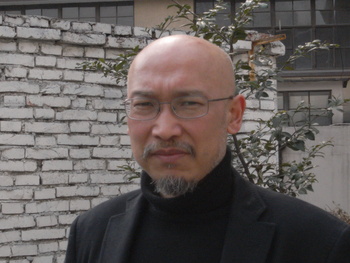
Zhang Enli

Resilience, Battle of Britain spunk. I must have some of that somewhere. So, yeah, sure enough, I thank the girl for her kindness and consideration and traipse off down a few aisles, take a butcher’s at a few Dalis and Picassos, nothing to write home about and then I come across someone who just might be the ticket. Zhang Enli, never heard of him but his series of still lifes grabbed me by the . . . . Anyway, two and two together, cats and dogs, leaking roofs, why not buckets, memories of the Great Dartford Flood of 1968 when the branch of Woolworth’s was up to its ears and staff were obliged to enter the store (I kid you not) by boat, and I think “Eureka, I’ll write about Zhang Enli. Try to turn him into a household name. Do my bit at least.”


Born in Jilin, China in 1965, a teacher at the Arts & Design lnstitute of Donghua University, Zhang Enli currently lives and works in Shanghai. Doesn’t tell you much but the guy is good and he’s had exhibitions all over the shop.

Zhang Enli, Bucket 5, oil on canvas, 2007

Art is about focus, the mind homing in on something or some emotion before transferring that energy into an artistic product, notes on a stave, steps on a dance floor, words in the mouth of an actor, paint on a canvas, you get the idea, from the mind through the body into or onto whatever is the chosen medium. For a painter, Enli in this case, there are so many options, so many considerations, so many choices, oils, acrylics, board, canvas, grape stems, representational or abstracted, it’s always ‘make your mind up’ time. Art is mind on matter, even if that matter is the thin air fattened by a few Beethoven chords. Long and the short is that our friend Zhang has a technique and an eye that Pablo would have been proud of. Word of warning: No good admiring it on a computer screen, or worse still a crappy iPad. You gotta go and see for yourself the delicacy of the brushwork, the subtlety of the colours, the perfection of the composition. It raises the humble bucket into an icon, but the icon is dedicated to our humanity, to the essential ordinariness of all of us, our common bond in the occasionally very damp and gloomy human condition. Art is elevation. It makes us feel good and alive, and it is not a luxury, it is oxygen to our soul and any attack on the arts, by reducing curriculum time in schools, or failing to fund local arts, national arts, whatever, is an attack on the species. Forget global warming, the battle for the survival of the human race is an artistic battle. Still, that’s enough from me on my hobbyhorse. Uncle Toby would be proud of me, de gustibus non est disputandum. . . and so on and so forth. Get along to the gallery and get a load of it for yourselves.

Meanwhile, busy busy busy. It’s still chucking it down outside when I head back to Blackfriars and I’m sitting on the train bound for Denmark Hill when the blog editor comes on the mobile blower to say we’ve had another sweet comment on Jonah and Anna-Belle, our running  soap, from dear old Molly Rosenberg. She’s such a darling, melts my heart every time. A ray of sunshine on a godawful day!

Note to myself: must get more sleep and slow down!


Eve Grubin – two poems

grubinYesterday Eve Grubin was due to give a talk at the British Library entitled “The Poetics of Reticence: Emily Dickinson and Her Contemporaries”. Unfortunately, owing to circumstances beyond her control, this lecture was cancelled.

Ms Grubin is an excellent poet in her own right and we have decided to print two of her poems which are readily available on her own site which readers may consult for further material (http://www.evegrubin.com/close.php).

It is not difficult to see why Eve Grubin is drawn to the poetry of Emily Dickinson: her own poetry is spiritual and mysterious and driven by minute observations, reflecting the great sensitivity of a life lived intensely, passionately.

We hope that in the not too distant future she will be able to return to the British Library to deliver her talk on Emily Dickinson and in the meantime we send her our best wishes.

Eve Grubin was born and raised in New York City. She was the Programs Director at The Poetry Society of America for five years (2001-2006). She divides her time between London and New York.


When the Light Begins to Close

When the light begins to close, just before it closes,
I am looking out the window or walking beside buildings,

a wave of uncertainty—suffocating, numinous—rushes my throat,
quick, unmistakable.

Suddenly I am my name:
standing in the garden, the fruit eaten, seeds burning the dust.

Loneliness, slanted cold enters the air around my neck.

Eve looks at the wet eyes of the animals, once soft and brown. The rotation of the earth moves through her, me.

Holiness, a slanted cold
sifts the spaces between my fingers.

At end of day, light contracts: I stare into trees and lamps, the gray
sidewalk, shadows walking into shadows. What is it

about the transition between sun and dark, hope and gloaming,
that constricts, elates?

*

A Boat of Letters

arrives, and I lie down in its white wet,
ink prints on my cheek, feet, and dress.
Last night I dreamt my husband
held me like a forceful wind
as I strained forward to hear
a group of girls sing soft, unclear,
in our doorway.
I pushed towards them. They seemed far away.
He was strong, and I struggled against him.
Boat of letters, filled to the brim,
take us to your wild inky swamp
where leaves hang down like muted lamps,
where we can write and read; and with each broken seal,
let there be an answer, a surprise, something delightful!

Beau Visage Belle Vie

Below is another of the stories I wrote in the early nineties. As I have explained before, at that time I was in the thrall of the American short story writers, Raymond Carver and Richard Ford. One of the things I discovered from reading their work was that nothing really had to happen in a story in order for it to work as a story: after all, they were not writing action stories but really meditations on life, on what it is to be human, to struggle, to fall in love, sometimes to lose that love, to fail and to come to terms with one’s failures, with the fact that life is not perfect, or at least we as human beings do not lead perfect lives but we can always be honest and try to do our best. The stories of these two writers were subtle and they often contained pearls of worldly wisdom drawn from observation and particularly in the case of Raymond Carver, from experience, some of it quite bitter. The bitterness, however, is always offset by the nobility of the story telling art.

No matter what means of expression we choose, be it drama, poetry, painting or fiction, art always rescues us, it always adds dignity to our lives and to our experiences, and this is because it always separates out something good in our lives, whether it is a bison drawn on a cave wall, or a simple refrain from a song that comes from the heart. Art is always from the heart. And we can fail in our art too, it can fall short of our own expectations, but it is always there, always something upon which we have focused our attention and which therefore has been salvaged from the endless drift of time. We see this in its most innocent form in the work of young children who at the school gate rush to show to a parent a painting or a sketch that they have done in class. Their pride in their production stems from the emotion of having made something of the moment, something true and something beautiful.

No worldly wisdom here below, I’m afraid, but I did my best at the time.


Beau Visage Belle Vie

ChicagoI was completing my final year at college in Chicago when my mother walked out on my father. The news came as no surprise to me, I have to admit. I had heard them quarrel throughout my teens and if anything, the surprising thing was that they managed to last as long as they did. I received a letter from my mother just before my exams started. The letter was posted in Dallas where she was now living with a man named Alvin who owned a string of donut shops. Finally, she said, I’ve met someone who appreciates me for what I am. I was happy for my mother but at the same time I knew that my father would find it difficult to get by on his own. My mother’s letter made no mention of him. It was as though he no longer existed. That part of her life was gone forever. Although she said that she loved me and promised to keep in touch, I suspected that this letter was in reality a fond farewell.

When I returned home to Helena, I found that my father was drinking again. He was still able to control it, but only just. He’d lost weight and looked older and more tired than before I had gone away and he was reluctant to talk about what had happened, about what had finally brought things to a head. These were difficult times for me. I loved my father. I knew he had his faults but that was no reason not to feel sympathy for him.

Having been away more or less for three years, I’d lost touch with almost all of my local friends in college and so most evenings I would stay in and talk with my father. Sometimes we would play chess. My father is a superb player and I have never once managed to beat him but he taught me a great deal. Often though he would not be in the mood for games and we would just sit and talk. Mainly he would talk and I would listen. Life was his theme. Life and its complexities and surprises. I expected him to be morose but in actual fact, despite the drink, he managed to retain a certain amount of optimism. He was still a good-looking man: tall and slim and with the sort of thick grey hair which gave him a certain aura. I felt sure that sooner or later he would find himself a divorcee or a widow if only he would make the effort and get out of the house a bit more often. He just needs time, I told myself. Events like these can damage a man’s confidence. It’s going to take him a while to get back on the road, to find his way again. The fact that he had also lost his job did not help. For as long as I can remember he had worked at the hydroelectric station. But the installation two years ago of new computerized equipment had made his job unnecessary. He was not unduly concerned. The terms of the settlement he’d reached with the electricity company were such that his financial security was more or less guaranteed. But work would have taken his mind off things, mixing with people would have forced him to make an effort to be sociable. I was looking for work myself as a newly qualified engineer, but in Montana there was little on offer. It occurred to me that I might have done better to remain in Chicago. Still, Chicago was always there and it could wait.

As I said, the nights when we didn’t play chess or merely sit in front of the television, my father would talk. He always was a good talker. The more whisky he took the more he opened up, and for the first time in my life I began to get a picture of the man. At first I used to enjoy our conversations, I felt I was learning something that would stand me in good stead. My father spoke with such assurance that everything appeared to have the ring of truth to it. Life, he would say, life is about coming to terms with loss. When you’re young you have so much, you gain so much, you grow so much, in so many ways. And you get to thinking that this is the pattern, that learning and growing and adding to your general stock of things is what it’s all about. Wrong! Dead wrong. That’s only a phase, an immature phase which sure we all have to go through. But it’s only a preparation for what’s to follow. And what follows it loss. I thought when he said this that he was referring to his own life, to the loss of my mother, but he made no mention of her. Life is learning to be a good loser. Life is knowing when you’re beat and not fighting battles you can never win. But after many evenings of him talking in this vein I began to recognise these sentiments for what they really were: an expression of his own helplessness. Even now I distrust any sentence that opens with the word life. The problem with those general statements is that they can give you a false sense of security, they can make you believe that there is somehow, somewhere, a perfect solution and this I simply do not buy. I’d look at my father topping up his glass of whisky or lighting another cigarette and think to myself: He’s just a lonely man, desperately talking to fill the void in his life. The game he’s playing is a game of make-believe.

When I was growing up, people would often comment on how much my father and I were alike. And we were very close. He would often take me fishing when I was old enough and he promised also to let me in on one of his hunting trips but this he never got around to. He used to go off for whole weekends with Jim Douglas and Phil Baines, two friends from work. Occasionally I would remind him of his promise: Sure thing, son, he’d say. One of these days, you can bet on it. But then something happened. Jim Baines got blinded in a shooting accident and though my father was not at all responsible for this, he took it very much to heart and the hunting trips stopped. I could see that physically I had a lot in common with my father, but hearing him night after night going on about life, I sure did hope that I would not end up in such a state.

One night the conversation we were having did turn to my mother. I can’t recall now whether it was me or him who brought up the subject of her departure. Whatever the case my father appeared to take it all very much in his stride. The trouble with your mother, he said, was that for years she wanted too little out of life. I know she blames me for that, but it really was none of my doing. I tried to encourage her but she always insisted that she was happy the way she was. The truth is, she allowed herself to be squeezed into a space that was so narrow it left her eventually with no room to breathe. And when this Alvin came along and offered to let her out, she just jumped at the chance. Then he paused and stared into the bottom of his whisky glass and rattled the ice. I just hope she’s happy, he added. That’s all. I don’t miss her. Fact is, I’m glad she’s gone. That may shock you, but then you young people are always so much easier to shock. I’m glad, I tell you. Perhaps now she’s getting what she’s wanted for all these years. What she maintained she was missing out on.

Then I met Glenda. Glenda was working as a beauty therapist at the Beau Visage Belle Vie parlour just off Main Street. She had just turned twenty-two and she was the prettiest thing I ever did get my hands on. About my height and with long brown hair and hazel eyes, I fell for her straightaway. She rented the small apartment above the parlour and I soon began to spend more and more time there with her. She was everything I ever wanted from a woman. She had spirit and a great sense of fun. I’m telling you, from the moment I first slept with her I felt like a man who had just struck gold.

What is this beauty therapy, my father asked me one day when I called in to see how he was doing. Just another term for getting you to look good, I told him. Glenda says that looking good makes you feel good and anything that makes you feel better than you felt before is a kind of therapy. He thought about this for a while and then he said: I’d like to meet her. Bring her over sometime? Introduce her, perhaps a lunch one Sunday. I couldn’t see the harm in that and so I promised him I would put it to her. Naturally she had no objection. Sure, she said, I’d like to see where you came from. But for several weeks I did nothing about it. There were interviews to go to—not that I was successful at any of them. And there were other things. And there was the simple fact that Glenda was so special, so precious to me, I didn’t feel like sharing her, not even with my own father. And Sundays. . . Sundays were for lying in bed all day with Glenda.

Then late one Saturday afternoon things finally came together. Glenda and I picked up some steaks and burgers and a few bottles of wine and drove over to my father’s place without warning. It was a warm summer’s day and the idea of a barbecue on the back patio really appealed to us. I found my father sitting in the living room with a bottle of whisky on the table and a glass in his hand. He was still in his dressing gown and he hadn’t shaved. But he was pleased to see us. While Glenda and I began to set things up on the patio he went off to shower and shave. By the time he appeared again the smell of charcoal and burning grease was thick in the air. I offered my father a glass of wine and we all toasted his health.

The evening turned out better than I had expected. Glenda and my father talked as though they’d known each other for ages. And my father seemed to be enjoying every minute of it. So tell me about this beauty therapy, he was asking her. Glenda immediately launched into a sales pitch. You should try it, she said. She was teasing him but I think that underneath that she did think a little therapy could do no harm. Come into the parlour one day and we’ll see what we can do for you. My father laughed. I hadn’t heard him laugh in ages, but he laughed talking to Glenda. I can’t see myself wearing a mudpack or any of that nonsense, he was saying to Glenda. And she was laughing too. Things have come on a long way since mudpacks, she told him. We have machines that can work wonders. She was playing it up and he was enjoying every moment of it. Or what about a manicure, she said, taking hold of one of his hands and holding it up to examine the cuticles. You’d be surprised what we have to deal with, she said. Farmers’ wives who’ve abused their skin for forty years and who suddenly come into a little money and want to repair the damage. I’m telling you straight, miracles is our business. Again my father laughed at the sales pitch Glenda was adopting. Then, for the first time in ages I thought of my mother. I wondered what she might be doing at that precise moment, whether she was at the rear of some palatial Dallas mansion, enjoying a rare steak with Alvin by her side, and laughing. I hoped she was. Life felt good and I wanted everyone to be happy.

© John Lyons, 1991