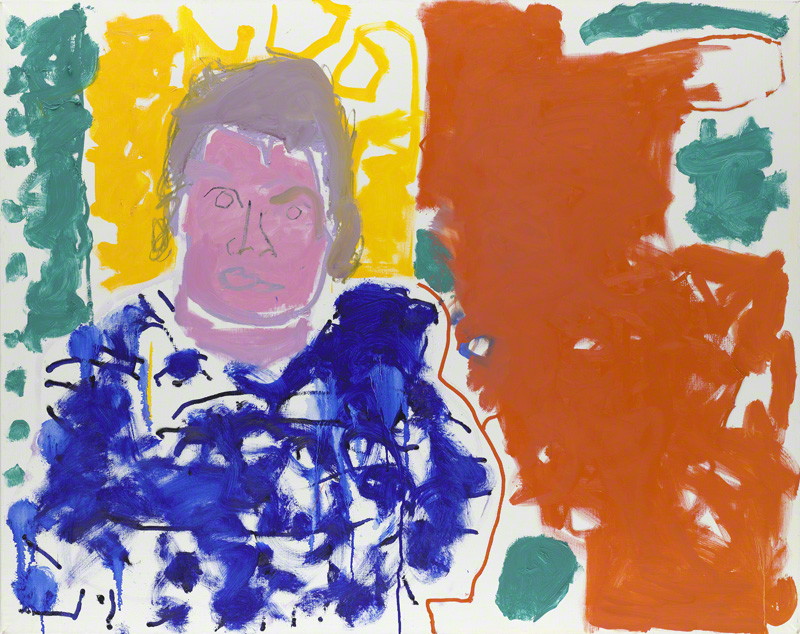
A.S. Byatt (Portrait of A S Byatt : Red, Yellow, Green and Blue : 24 September 1997)
The 1997 portrait of A S Byatt, by Patrick Heron, in oils on canvas, captures all the exuberance of the novelist in primary colours. It is a triumph of art over photography, in the sense that the sketching of the writer’s figure tells us more about her than any photograph could ever hope to do. Her vibrant personality, her larger than life appearance, her vivaciousness are all there, beautifully expressed. Picture her there in a room, in person: one could not fail to notice her dominating presence. But it is a domination without threat, the domination of an enthusiast for her profession, for her own art. Portraits in the Victorian mould can so often be almost photographic, the painter striving for perfection, every hair in place, every tiny detail forensically included. Imagine the consternation of these artists were they to see Patrick Heron’s rendering of A S Byatt. How can so much be achieved by apparently so little? How can such bold strokes and seemingly haphazard splashes of paint create such a profound. living, breathing representation of the sitter’s persona?
Portraits may be simple representations – or on occasions, deliberate misrepresentations: they can be masks or disguises or false projections, telling us nothing of the real person. Like the portrait of Dorian Grey, they may cover a multitude of sins. That is not the case with Patrick Heron’s masterpiece. It is full of narrative detail, in the dress, in the tilt of the head, in the loudness of the primary colours, a veritable short story in itself. And one would never tire of this painting as one might of a photograph of the novelist. Hung upon any wall, this rendition would dominate the room, just as the author does wherever she goes.
Let us suppose for a moment that the gallery curator decided to hang this work in a completely different room, for example, among the somewhat stuffy (in comparison, and no offence) 19th century portraits: what an effect that would have as you walked in and were greeted by Patrick Heron’s astonishing burst of colour! Time to rock the conventions and shuffle things around? The day may come!
If you haven’t seen this painting for yourself, I would strongly recommend a quick visit to the National Portrait Gallery in Charing Cross Road to judge for yourself. I guarantee you will not be disappointed!
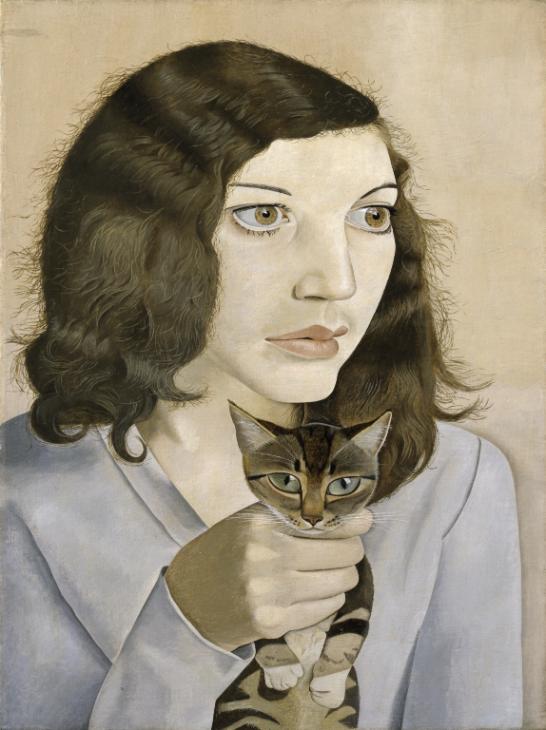
Lucian Freud, Girl with a Kitten (oil on canvas) 1947
Art is analysis and projection. Art is perspective and choices. Art is narrative. Art is conscious and unconscious. Lucian Freud, grandson of the pioneer of psychoanalysis, paints a portrait of his wife, Kathleen Garman entitled Girl with a Kitten. She herself is the daughter of an artist, Jacob Epstein. Freud plays on her name: she is Kitty, and so he poses her with a cat. She appears to be throttling the cat, but it is the artist writing the narrative and so he is the one choosing to throttle the cat, yet when we examine the painting closely there are details to suggest that the cat is a paragon and the wife may be the aggressor: compare the eyes, compare the perfection of the cat’s hair to the wilder hair of the wife, compare the colours, the deathly pale of the wife, the warmth of the cat. So who is who in this relationship? Who the innocent, who the guilty party?
The entire portrait is chilling, the palette is icy. This is not a flattering portrait and one wonders how the wife would have felt when she saw the finished product. She is not a wife in possession or in repose, and if there is sentiment, it is certainly not sentimental. The bland background and the softness of her blouse heighten the intensity of her glaring faraway eyes. Her knuckles are tense with adrenalin. This is a portrait of a tempestuous relationship between the woman and the cat (or between man and wife). But the narrative is unresolved, as in a dream or a nightmare. The elements are disturbing and that too is a function of art, to unsettle, to challenge, to undermine the conventions, to go against the grain, to stick it in the eyes and mind of the observer.
As with so many canvases, the wealth of detail has to be examined in person. A reproduction can never do justice to textures, so there really is no alternative to paying a visit to Tate Britain in Pimlico to see this masterpiece for yourself.
Lucian Freud, grandson of the psychoanalyst Sigmund Freud, was born in Berlin in 1922 and came to Britain in 1933. In 1946–7 he travelled to Paris and Greece. On his return to London in February 1947, he began a relationship with Kitty Garman, the eldest daughter of the sculptor Jacob Epstein and the model and collector Kathleen Garman. The subsequent marriage between Freud and Kitty was short-lived – they wed in the spring of 1948 and divorced in 1952 after having two daughters. Girl with a Kitten is one of eight portraits that Freud made of his first wife.
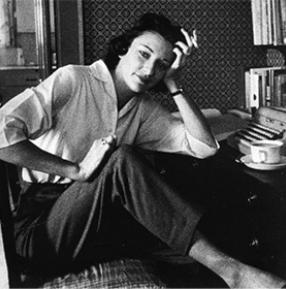
The Pulitzer Prize-winning American poet, Anne Sexton (1928–1974), struggled with depression throughout most of her life. Her poetry is the heart she wore constantly on her sleeve, and it deals with every aspect of her private life, including her relationships with her husband and her children and indeed with the intimate relationship with her own body.
She began to write poetry as a young girl, and when she first showed her work to her mother, she felt humiliated when her mother, who also wrote poetry, accused her of plagiarism. The fact is that her mother could not believe that her daughter could be so talented. But Sexton constantly sought approval from both her parents, and in later life from her peers. In Anne Sexton, A Self-Portrait in Letters, edited by Anne’s daughter, Linda Gray Sexton and Lois Ames, there is a very touching letter written by Anne to her mother on Christmas Day 1957:
Dear Mother,
Here are some forty-odd pages of the first year of Anne Sexton, Poet. You may remember my first sonnet written just after Christmas one year ago. I do not think all of these are good. However, I am not ashamed of them. They are not in chronological order, but I have arranged them in a sort of way in a sort of a story. But not too much or too well. I have tried to give a breather between the more difficult ones that use a more modern idiom. A few are obscure. I do not apologize for them. I like them. Mood can be as important as sense. Music doesn’t make sense and I am not so sure the words have to, always.
Below are three poems from Sexton’s adolescent period not included in her Complete Poems. Anne married when she was very young and her husband dropped out of medical school in order to get a job as a travelling salesman to support her. The poems offer an early indication of the themes of insecurity that would dominate her mature poetry. Sexton studied poetry under the renowned poet, Robert Lowell, alongside Sylvia Plath: and all three had serious mental health issues. For those interested in a deeper understanding of Anne Sexton’s work, the biographical edition of her letters is essential reading.
ON THE DUNES
If there is any life when death is over, These tawny beaches will know of me. I shall come back, as constant and as changeful As the unchanging, many-colored sea. If life was small, if it had made me scornful, Forgive me; I shall straighten like a flame In the great calm of death, and if you want me Stand on the seaward dunes and call my name.
*
SPIRIT’S HOUSE
From naked stones of agony I build a house for me; as a mason all alone I will raise it stone by stone, And every stone where I have bled Will show a sign of dusty red. I have not gone away in vain, For I have good of all my pain; My spirit’s quiet house will be Built of naked stones I trod On roads where I lost sight of God.
*
TRAVELER’S WIFE
Although I lie pressed close to your warm side, I know you find me vacant and preoccupied. If my thoughts could find one safe walled home Then I would let them out to strut and roam. I would, indeed pour me out for you to see, a wanton soul, somehow delicate and free. But instead I have a cup of pain to drink, or I might weed out an old pain to think. Perhaps old wounds have an easy sorrow, easier than knowing you leave me tomorrow. The mind twists and turns within the choice of some sagging pain, or your departing voice. In the last hour I’ve tried images and things, and even illusion breaks its filament wings on the raw skin of all I wouldn’t know about the waiting dawn when you smile and go. You must not find, in quick surprise, one startled ache within my vacant eyes.
The poem below was written by José Coronel Urtecho (1906-1994) in the months following the July 1979 Sandinista Revolution in Nicaragua. These were the days of innocence and euphoria, the likes of which had never before been known in that very poor Central American country. In those early days of the revolution the whole country was undergoing a radical transformation; the young, educated few were going out in brigades into the countryside and the poor urban neighbourhoods bringing the gift of literacy to the hundreds of thousands who had been denied any sort of education under the successive governments of the US-backed Somoza dictatorship. Alongside, there were brigades of doctors and nurses and health workers taking healthcare, for the first time ever, to the same marginalized sectors of the population in order to vaccinate, to provide antenatal and perinatal care and to conduct an all-out offensive against infant mortality and preventable disease.
Coronel Urtecho, one of Nicaragua’s greatest poets, had earlier in his life been a supporter of the Somoza dictatorship but he was gradually radicalized through contact with members of the Sandinista National Liberation front, and Panels of Hell was written as an act of contrition for the sins of his earlier ideological beliefs.
My translation of the poem was eventually published by Harold Pinter in 1989 at the height of the illegal Contra war against the people of Nicaragua, instigated by Ronald Reagan and spearheaded by the Oliver North.
It is salutary, on this Columbus Day 2015, to reflect on the significance of today’s commemorations, to ask exactly who in the Amercias has anything to commemorate, to speculate how the native American peoples, for example, might be taking Christopher Columbus to their hearts, how the poor and dispossessed of the Americas might like to remember that fateful day, 12 October 1492, when according to his log, Columbus, in his search for a new route to the spice lands of the East, first sighted land in the West.
The two avatars of that discovery were (and remain to this day) wealth and poverty, or as they are known euphemistically: North and South! Happy Columbus Day!
PANELS OF HELL (extract)
Who remembers the octogenarian swine in his sedan chair the one who first stole Nicaragua the country the government the land for himself and for his family the first one who saw Nicaragua as a business his own business the first one who in Nicaragua established the business of slaves the exploitation and selling of slaves the first of the usurious foreign bankers and financiers in Nicaragua the one who first brought to Nicaragua his genocidal dogs to guard over his minerals the one who first killed in Nicaragua ‘two million’ Indians (2,000,000) the first one who installed his dynasty in Nicaragua the first of the first dynasty in Nicaragua continued by his daughter and his son-in-law and his grandchildren tyrant usufructuaries of the Empire who in Nicaragua today remembers the worst of all the Spanish conquerors of America and his murderous descendants?
All of them are submerged in the dung heap of History
What became of the cold paranoid filibuster robber of countries the ill-famed adventurer from Tennessee gone bust in Sonora ill-adapted in California who very nearly stole Nicaragua from the democrats and legitimists or Liberals and Conservatives who amongst themselves were killing each other to exploit the Nicaraguan people the first North American to see Nicaragua the country the government the land as a subsidiary business to North American business the first imperialist racist North American pro-slaver who tried in Nicaragua to introduce the black slave trade importing the slavery of the slave States of the South of North America through the elimination of Nicaragua’s Indians and mestizos but could get nowhere with the people of Nicaragua Costa Rica Honduras El Salvador and Guatemala
the first North American of the South or the North the East or the West who brought his dogs to Nicaragua and thugs or mercenary animals enlisted in New York and New Orleans and San Francisco California
the first agent of the thieving bankers of Frisco competitors of the usurious bankers of Manhattan concessionaires of the inter-oceanic Transit of foreign passengers through Nicaragua
the first North American arsonist destroyer of Nicaraguan cities who would have reduced them all to ashes and left them in ruins and sown the land with wooden crosses and scattered cemeteries and common graves before handing it over empty to his pro-slaver filibusters but could get nowhere with the resistance of the people of Nicaragua Costa Rica Honduras El Salvador and Guatemala
the first for us of the models of North American imperialism without a mask or with a mask in person or if not through an intermediary but in any case the model for the North American invaders interveners ambassadors swindlers mediators and for the North Americanizing dealers and businessmen and traffickers of the Nicaraguan patrimony-peddling bourgeoisie
the first of the first North American military occupation of Nicaragua never really discontinued rather immediately continued by the Conservative and Liberal oligarchies and from 1936 to the 19th of July 1979 by the proconsular family of the pentagonal dynasty enthroned on Tiscapa Hill by the Yankee Empire who today is aware in Nicaragua of the worst of all the filibusters of America—admired by Truman—and of his murderoussuccessors?
All of them are at the bottom of the latrines of History
Dead fingers talk. Our language comes from community, from those present and from those who have gone before us. Keep it simple! Charles Olson wrote that the breath is the unit of composition in poetry. Our texts are echoes of other texts, others have breathed before us. Truth is the raw material of poetry and has been recognised as such since the earliest days of the alphabet, the alpha and omega of writing.
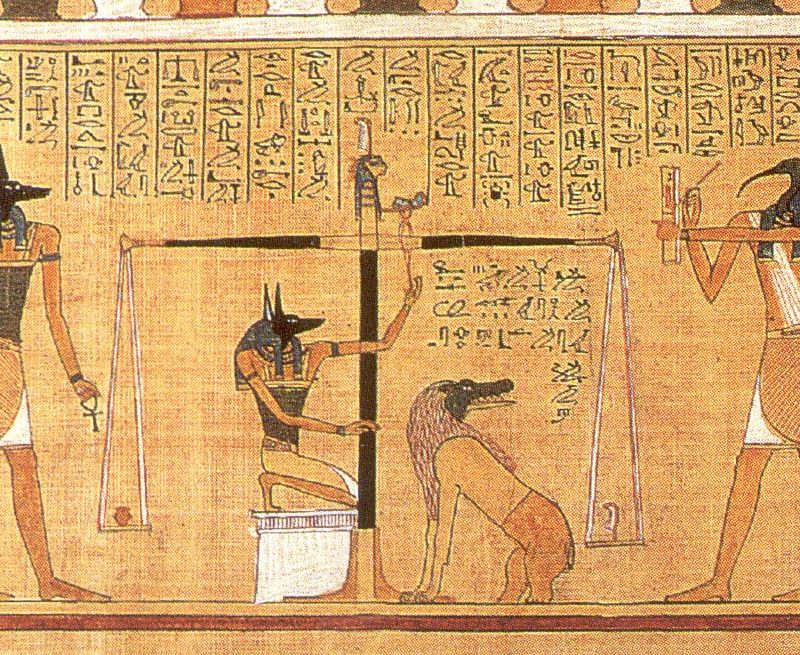
In the accompaning illustration from the Egyptian Book of the Dead, the scene, from the Papyrus of Hunefer (c. 1275 BC), shows the scribe Hunefer’s heart being weighed on the scale of Maat against the feather of truth, by the jackal-headed Anubis. The ibis-headed Thoth, scribe of the gods, records the result. If his heart equals exactly the weight of the feather, Hunefer is allowed to pass into the afterlife. If not, he is eaten by the waiting chimeric devouring creature Ammit composed of the deadly crocodile, lion, and hippopotamus.
Saturday seems to me to be the day for philosophical thought. Although outwardly awake, I wake slowly in my deeper mind, turning things over, meditating, wondering about the past and what the coming day will hold.
This morning, for example, I had the image in my mind of all the days of my life lined up outside my door, as though they had come for an interview, as though they expected to be questioned, and perhaps be asked to justified themselves, to justify actions taken or not taken, words said or not said, the sins of commission and omission. Imagine this long line of every day of my life stretching down the street and around the corner all the way back to the place where I was born, to the small maternity clinic located in a patch or remnant of ancient woodland. Imagine all the characters I have played in those years, all the different styles of clothes I wore and all the hopes and dreams and ambitions that I carried with me.
The poem below is a stab at understanding that image, although I am aware that more energy needs to be applied if I am to get to the heart of any matter. As a poet, I have good days and bad days, the words flow or they struggle, depending on so many factors. But I am alive, and irrespective of anything else, that is something to be celebrated, any breath being better than none.
Meanderings
There is a sense in which we are all orphans wanderers on the face of the earth looking for origins looking for purpose striving for achievement and hoping for love The years are lined up at my door a procession of dates times and encounters and in my mind the echo of words that have never left me Sometimes it seems that dust and ashes is all that there is beauty is such a rare thing but then comes the dawn light and breath by breath I am revived charmed by bird song delighted by the rose that has yet to fall enticed by the kisses yet to be given the hand yet to be held Today I will walk in the woods I will hear the deathless voice of all the world and shake off the pangs of dust I will surrender the lease I hold on time and disgrace and I will wallow in the instant : step after step I will draw closer to that ultimate nativity and look beyond my mortal eyes Now the fields lie bare the trees stripped to their silhouettes panic among the creatures that must bide the winter months in warm reclusion The brittle bones of love will carry me through I will dispute the sombre sunsets and at night I will usher in the stars number them as pearls in my own private firmament whatever blessing there are they are there to be counted
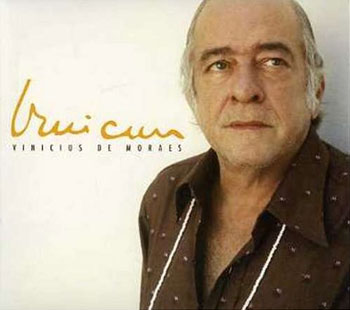
Vinicius de Moraes, (1913-1980) was a Brazilian dramatist, journalist, poet and composer. He is most famous for having written the words to the immortal bossa nova song, “Girl from Ipanema”, with music by Tom Jobim.
In 1938 Vinicius was an undergraduate at Magdalen College, Oxford, where he studied English Literature. There he also wrote a series of playful and amorous sonnets, one of which is translated below.
His success as a lyricist has overshadowed his reputation as a very fine poet but perhaps in years to come the balance will be redressed. The Chilean poet, Pablo Neruda, was a great friend of Vinicius and an admirer of his poetry.
SONNET OF GREATEST LOVE
No greater nor no stranger love than mine exists, that seeks not to soothe the beloved And on sensing she is happy, grows sad Yet seeing her distressed, rejoices.
For it only finds peace if the beloved’s heart resists it, and so takes more pleasure from the perpetual adventure it pursues than from an ill-adventured life.
My crazy love, which wounds with its caress And quivers when it wounds, but would rather Wound than die – and lives randomly
True to its law of living for the moment Fearless, crazy, delirious – wrapt In a passion for all and for itself.
Oxford, 1938
Translation by John Lyons
Here is the original Portuguese text:
SONETO DO MAIOR AMOR
Maior amor nem mais estranho existe Que o meu, que não sossega a coisa amada E quando a sente alegre, fica triste E se a vê descontente, dá risada.
E que só fica em paz se lhe resiste O amado coração, e que se agrada Mais da eterna aventura em que persiste Que de uma vida mal-aventurada.
Louco amor meu, que quando toca, fere E quando fere vibra, mas prefere Ferir a fenecer – e vive a esmo
Fiel à sua lei de cada instante Desassombrado, doido, delirante Numa paixão de tudo e de si mesmo.
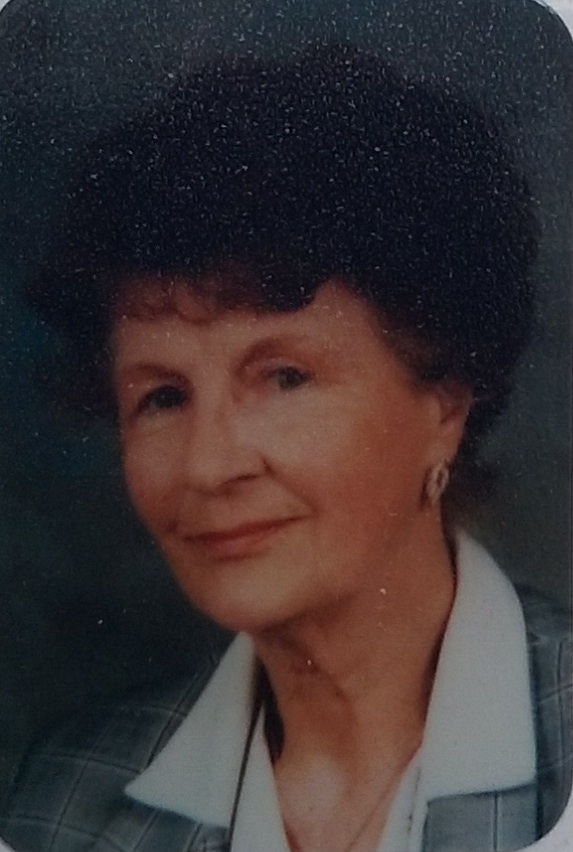
These cold frosty mornings, such as the one I awoke to today, always remind me of the days my mother spent in the Brook hospital in Shooters Hill, towards the end of her life. The poem below was written immediately after visiting her one day in the hospital when I, like all her children, had been stunned by her sudden decline. The accompanying photo was taken two years earlier, around the time of her seventieth birthday and that is how I like to remember her. She was born in Tralee, Co. Kerry in 1922, and her family emigrated to Welling in 1937, for reasons I never fully understood. From the photo it can be seen that even at her age then, she had lost none of the beauty that led my father to call her his Rose of Tralee throughout their life together. But the radiance of her physical beauty was nothing compared to the inner beauty that glowed within her and was manifest in her eternal smile. She was blessed with the tough genes of the Kerry people and she worked tirelessly throughout her life as a proud wife and a mother of six and as a teacher of primary school infants. In so many respects she was the life and soul of the family, and if I had to sum up in one word what drove her to embrace life with such inexhaustible energy, I would have to say love.
Your final resting
Half-moon over November night: snow on the ground and icy dusting of snow in the boughs of trees in the ancient woodlands by your last bed. A barn owl sits motionless in the darkness, in the half-light of the half-moon. A lone cry in the woodlands, the lone cry of the November owl under the half-moon. And then silence. And then peace. A final flurry of snow.
That you should love and be loved. nothing more. That you should love and be lived by that love. The two-way gift, the life-gift and the love-gift, and not the one without the other. All life is two-way just as all love is all life in the giving and receiving. And so Divina asks me where was she before she was born, because living and loving cannot understand the state of non-being. And I say to her: You were there in our love where you will always be, there in our love.
And you, my mother— I gave birth to you just as you brought me out of yourself and into the light, barely a half-moon from now, barely three and forty years from here. You born again in the moment of my birth into that deep love-gift of motherhood; And I have loved you as the father of your motherhood of me, son and father to you as the mother and daughter of my love.
And your dying — this two-way sadness which we call your death is also a kind of lying in, is also a kind of new maternity, a fresh maternity as you lie here now in peace and at peace, nurturing us into that new life, that life with and without you, that never-losing-you life of your death. Your six children around your last bed, at the breast of your love.
November sun — and magpies soaring in the chill air, seen through the window of your last resting A sadness yes, a grief undeniably. And yet an overwhelming sense of love undying. Not of ashes to ashes but of life to life through love.
If you haven’t seen it already, there’s still time to catch the free exhibition of sculptures by Alice Anderson at the Wellcome Collection in Euston Road, (diagonally opposite Euston Station), before it closes on 18 October.
According to the publicity handout:
Alice Anderson asks you to take a journey into memory. Displayed together for the first time is a series of sculptures which prompt you to rediscover things you thought you already knew. A computer, a record-player, sketch-books, a bicycle, even a staircase have been transformed into luminous half-recognisable shapes through a process the artist refers to as “mummification”. This process actually involves the objects being bound with very fine copper thread so that they are, theoretically preserved for all time.
The exhibition experience is broken down into a series of themed rooms. In the first room, called Studio, you are invited to contribute to a sculpture by becoming part of Anderson’s studio. Here you can participate in the transformation of a ‘naked’ object by weaving copper thread around a 1967 Ford Mustang. The space where this occurs has minimal lighting to heighten the impact of the glowing copper thread and the effect is absolutely breathtaking.
Turntable
And as you move through the different spaces of the exhibition you are bombarded with a series of everyday objects similarly wrapped in the copper thread. The range of objects mummified includes a plasma tv screen, a guitar, a bicycle, keys, a telescope, a turntable, eye glasses, a smoking pipe, a telephone, coat hangers, a stethoscope, tools including screwdrivers and hammers, a basketball, a boomerang, a set of drums, ladders, shelves, geometrical shapes, and so on, and the cumulative effect is spectacular.
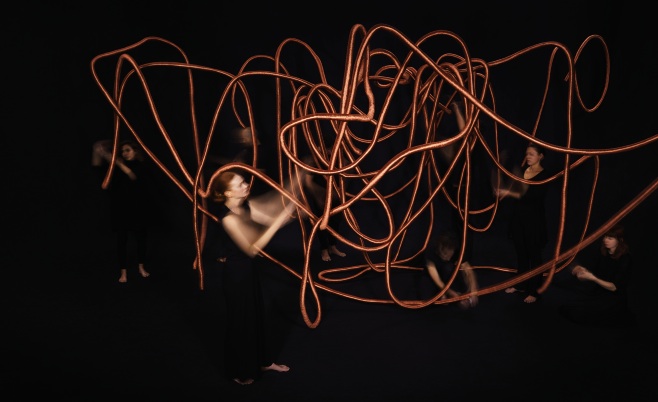
Two sculptures in particular caught my imagination: the first was a staircase wrapped in the luminous thread, and such was the scintillating play of light that it appeared to be a staircase to heaven. The second sculpture (illustrated at the top of the page) was a huge, twisting and turning cable of copper rope suspended from the ceiling in one room creating a beautiful abstract space that visitors are able to walk through and therefore observe the rope from every dimension.
Alice Anderson
Like with so much conceptual art, Alice Anderson is inviting us to take a fresh look at everyday objects we take for granted by reducing them to their essential shapes. However, the fact that they are bound in a glowing precious metal inevitably enhances their worth—especially given the market price of copper today—and the overall effect is as though Miss Anderson has transformed the objects into gold with her Midas touch. I would add incidentally, that it is probably no coincidence that the artist’s own hair is copper-coloured. Make of that what you will!
Alice Anderson lives and works in London. She studied at the École Nationale Supérieure des Beaux- Arts de Paris and at Goldsmiths College London. See http://www.alice-anderson.org/travfactory.html
Never been to the Wellcome Collection? If that’s the case, make a note. It’s a fabulous exhibition space, and the museum’s permanent collection is full of informative displays. The building itself is worth a drop-in visit, and on the day I was there the cafeteria and bookshop were buzzing. On top of all this, the venue has a broad programme of events embracing the arts and sciences, the majority of which are free. Details available from http://wellcomecollection.org/.
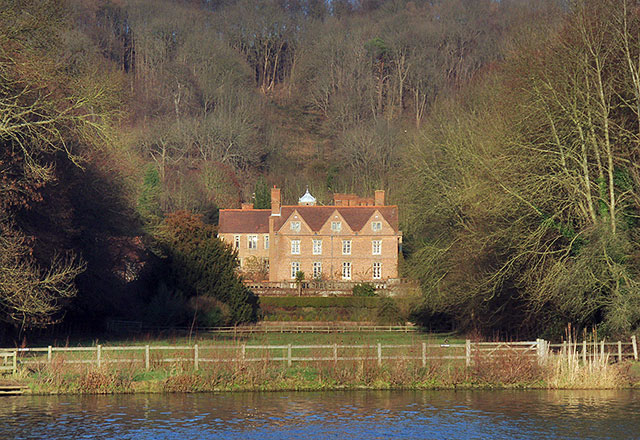
And so on a beautiful autumn afternoon, with Patsy and Allyson and Aidan to the Pumpkin Fair in the grounds of Hardwick House, a seven-bedroom Elizabethan manor house located on the Thames in South Oxfordshire, with a beautiful river view.
The sun shone and the children played, and pizza and pumpkin soup were consumed; and for those with a keen interest in horticulture, the head gardener gave an impressively informative tour of the 900-acre Estate’s market garden, the theme of which was “know and embrace your natural friends and allow them to thrive so that they keep the predators at bay”. Good advice at any time!
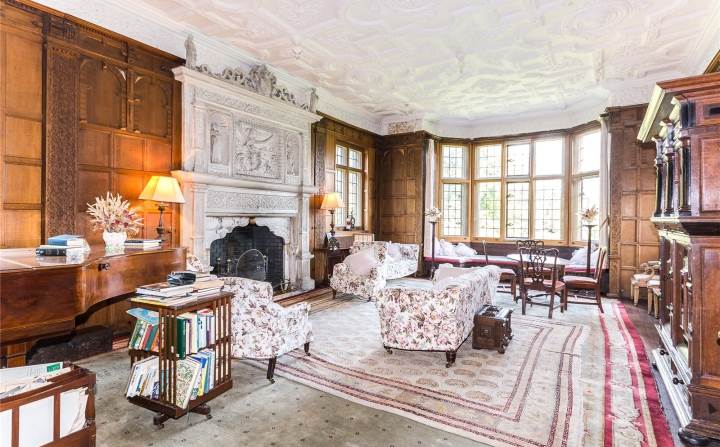
Following that, the delightful Miriam Rose, daughter of the present owner, gave a straggling group of followers a brief tour of the incredibly well-preserved house.
The drawing room
Turns out, Hardwick House was built on top of the remains of an ancient dwelling recorded in the Doomsday book, part of which remains in the flint and chalk cellar walls. The main house was constructed in the 16th Century by the Lybbe family – soldiers, courtiers and winetasters to the Plantagent Kings. In 1643 the royalist Lybbe family were forced to flee during the Civil War, when the house was bombarded by Cromwell’s forces. King Charles I, possibly a friend of the family, also played bowls on the green at Collins End Common on the Hardwick Estate before he was finally beheaded.
When the Lybbe-Powyses fell on hard times in the late 1800s, Sir Charles Rose – a banker, MP and larger-than-life public figure, bought the estate and house. He and his wife were well connected in the arts and literary world and Kenneth Graham visited the house regularly, basing his book The Wind in The Willows at Hardwick (with influences from other Thames-side houses), and the character of Mr Toad on Sir Charles himself. Henry James also set the first scene of Portrait of a Lady in the gardens at Hardwick, and a number of other books of the time make mention of the house.
Sir Charles was a tennis, motoring, yachting, flying and horse-racing enthusiast, and built two Real Tennis courts at Hardwick, one of which is still very actively used. His paintings and furnishings still adorn many of the rooms.
And the good news? The East Wing of this glorious house is currently available to rent at £5000 per month, which will give you 7 bedrooms, 3 reception rooms, 2 bathrooms, and an immersion in the history and joys of country life as it was in the good old days that should last you a lifetime.
Extract from Chapter seven of The Wind in the Willows, by Kenneth Grahame. Toad is in prison, having been caught by the police after he stole a car:
Now the gaoler had a daughter, a pleasant wench and good-hearted, who assisted her father in the lighter duties of his post. She was particularly fond of animals, and, besides her canary, whose cage hung on a nail in the massive wall of the keep by day, to the great annoyance of prisoners who relished an after-dinner nap, and was shrouded in an antimacassar on the parlour table at night, she kept several piebald mice and a restless revolving squirrel. This kind-hearted girl, pitying the misery of Toad, said to her father one day, ‘Father! I can’t bear to see that poor beast so unhappy, and getting so thin! You let me have the managing of him. You know how fond of animals I am. I’ll make him eat from my hand, and sit up, and do all sorts of things.’
Her father replied that she could do what she liked with him. He was tired of Toad, and his sulks and his airs and his meanness. So that day she went on her errand of mercy, and knocked at the door of Toad’s cell.
‘Now, cheer up, Toad,’ she said, coaxingly, on entering, ‘and sit up and dry your eyes and be a sensible animal. And do try and eat a bit of dinner. See, I’ve brought you some of mine, hot from the oven!’
It was bubble-and-squeak, between two plates, and its fragrance filled the narrow cell. The penetrating smell of cabbage reached the nose of Toad as he lay prostrate in his misery on the floor, and gave him the idea for a moment that perhaps life was not such a blank and desperate thing as he had imagined. But still he wailed, and kicked with his legs, and refused to be comforted. So the wise girl retired for the time, but, of course, a good deal of the smell of hot cabbage remained behind, as it will do, and Toad, between his sobs, sniffed and reflected, and gradually began to think new and inspiring thoughts: of chivalry, and poetry, and deeds still to be done; of broad meadows, and cattle browsing in them, raked by sun and wind; of kitchen-gardens, and straight herb-borders, and warm snap-dragon beset by bees; and of the comforting clink of dishes set down on the table at Toad Hall, and the scrape of chair-legs on the floor as every one pulled himself close up to his work. The air of the narrow cell took a rosy tinge; he began to think of his friends, and how they would surely be able to do something; of lawyers, and how they would have enjoyed his case, and what an ass he had been not to get in a few; and lastly, he thought of his own great cleverness and resource, and all that he was capable of if he only gave his great mind to it; and the cure was almost complete.
When the girl returned, some hours later, she carried a tray, with a cup of fragrant tea steaming on it; and a plate piled up with very hot buttered toast, cut thick, very brown on both sides, with the butter running through the holes in it in great golden drops, like honey from the honeycomb. The smell of that buttered toast simply talked to Toad, and with no uncertain voice; talked of warm kitchens, of breakfasts on bright frosty mornings, of cosy parlour firesides on winter evenings, when one’s ramble was over and slippered feet were propped on the fender; of the purring of contented cats, and the twitter of sleepy canaries. Toad sat up on end once more, dried his eyes, sipped his tea and munched his toast, and soon began talking freely about himself, and the house he lived in, and his doings there, and how important he was, and what a lot his friends thought of him.
The gaoler’s daughter saw that the topic was doing him as much good as the tea, as indeed it was, and encouraged him to go on.
‘Tell me about Toad Hall,’ said she. ‘It sounds beautiful.’
‘Toad Hall,’ said the Toad proudly, ‘is an eligible self-contained gentleman’s residence very unique; dating in part from the fourteenth century, but replete with every modern convenience. Up-to-date sanitation. Five minutes from church, post-office, and golf-links, Suitable for—-’


 johnjosephlyons