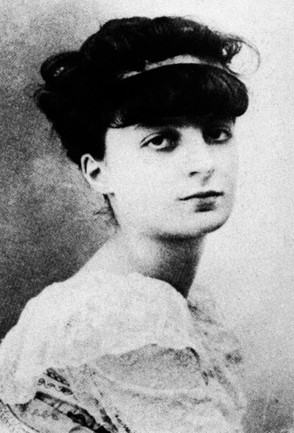
In this extract from Le livre de ma vie, published in 1932, Anna de Noailles meditates on the emotional impact of her father’s death.
How can we not think here of the secret mourning devoid of any pomp which, later, accompanies the death of those of our friends who take our lives with them? They leave us lying there, with no choice but to meditate on their intolerable absence. The old crimson wool sweater that we wore during times of tender and familiar conversations; in the moments of our work, contemplated by them; during intimate meals, and that they kissed on the shoulder, the elbow, the wrist, does not offer us the entertainment of thinking of leaving them! When, staggering, without them, we begin to take our first steps again on the land which stole them from us and which, in all places, will seem funereal to us, we can henceforth put on the dress chosen at random from the wardrobe; we can cover our hair with a hat trimmed with robin feathers or purple camellias, without worrying about our appearance, which no longer matters to us. Unhealed misfortunes do not reveal themselves to passers-by or even to our superficial relationships. They do not register in the concierge’s lodge nor in the hallways of our houses; the murder they’ve committed on us remains our secret and our inexhaustible knowledge. . .
Translation by John Lyons
Comment ne pas songer ici au deuil secret et dénué de tout apparat qui, plus tard, accompagne la mort de ceux de nos amis qui emportent avec eux notre vie? Ils nous laissent gisants, sans nul autre parti à prendre que de méditer leur intolérable absence. Le vieux tricot de laine cramoisie que nous portions à l’heure des conversations tendres et familières; aux instants de notre travail, par eux contemplé; au cours des repas intimes, et qu’ils baisaient à l’épaule, au coude, au poignet, ne nous offre pas le divertissement de songer à le quitter! Lorsque, chancelants, amputés d’eux, nous recommençons à faire nos premiers pas sur la terre qui nous les a dérobés et qui, en tous lieux, nous semblera funèbre, nous pouvons revêtir désormais la robe décrochée au hasard dans l’armoire; nous pouvons poser sur nos cheveux un chapeau garni de plumes de rouge-gorge ou de pourpres camélias, sans nous préoccuper de notre aspect, qui ne nous tient plus à cœur. Les malheurs sans guérison ne se révèlent pas aux passants ni même à nos relations superficielles. Ils n’ont pas de registre dans la loge du concierge ni dans le vestibule de nos maisons; le meurtre qu’ils ont exercé sur nous demeure notre secret et notre inépuisable savoir. . .
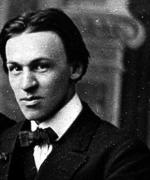 The French poet, Blaise Cendrars (1887-1961), lost his right arm during the Battle of the Somme in 1915. An important member of the Montparnasse community of writers and artists, Cendrars was an inspirational influence on many American writers, including John Dos Passos and Henry Miller.
 johnjosephlyons