“I am a writer. . . .”

wonderboysThere is a marvellous moment in the film, Wonder Boys (2000), where one of the characters, a pompous but renowned novelist, played by Rip Torn, and known by a single initial as “Q”, walks to the podium to address a university audience during Writers Week, and solemnly declares: “I am a writer. . . .”

This is greeted by a very loud belly laugh from James Leer (Toby Maguire), a student in the creative writing class run by Professor Tripp (Michael Douglas). Well, all of us who make that claim about ourselves run the risk of being labelled pompous and yet we are all writers.

Towards the end of this school year I gave some English lessons to a very sensitive and charming autistic boy, aged 16, and I encouraged him to explore the possibilities of creative writing. On each occasion we met, he would tell me the news that Shakespeare was dead and that he didn’t want to be a writer. To the first statement I would reply, “Good, cuts out the competition”. The second statement I would answer by picking up an issue of National Geographic entirely dedicated to dinosaurs (he was intensely interested in the reptiles) and point to the text. “There’s no escape from text. We all have to write. We’re all writers.” In fact, over the weeks I saw him, the boy produced some very fine pieces of writing, albeit under protest.

Over the coming months I intend to reveal a little about the reasons why I write and the processes I use to create my poetry. But for the time being, here is an example of one of the poems produced by my autistic pupil:

The perfect days of summer

Holiday with my family
         waking to the sound of waves
Cereal with fresh milk
         resting on the beach
throwing water
         at friends’ faces
a cold drink
         a seat
               an umbrella
Marvellous views
         of the land and the sea
Use suntan lotion
         and insect repellent
Lunch in a Turkish
         seaside restaurant
Going for long walks
         new places
               new faces
different sounds
         different smells

Looking forward
         to returning
         back to London
         back to my room
         back to my computer
         in the basement
back to friends at school
with my very own photos

This blog seeks, among other things, to celebrate the work of those poets and other writers who have had the greatest impact on my own poetry, and in this first post I have chosen a poem I wrote in 2004, inspired by my reading of Marianne Moore. Beneath the apparent simplicity of her poetry there is great sophistication: her delivery via the rhythm is smooth and controlled like the action of a great baseball player standing at the plate, and the final flourishes of her poems are often akin to those of a glorious home-run. Just as cricket was important to Beckett and Pinter, baseball was Marianne Moore’s chosen sport, and its influence is everywhere you look in her lines. William Carlos Williams, in his Selected Essays, describes Marianne Moore’s talent thus: “It is a talent which diminishes the tom-toming on the hollow men of a wasteland to an irrelevant pitter-patter. Nothing is hollow or waste to the imagination of Marianne Moore.”

moore

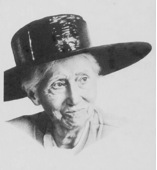
Marianne Moore

The face
         that has come down to us
                   through the photographs
         is of an elderly lady–white hair
                   beneath a broad-brimmed black

boater.
         A face that bears the soft creases but not
                   the deep lines of age; the eyes incisive
         and captivating as any disenfranchised tiger’s;
                   a wry, generous smile tightly-

pursed
          in the knowledge that silence
                   is a most auspicious friend
         to the judicious poet.
                   Her poetry: a

space
         in which we would-be
                   steeplejacks
         might immerse ourselves
                   and grow ever so youthfully older,

in
         contempt only of all that is
                   small-minded, artificial,
         artless and
                   conspicuously untrue.
berryman

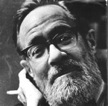
For the repose of John Berryman

A clone met in a clearing sprouts a salt and pepper
beard and speaks from below a gentle frown, furrowed
by the unbridled years of empty, dyspeptic houses
in which only old things ever re-offended and even
the tears appeared to break laws. Picture him
seated thus with high forehead, so inclined as to
nestle his profound intelligence on the palm
of his aging hand, all future movements of stone within,
and yet gracefully beyond his grasp, all the niceties
of distance and dream Book of Job despair
writ in words of wrought iron. “Brush away
them words that to you do no favours, Mr Bones,”
quoth quietly the alter ego. Quite. We pray: wipe
away those words pure and simple as one would, say,
the cigarette smoke that heavenlywards winds its way
from betwixt insubordinate and pain-stained fingers.
“My God, my God, why have you so utterly abandoned
me so,” mutters finally the altared ego. Tetelestai.

NoteTetelestai, supposedly Christ’s final words before he died on the cross, signifying “it is finished”.