Neatly folded napkins and freshly cut roses in a cut glass vase a long oak table guests to populate it : amid the wealth of words silences cultivated in every nook and cranny
Alice and her embroidery Gertrude with hers a carafe of red wine sparkling silverware shining porcelain At the window heavy drapes to keep out the dust and for the world to know its place
Sometimes always occasionally loving glances often exchanged time under orders and life on its best behaviour : a dog with a name a stern smile the making of history word by word line by line
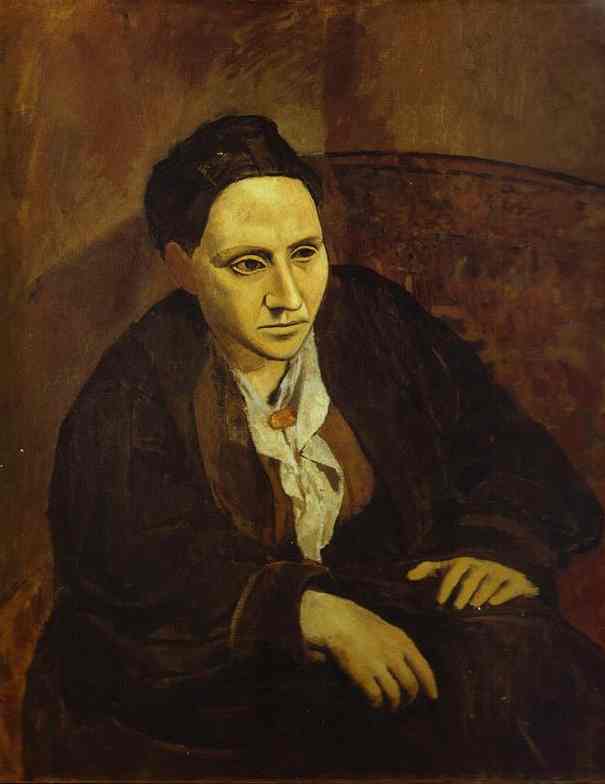
First published in 1914, Tender Buttons, by the American writer, Gertrude Stein, is a collection of poems written in a style which some critics have described as verbal Cubism. Stein’s close friendship with Pablo Picasso, detailed magnificently in The Autobiography of Alice B. Toklas (1933), undoubtedly exerted a great influence on the experimental style of composition in which everyday objects are described in ways that detach them from their familiar context so that the reader has to reassemble the parts in order to derive the sense. Plainly, it is a modernist work that demands some effort on the part of the reader, and this explains why it is one of the great unread classics. This is a pity because the work contains some of Stein’s very best writing and with the correct approach it can bring a good deal of pleasure. Each poem has to be read slowly and with a relaxed, meditative voice so as to handle each fragment of syntax with care, to examine it closely and allow the unconscious to assist in the process of assembly. There are many beautiful observations within the poems but they have to be teased out by a sympathetic reader, one who genuinely enjoys the true power of poetry and is attuned to its often unconventional rhythms and syntax. The theme of the work is, of course, explicit in the title, which celebrates the tenderness of homely relationships, including the people who occupy the home and the ordinary, everyday objects that surround them and which they use.
Tender Buttons
A reading for Gertrude: a table means necessary places cutlery on the starched white linen and a glass of any height a looking glass a lamp and a cake a tin lined with crumbs a precocious blue but not so sad after all green can be lean but nothing tendered nothing gained A table means also and also perhaps full of possibilities a commitment and a compromise : the light was gracious one might say forgiving so that they all looked their best A table is geometry and dynamics and sometimes crosstalk and sometimes silence it has moods and expectations and some things are certain and some things are not A wet-weather window opens us to the elements and chance as we know is a very fine thing
Picasso once ate and drank and smoked at her table and loved in her all that there was to love and more and Alice once sewed a button on his shirt : : that was a tender thing to do don’t you think ?

 johnjosephlyons