Keeping this blog going on a daily basis has proved to be a challenge. This morning, for example, I was tempted to post a poem written when I was still at school, around the age of sixteen. Sweet little sixteen! Those years are long gone. On the other hand, I am always loath to use up material which is there on file and could be used on a rainy day. Sometimes this desire leads me to improvise new poems, and most of the poems on this blog have been written on the spur of the moment on the day, with an imaginary deadline of nine a.m. to help me focus.
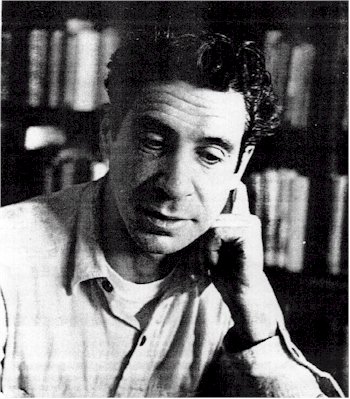
The poem below, more of a haiku really, was inspired by a line I read last night in a letter Anne Sexton sent to fellow poet, Anthony Hecht, in 1961. I’ve mentioned the book Anne Sexton: A Self-Portrait in Letters in a previous post. I cannot recommend it highly enough for those interested in her poetry but also as a glimpse into a remarkably open, creative soul, gifted with tremendous self-knowledge, albeit tragically peppered with self-doubt. To those reading her Complete Poems, the letters are indispensable. My poem is an imagined response from Hecht to the line in that letter.
Anne Sexton
Being with you
Being with you is just like your face said it would be your hair your ears your eyes your lips your smile your kiss your chin your shoulders your breasts your waist your hips your sex your thighs your knees your ankles your feet your words your love
Being with you is just like your love said it would be being with you
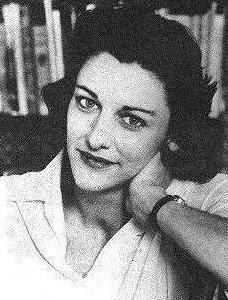
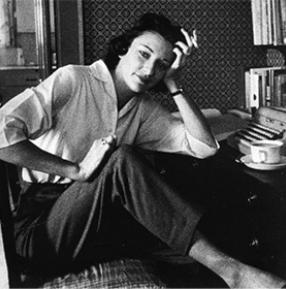
The Pulitzer Prize-winning American poet, Anne Sexton (1928–1974), struggled with depression throughout most of her life. Her poetry is the heart she wore constantly on her sleeve, and it deals with every aspect of her private life, including her relationships with her husband and her children and indeed with the intimate relationship with her own body.
She began to write poetry as a young girl, and when she first showed her work to her mother, she felt humiliated when her mother, who also wrote poetry, accused her of plagiarism. The fact is that her mother could not believe that her daughter could be so talented. But Sexton constantly sought approval from both her parents, and in later life from her peers. In Anne Sexton, A Self-Portrait in Letters, edited by Anne’s daughter, Linda Gray Sexton and Lois Ames, there is a very touching letter written by Anne to her mother on Christmas Day 1957:
Dear Mother,
Here are some forty-odd pages of the first year of Anne Sexton, Poet. You may remember my first sonnet written just after Christmas one year ago. I do not think all of these are good. However, I am not ashamed of them. They are not in chronological order, but I have arranged them in a sort of way in a sort of a story. But not too much or too well. I have tried to give a breather between the more difficult ones that use a more modern idiom. A few are obscure. I do not apologize for them. I like them. Mood can be as important as sense. Music doesn’t make sense and I am not so sure the words have to, always.
Below are three poems from Sexton’s adolescent period not included in her Complete Poems. Anne married when she was very young and her husband dropped out of medical school in order to get a job as a travelling salesman to support her. The poems offer an early indication of the themes of insecurity that would dominate her mature poetry. Sexton studied poetry under the renowned poet, Robert Lowell, alongside Sylvia Plath: and all three had serious mental health issues. For those interested in a deeper understanding of Anne Sexton’s work, the biographical edition of her letters is essential reading.
ON THE DUNES
If there is any life when death is over, These tawny beaches will know of me. I shall come back, as constant and as changeful As the unchanging, many-colored sea. If life was small, if it had made me scornful, Forgive me; I shall straighten like a flame In the great calm of death, and if you want me Stand on the seaward dunes and call my name.
*
SPIRIT’S HOUSE
From naked stones of agony I build a house for me; as a mason all alone I will raise it stone by stone, And every stone where I have bled Will show a sign of dusty red. I have not gone away in vain, For I have good of all my pain; My spirit’s quiet house will be Built of naked stones I trod On roads where I lost sight of God.
*
TRAVELER’S WIFE
Although I lie pressed close to your warm side, I know you find me vacant and preoccupied. If my thoughts could find one safe walled home Then I would let them out to strut and roam. I would, indeed pour me out for you to see, a wanton soul, somehow delicate and free. But instead I have a cup of pain to drink, or I might weed out an old pain to think. Perhaps old wounds have an easy sorrow, easier than knowing you leave me tomorrow. The mind twists and turns within the choice of some sagging pain, or your departing voice. In the last hour I’ve tried images and things, and even illusion breaks its filament wings on the raw skin of all I wouldn’t know about the waiting dawn when you smile and go. You must not find, in quick surprise, one startled ache within my vacant eyes.
 johnjosephlyons