In terms of place there was always water a river dissecting the city a bridge by a Norman tower Or in times of place the ebb and flow of love the pace of passion the irresistible rush headlong into palpable life
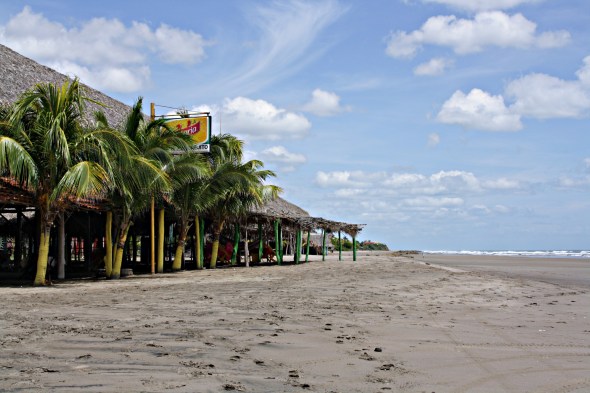
Always water : a seashore of white sand scattered with the debris of palm and coconut shells a scorching sun and frigate birds skimming the waves
And at night the emergence of sea turtles there to lay their soft white eggs in the amorous dunes Was I really ever there at the time? And you?
John Lyons
Dunes amoureuses
En termes de lieu, il y avait toujours de l’eau, une rivière coupant la ville en deux, un pont près d’une tour normande, ou encore, à certaines époques, le flux et le reflux de l’amour, le rythme de la passion, la ruée irrésistible vers la vie palpable.
Toujours de l’eau : un rivage de sable blanc parsemé de débris de palmiers et de noix de coco, un soleil brûlant et des frégates effleurant les vagues.
Et la nuit, l’émergence de tortues marines venues pondre leurs œufs blancs et mous dans les dunes amoureuses. Étais-je vraiment là à ce moment-là ? Et toi?
When you no longer love me and there’s nothing left for us to harm because there’s nothing left living worthy of our trust
When you have left and I have left and the musicians have gone and the doors have been closed and the locks have been bolted and the candles extinguished though the wicks smoulder on
When you no longer love me When in the social round your eyes on meeting mine no longer say « Be patient my dear you know my heart belongs to you »
When you no longer love me and I no longer fear you
When in the next phase of your incessant search you love another and bare your feet beneath the shadow of another’s sceptre and I cheerfully dismiss the loneliness and the bitterness I myself will have forgotten when you who once loved me no longer love me
We will say something has been lost Not much It’s never much
Though something essential a cult a language a ritual will have been lost when you no longer love me
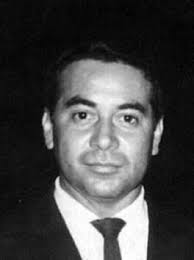
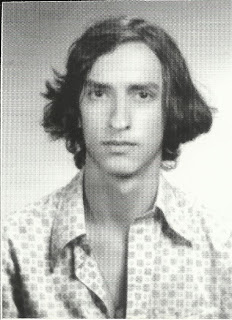
Ernesto Castillo Salaverry (1957-1978) was born in Managua, Nicaragua; he died barely two months before his 21st birthday, fighting against Somoza’s National Guard on the streets of Leon. His poetry reads like a diary of the daily struggle against the dictatorship, interwoven with love and nostalgia. Days before his death he wrote a letter to his parents:
Sunday, August 27, 1978.
To all those who love me, and among them, especially you.
I had thought not to write these lines, because you know I do not like goodbyes, I believe that every separation is temporary because when several people are together, when they love each other in the way that we love each other, it is impossible to forget each other, and at happy times, in the sad moments, we are together, sharing, as we have done so often. You are always with me. You are in the rain, you are on the streets mingling with the people, accompanying me every time I go to work. When I talk with colleagues, and we touch on family matters, matters of love, I just smile, because I have the good fortune to have your support; I am happy to know that you understand the need to fight; happy because the training I received made me aware of the need for change, for the revolutionary transformation of an unjust society.
In addition to having you, I am not alone; colleagues who work with me are very fraternal, we live together in danger, we share the same ideology, and our Sandinista convictions make us brothers. The people, the workers, the taxi driver, the newspaper seller, the cornershop keeper, they all accompany me. They trust me, without even knowing me, they love me, they have great faith in me, in us.
For you, for them, for Nicaragua, I am willing to fight to the end.
I cannot say that I don’t miss you, that would be a lie. I’d like to be with you, sharing every moment, enjoying every word, every gesture, every look. Today it’s not possible, but we must sacrifice ourselves, and I confess that I find it hard, we must fight in these conditions so that thousands of families can come together, so that Nicaraguan mothers do not continue to see their children murdered by the National Guard.
I’m not afraid, I know I’m going to brush with death, and I’m not afraid. You, and an entire nation, are with me. I love you.
Ernesto.
4 poems by Ernesto Castillo
The list of revolutionary martyrs is long; I know that the road to Liberation is painful; but if I fall, another will take my place and maybe fight longer than me, and his work combined with what has been done, may finally achieve victory.
* The streets wet with rain reflect the night. I crawl along the path as though trying to prolong the steps that must take me to my death.
*
September 1978
Some are for your sister; let her enjoy them if she likes them , if not, let her accept them, because it was she who created them; not all, just some. The others are scattered in women’s names I’d already have forgotten, had I not written them in my poems. The last ones, the most recent, are yours, I wasn’t sure before. These poems and these feelings are yours because you earned them.
* Thanks for having given me your kisses, your moments of joy and loneliness thanks for sharing my problems.
I can only leave you my poems and my memories, the memory of the silent nights with my hands running across your body and my eyes glistening as our mouths met.
I see you rereading my letters and poems, remembering the why of each sentence, trying to revive my love in every one of those pages.
I’ll leave my sensation of loneliness, because where I’m going you cannot reach me; and in your sleepless nights you’ll remember that I can never come running to you, that you’ll no longer even have my distant presence, because my body will be eaten by worms that will erase every trace of your kisses on my neck.
Time will turn my bones to dust, everyone will forget me, but you will sometimes feel the urge to cry; a veil of sadness will overwhelm you and my memory will reappear in your eyes.
Translations by John Lyons
Following the United States occupation of Nicaragua from 1912 to 1933, during the so-called Banana Wars, the Somoza family political dynasty was installed, and, with US backing, would rule the country until the final dictator was ousted in the 1979 Nicaraguan Sandinista Revolution.
In the 1970s the Sandinista National Liberation Front (FSLN) had begun a guerrilla campaign with isolated attacks which led to national recognition of the group in the Nicaraguan media and solidification of the group as a force in opposition to the dictatorship. The Somoza regime, was defended by the National Guard, a force highly trained by the U.S. military, that used torture, and extra-judicial killing, intimidation and censorship of the press in order to combat the FSLN attacks. In 1977, mounting international condemnation of the regime’s human rights violations led the Carter Administration to cut off aid to the Somoza regime. By the end of January 1978, civil disobedience had turned into a full-scale popular uprising throughout the country, ending in July 1979 when Somoza abandoned Nicaragua and the first Sandinista government was installed.
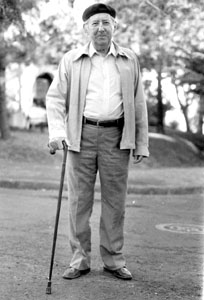
The poem below was written by José Coronel Urtecho (1906-1994) in the months following the July 1979 Sandinista Revolution in Nicaragua. These were the days of innocence and euphoria, the likes of which had never before been known in that very poor Central American country. In those early days of the revolution the whole country was undergoing a radical transformation; the young, educated few were going out in brigades into the countryside and the poor urban neighbourhoods bringing the gift of literacy to the hundreds of thousands who had been denied any sort of education under the successive governments of the US-backed Somoza dictatorship. Alongside, there were brigades of doctors and nurses and health workers taking healthcare, for the first time ever, to the same marginalized sectors of the population in order to vaccinate, to provide antenatal and perinatal care and to conduct an all-out offensive against infant mortality and preventable disease.
Coronel Urtecho, one of Nicaragua’s greatest poets, had earlier in his life been a supporter of the Somoza dictatorship but he was gradually radicalized through contact with members of the Sandinista National Liberation front, and Panels of Hell was written as an act of contrition for the sins of his earlier ideological beliefs.
My translation of the poem was eventually published by Harold Pinter in 1989 at the height of the illegal Contra war against the people of Nicaragua, instigated by Ronald Reagan and spearheaded by the Oliver North.
It is salutary, on this Columbus Day 2015, to reflect on the significance of today’s commemorations, to ask exactly who in the Amercias has anything to commemorate, to speculate how the native American peoples, for example, might be taking Christopher Columbus to their hearts, how the poor and dispossessed of the Americas might like to remember that fateful day, 12 October 1492, when according to his log, Columbus, in his search for a new route to the spice lands of the East, first sighted land in the West.
The two avatars of that discovery were (and remain to this day) wealth and poverty, or as they are known euphemistically: North and South! Happy Columbus Day!
PANELS OF HELL (extract)
Who remembers the octogenarian swine in his sedan chair the one who first stole Nicaragua the country the government the land for himself and for his family the first one who saw Nicaragua as a business his own business the first one who in Nicaragua established the business of slaves the exploitation and selling of slaves the first of the usurious foreign bankers and financiers in Nicaragua the one who first brought to Nicaragua his genocidal dogs to guard over his minerals the one who first killed in Nicaragua ‘two million’ Indians (2,000,000) the first one who installed his dynasty in Nicaragua the first of the first dynasty in Nicaragua continued by his daughter and his son-in-law and his grandchildren tyrant usufructuaries of the Empire who in Nicaragua today remembers the worst of all the Spanish conquerors of America and his murderous descendants?
All of them are submerged in the dung heap of History
What became of the cold paranoid filibuster robber of countries the ill-famed adventurer from Tennessee gone bust in Sonora ill-adapted in California who very nearly stole Nicaragua from the democrats and legitimists or Liberals and Conservatives who amongst themselves were killing each other to exploit the Nicaraguan people the first North American to see Nicaragua the country the government the land as a subsidiary business to North American business the first imperialist racist North American pro-slaver who tried in Nicaragua to introduce the black slave trade importing the slavery of the slave States of the South of North America through the elimination of Nicaragua’s Indians and mestizos but could get nowhere with the people of Nicaragua Costa Rica Honduras El Salvador and Guatemala
the first North American of the South or the North the East or the West who brought his dogs to Nicaragua and thugs or mercenary animals enlisted in New York and New Orleans and San Francisco California
the first agent of the thieving bankers of Frisco competitors of the usurious bankers of Manhattan concessionaires of the inter-oceanic Transit of foreign passengers through Nicaragua
the first North American arsonist destroyer of Nicaraguan cities who would have reduced them all to ashes and left them in ruins and sown the land with wooden crosses and scattered cemeteries and common graves before handing it over empty to his pro-slaver filibusters but could get nowhere with the resistance of the people of Nicaragua Costa Rica Honduras El Salvador and Guatemala
the first for us of the models of North American imperialism without a mask or with a mask in person or if not through an intermediary but in any case the model for the North American invaders interveners ambassadors swindlers mediators and for the North Americanizing dealers and businessmen and traffickers of the Nicaraguan patrimony-peddling bourgeoisie
the first of the first North American military occupation of Nicaragua never really discontinued rather immediately continued by the Conservative and Liberal oligarchies and from 1936 to the 19th of July 1979 by the proconsular family of the pentagonal dynasty enthroned on Tiscapa Hill by the Yankee Empire who today is aware in Nicaragua of the worst of all the filibusters of America—admired by Truman—and of his murderoussuccessors?
All of them are at the bottom of the latrines of History
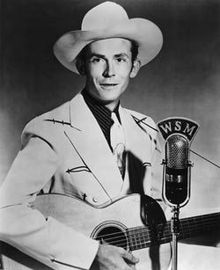
To the immortal words of Hank Williams’ unforgettable song, our old sea-dog Jonah decides he’s going to share one of his culinary secrets. How come these old timers in Central America, who don’t have two beans to rub together, live to the ripe old age of 90 or more? The answer is diet, and hard work. You all know the saying, “Hard work never killed anyone.” The fact is that hard work saves more lives than it kills, way more!
So what about diet? What do the peasants in Nicaragua and Costa Rica have for breakfast, lunch and dinner? The answer is gallo pinto: a basic mixture of rice and black beans fried together with a little garlic, onion, salt and pepper. Eat it with maize tortillas, an egg (fried or omelette), or maybe a little meat (not too much) or on its own with plenty of chile sauce and you’re away. Live forever!
So how’s it done?
You need to cook your rice and your beans separately and remember that for gallo pinto they will be mixed 50/50 so I won’t give precise weights. Once the beans are cooked you drain off the liquid and let the beans dry.
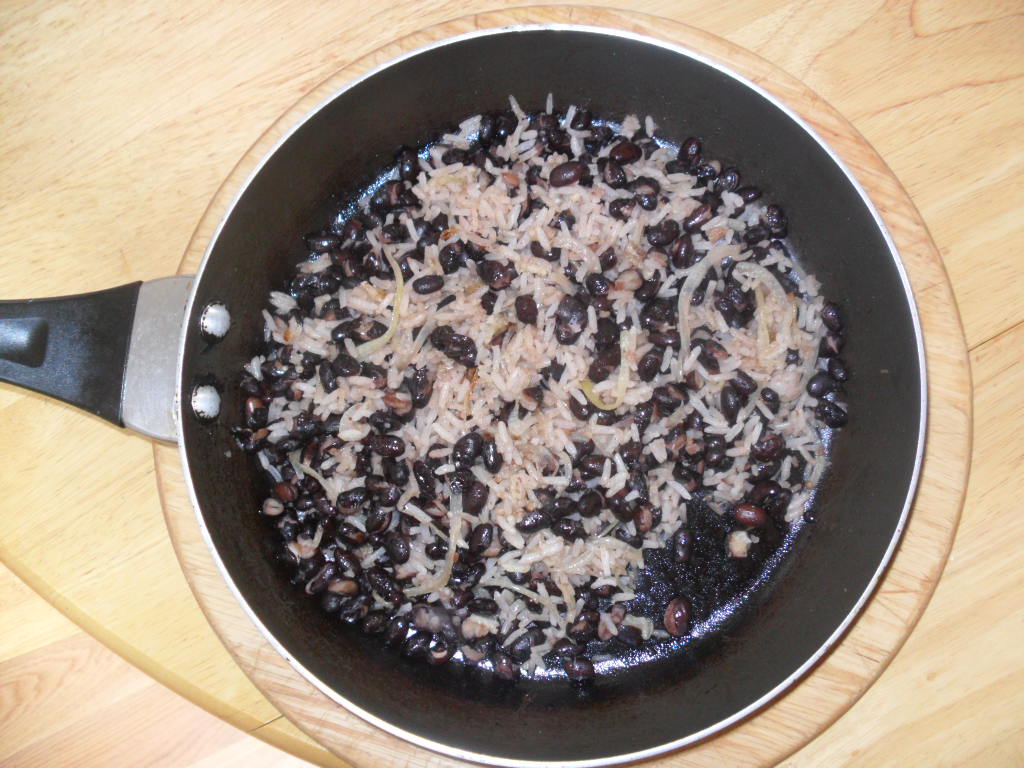
Then in a large frying pan you fry a little minced garlic with a little finely chopped onion in a generous dose of good oil (sunflower or extra virgin), adding a little salt and pepper to taste. Once the onions are soft you slowly add the beans on a moderate heat. After a minute or two, you add a similar portion of rice and with the heat still low you stir the contents of the pan, noting how the beans and the rice are getting drier all the time. As the moisture begins to evaporate, the rice will take on a reddish hue having absorbed some of the colour from the beans. What this translates into is flavour. You now need to reduce the heat as low as possible so that the mixture continues to dry out, taking care, however not to burn it. Believe me, the mixture of rice and beans in gallo pinto is a marriage made in heaven!
Gallo pinto is often served with sliced fried plantain (either sweet, when skin is yellow, or savoury, when skin is green). Eggs, meat, tortillas are all optional extras. The beauty of this dish, apart from its simplicity and divine taste, is that it delivers in a very simple format, all the protein and carbohydrate you’re going to need if you intend to do a hard day’s work. And there’s an added bonus. By taking your main protein shot from pulses rather than from meat, you’re actually helping to save the planet. So go for it!
gallo pinto Jonah made for lunch today
Ingredients Black beans Cooked rice Clove or two of minced garlic Half onion finely chopped Cooking oil Salt Pepper
Final point. Keep the leftover gallo pinto in an airtight container in the fridge. When next required gently warm through. You’ll find that with every warm-up, the mixture will get drier, the rice and beans will eventually become crunchy and you will cross the taste barrier into ecstasy. By the way gallo pinto means spotted rooster in Spanish.

 johnjosephlyons