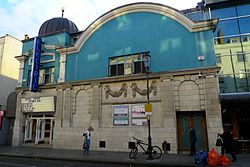
 For the whole of the 1980s I lived in Ladbroke Grove, just up by Harrow Road and close to the Grand Union Canal. This was in the days before the catastrophe of gentrification. I was working at the time as a teacher in Holland Park School, and on Saturdays I would do my grocery shopping in the market at Portobello Road, often meeting pupils of mine who had Saturday jobs on the fruit and vegetable stalls. In the evenings or perhaps for a Saturday matinee, I might go to see a film at the Electric Cinema (pictured) which first opened in Portobello Road in 1910. Nowadays it’s a very smart place, but back then the seats were rickety and mice would be running between your feet as you sat and watched Bob Dylan and Sam Shepard in the crazy film, Reynaldo and Clara, which also featured Allen Ginsberg; or Elliot Gould playing Philip Marlowe in The Long Goodbye. But did I care?
I loved to ferret through the stalls looking for CDs or second-hand books, anything that took my fancy. It was there that I discovered two sensational CDs featuring Joe Arroyo, possibly Colombia’s greatest salsero, bought them for a couple of quid each. And before that, back in the days of vinyl, I bought four of John Lennon’s solo albums in a pop-up shop opposite Tesco, also for a couple of quid each. There was a family butcher’s in the Golborne Road where the meat and the service were always excellent; and I would sometimes go into the Cañada Blanch Spanish School at the very top of Portobello for lunch in the canteen there, where two of my Spanish friends taught: calamares a la romana, delicious! Above all, I loved the colour and the buzz on the streets and loved being part of that community. There were the Rastas smoking ganja on the corners, and the Spanish and the Morrocans and the Portuguese, and so many other nationalities, and everywhere heaved to the sound of Bob Marley. Get up, stand up, stand up for your rights!
Among the many characters in the area, and believe me there were many, there was a black man who used to carry a white cross. I would see him frequently in different parts of the borough but mostly in Ladbroke Grove, and on one occasion I even met him in the big supermarket up by the canal. He had put his cross down just behind one of the check-outs and was paying for his goods.
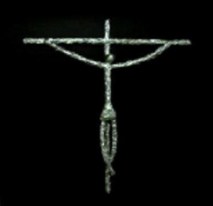
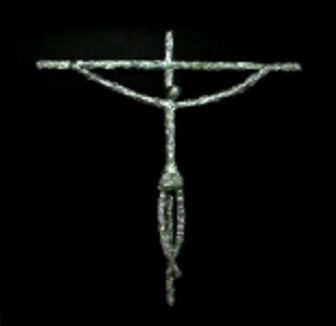
So the story below is actually a true story and it was published in my translation some years later in Managua, in the Saturday supplement of El Nuevo Diario along with the picture of a cross sculpted by the poet, Ernesto Cardenal.
The Cross
 Laminated white wood. An oak cross with white panels. The size of a man. A tall man, almost six foot six. A man with broad shoulders and a long neck. A man with short black hair. A black man, carrying a white cross. He says nothing as he walks along the street. Says nothing to anyone, but talks constantly to himself. Maybe he’s praying. Maybe not. He wears black trousers, worn at the knees. His trousers are tucked inside Wellington boots. His jacket is not black, but dark blue, the cuffs frayed. Under the jacket he wears a polo neck sweater, thin black wool. He goes up the street muttering under his breath and people gape at him as he goes. No one laughs in his face, but behind his back, people roll their eyes and a smile appears on their lips. An eccentric, carrying a huge white cross. Was a time in Virginia, a man could be crucified for less. The Klan would have told him what to do with that cross, that’s for sure. . . .
 johnjosephlyons