 I mentioned the American short story writer, Raymond Carver in an earlier post. The title of one of his stories, “What we talk about when we talk about love”, has always stayed in my mind. Most of Carver’s stories talk about love, and in this particular story the examples of love all appear to be dysfunctional, raddled by drink. The love I witnessed between my parents was quite the opposite and it has always been for me exactly what I talk about when I talk about love.
An example of this love can be glimpsed in an extract from a letter my father wrote to my mother early on in their marriage, but the feelings it expresses were reciprocal and never diminished, never dated. My parents were not what I would call outwardly sentimental in their devotion to each other, they were simply devoted. There was always humour, and always love.
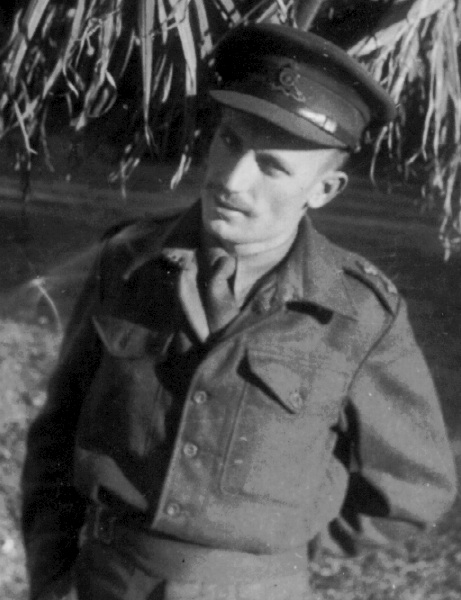
The context of the letter is as follows: in 1946, my father, then a Captain in the Royal Artillery, found himself posted to Egypt. He’d married my mother in Belfast in 1944, and my oldest sister, Annette, had just been born. Omitted from the letter is the substance of my father’s meeting with the Colonel he mentions: this was to discuss his future intentions now that the War was over, and whether he would remain in the Army.
AEC 48 Canal Sth Dist.
Fayid. M.E.F
7-4-46
My dearest,
Yesterday I went to Cairo. It was an awfully hot day, and I sweated blood. First I went to BTE. I saw the Colonel. . . .
[. . . ] I had lunch and went for your shoes. Meech, the chap in my tent and I searched I don’t know how many shops. I couldn’t find the exact copy, tho’ I could have had them made for £4. However, I thought that you didn’t necessarily want white, as in the picture, but that type. And I thought, pure white would get dirty (practical eh?) so I would buy you a pair you could wear with anything, and would look smart as long as you had them. I think they’re lovely, and I saw nothing like them in any of the shops I called at. The same shoes would be hard to find in England, and be quite expensive. They cost £3-7-6! So they are not a cheap pair. They have cork inside, so they should be very comfortable. Tomorrow I will have them sewn up. I also have something else for you —— something of my own —– I didn’t buy it, so don’t expect anything like that. It’s something special. Not very good, but it’s what it means. You’ll understand, you’re like that. And I love you very much, my dearest —- adore you. I think you’re the most beautiful adorable girl in the world. That’s what my present depends on. It isn’t good but it comes from me as a token of my love, my devotion, and a tribute to your beauty, darling Marie.
How are you feeling, and how is the darling baby? Do write to me soon, darling, only a line. Because it means so much to me to hear from ‘you’. Oh if you knew how much I love you darling. But I think you know a little about it. You are my whole life, my dearest.
God bless you, my darling love.
Your own devoted Bill
xxxxxx

 I wake at dawn. Gayle is still fast asleep. My throat is dry. I reach for the glass of water on the bedside cabinet and drain it. My hands are shaking. I put down the glass. Gayle turns over and for a moment her eyes open. She looks at me and smiles. I lean across and kiss her on the forehead. She mutters something in a sleepy drawl which I cannot understand. I pull the covers up around her shoulders. You go back to sleep, I say. She smiles again and closes her eyes. I run my fingers through her grey hair. The hair is dry and brittle. Her soft skin is marked now with fine deep lines like a spider web of pain.
 johnjosephlyons