Not all poetry yields its meaning immediately, and why should it? Just as you can stare for hours at an abstract painting, so too, a poem can be a source of meditation. What does it actually mean? And what does it matter what it means? That is not to say that the words do not matter. But often the conscious logical mind is too earth-bound, too stuck in the trivia or fatigue of daily life to be able to get to the heart of a feeling. It is important sometimes to let the mind go with the flow, to detach from the rational Cartesian world with its arid formula of I think, therefore I am. Clearly Descartes had scant understanding of the role and the power of the unconscious mind!
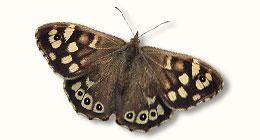
Adonis Blue
Notice when we are happy, when we play, when we frolic, when we are in love, when we have experienced a sense of achievement, whenever we are overcome by any powerful emotion, it takes us out of the moment, releases us from the tyranny of time. So we might wonder why these parallel forms of existence occur. Who has never wished that a moment could go on for ever? Who has never prayed for a seemingly endless state of discomfort or pain or sorrow to pass? In which realm do we live our true, authentic, fully human life? So many poets down the ages have observed the innocence of nature, the instinctive forms of life that appear to know no suffering, and longed to live likewise, free from the yoke of mortality. I believe that that is the function of art, to lift us out of the pedestrian, to lift us up into the spirit so that for a moment we drift above ourselves as though in an out-of-body experience and allow ourselves to be carried along in a different flow, to be timeless for a time. Be a butterfly!
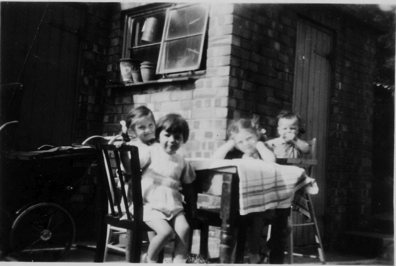
In this photo, which I’ve used in a previous post, I am sitting in my highchair, aged eighteen months. Behind me you can see the door to the shed where my father kept his gardening tools, especially the lawnmower, along with some of the army debris he brought back with him when he was demobbed, his collapsible canvas camp bed, for example. There were boxes containing spares for his motorcycle, spark plugs, replacement lamps for his headlights. His Wellington boots always stood just inside the door and I would often take them out and totter around the garden wearing them even though they came up to my thighs. The shed has lots of memories. It was lit by a single bare electric light and it was always damp inside. It had been built in 1947, at the same time as the house we lived in, but the builders had rushed the shed and forgotten to put in a damp course which meant that humidity rose up through the bricks and the door frame was rotting and hinges were rusting. The shed window consisted of four panes of glass, two of which on the part of the window that opened, were cracked ever since I could remember, and were never replaced.
The flowerpots on the sill are testimony to my father’s abiding passion, which was cultivating his garden. He grew vegetables, beans, tomatoes, as well as roses and a whole variety of seasonal and perennial flowers. He loved to sit in his garden at the end of a long day and smoke his pipe in silence contemplating the handiwork of his green fingers. Gradually, over the years, the garden evolved, as the family’s financial circumstances improved, but he never stopped adding new features, a watercourse, a greenhouse, new varieties of rose. It was his principal relaxation.
Bramley apples
You can barely see it, but behind the pram on the left of the photo there is a door to another part of the shed, which was a separate storage area. It had several wooden shelves inside and there my father would store the apples from our many fruit trees and which we would consume in the course of the cold winter months. The most productive tree was a Bramley which bore beautiful, huge, slightly tart apples which were ideal for apple pies and crumbles, two of my father’s favourite desserts and which my mother cooked to perfection.
The pram itself is interesting: if I was eighteen months old, my brother Michael would have been a baby and was therefore somewhere in the house in his cot at the time of the photo. When we shopped with my mother I would sit in the pram with Michael and she would wheel two miles up Gravel Hill to the nearest shops in Bexleyheath. We went there to buy cheese and meat which was still rationed after the end of the Second World War until rationing was finally abolished in 1954. There was also a sort of community hall behind Christ Church, an Anglican church on the Broadway, where families with young children went to collect their free concentrated orange juice. When Mark, my second brother was born, my mother would sometimes take all three of us in the pram, but eventually I was big enough to walk by her side, holding on to the pram handle. Large-wheeled, well-sprung prams went out of fashion when the Maclaren stroller or foldable buggy was invented in the mid-1960s, but nowadays fashion has changed and these beautiful, sturdy, hand-built wooden prams are once again in demand. When Mark was a baby he would often sleep in the living room in the pram during the day and when he woke he would find a way to rock the pram so that it travelled the length of the living room and back. I can remember the living room walls were deeply scored by the knobs on the side of the pram.
When I was a little older I would often keep tabs on my father who at certain times of the year would disappear into the shed for hours. One evening in mid-December, I put a chair outside the shed window so that I could climb up and peer in. There I saw my father working away at a wooden fort or stockade that he was building for my brother Mark as a Christmas present; it was his own design, the pieces of which he had shaped with a tenon saw before gluing them together. When he noticed me, he called me into the shed and made me promise not to say a word to my brother. The next time I saw the fort it was being unwrapped on Christmas morning.
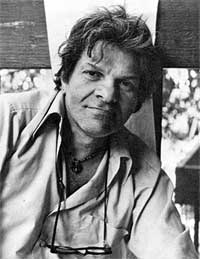
Gregory Corso was a key member of the Beat movement, a group of convention-breaking writers, including William S. Burroughs, Jack Kerouac and Allen Ginsberg, who were credited with sparking much of the social and political change that transformed the United States in the 1960s. Corso’s spontaneous, insightful, and inspirational verse once prompted Ginsberg to describe him as an “awakener of youth.” Although Corso enjoyed his greatest level of popularity during the 1960s and 1970s, he has continued to influence contemporary readers and critics.
Writing in the American Book Review, Dennis Barone remarked that Corso’s 1989 volume of new and selected poems, Mindfield, was a sign that “despite doubt, uncertainty, the American way, death all around, Gregory Corso will continue, and I am glad he will.”
My own poem was inspired by a short poem (“For Lisa 2”) written by Corso and dedicated to Lisa Brinker, his eventual wife and surrogate mother to his son, Max. I used this wonderfully evocative text many times while teaching creative writing in Brazil.
For Lisa 2
I saw an angel today without wings with human smile and nothing to say
Gregory Corso
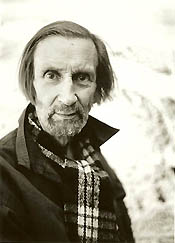
Imagine a poetic gift of such intensity that his wolfish eyes were capable of penetrating the core of a palm tree so as to observe infinitesimally its actual
growth. That brooding, not-guilty gaze he acquired in the years when barely out of adolescence he served a jail sentence, there learnt to read, learnt there to write poems. Yet prison was no
place for the angels he would later catch sight of, in diners, on street corners, sometimes with an unlit cigarette in their mouth, sometimes not, but always a beauty to behold. He made
no secret of love, but truly believed in the coming together of two bodies as a celebration of being. Friendship was second nature to him: poetry was his first.
John Latham, Film Star (1960) Books, metal and plaster on canvas
Educated at Winchester College, John Latham (1921-2006) commanded a motor torpedo boat in the Royal Naval Volunteer Reserve during the Second World War. After the war he studied art at the Regent Street Polytechnic and later at the Chelsea College of Art and Design. He was married to fellow artist and collaborator Barbara Steveni.
According to the Tate Britain display caption: This work was titled Film Star because it appeared in Latham’s film Unedited Material from the Star. It incorporates books whose pages have been painted in twelve colours. Because the books can be opened at different pages, the work can exist in different states. The film consists of static shots of opened books. During production, Latham would stop filming at various points, turn the pages of the books, and start filming again. When the film is shown, the books appear suddenly to open, close and change colour.
John Latham
There is something erotic about the red version of the books, as though the books are about to swallow, to devour the observer, the reader of the painting/sculpture. This sensation would be heightened when watching the animated film. The human presence on the canvas appears to be signalled by what could be a spinal cord and eyes so that we are in fact looking at a portrait. But perhaps that’s just my interpretation. Why not pop down to Tate Britain in Pimlico and see for yourself!
There are so many things to like about this piece, but what struck me, having observed it in situ in the gallery, was the speed with which most visitors glanced at it and moved on. Art appreciation deserves more than a knee-jerk reaction! Latham is inviting us to share some time with his work because its content and its energies cannot be appreciated in haste. He knows that our time is precious, all time is precious. We could all be doing other things rather than traipsing round an art gallery, we could be living and loving in other ways, travelling in other directions. But then, why visit a gallery if we are not going to take the art seriously, if we are just going to shoot through the rooms clocking one exhibit after another as fast as we can?
Art bundles time and energy. As consumers of art our task is to unbundle it, using all our powers of perception and the generosity of our hearts and minds. Furthermore, the creation and appreciation of art should be central to the education of young people and not be relegated to the status of an optional, peripheral activity on the curriculum.
Why does Latham include so many books in his composition? Books are artefacts, physical objects and they can encompass all manner of printed material, hagiographies of film stars, biographies, histories, literatures etc. The book is a fundamental building block of culture, a cornerstone, and over the course of time, the dominant books will reflect the dominant ideology. Books can be instructive, destructive, they can be articles of rebellion and they can be persecuted, they can shape and they can deform opinions, they can be lauded and loathed, they can be best-sellers, stars in their own right and they can go in and out of fashion. Plastic arts can be encapsulated within the pages of books and in Latham’s sculptures books can be incorporated into his compositions as found objects, underlying the phoniness of rigid divisions between the arts. At the heart of it all is the word and the image. Art subverts received ideas and conservative thinking. Art is a weapon of liberation insofar as it operates on the consciousness and can set it free. Plastic, conceptual and literary art all share this power. Hence the reverence that artists tend to have for writers and vice versa. We’re all in this together, all for one and one for all.
By the banks of the river Darenth that skirts through a far corner of Dartford municipal park, Jonah sat on a bench and gazed at the weeping willows. There was sadness in his heart. Things had gone pear-shaped with Anna-Belle and she was no longer talking to him, said she never wanted to see him again in her life. Never, jamais, ever, she’d shouted. And he’d had such high hopes for a future with her ever since the day he’d chanced upon her, after an absence of thirty years or more, sitting in the King’s Head in Bexley Village reading War and Peace. But no. Nothing had gone according to plan. Would it ever?
It was a beautiful early autumn afternoon, and the park was virtually empty except for clusters here and there of school children who had bunked off for the day. Young boys and girls chatting and smoking and struggling to act cool under the fierce impact of their impetuous adolescent hormones.
And in Jonah’s head, that tune that had been haunting him ever since he’d woken earlier that morning. You can’t always get what you want, no you can’t always get what you want, you can’t always get what you want, but you just might get what you need. The voice of Mick Jagger, the voice of Jonah’s adolescence. He’d grown up with the Stones’ music, every party he’d ever gone to, back in the days, the same old songs blasting out of the stereo, you can’t always get what you want. No satisfaction!
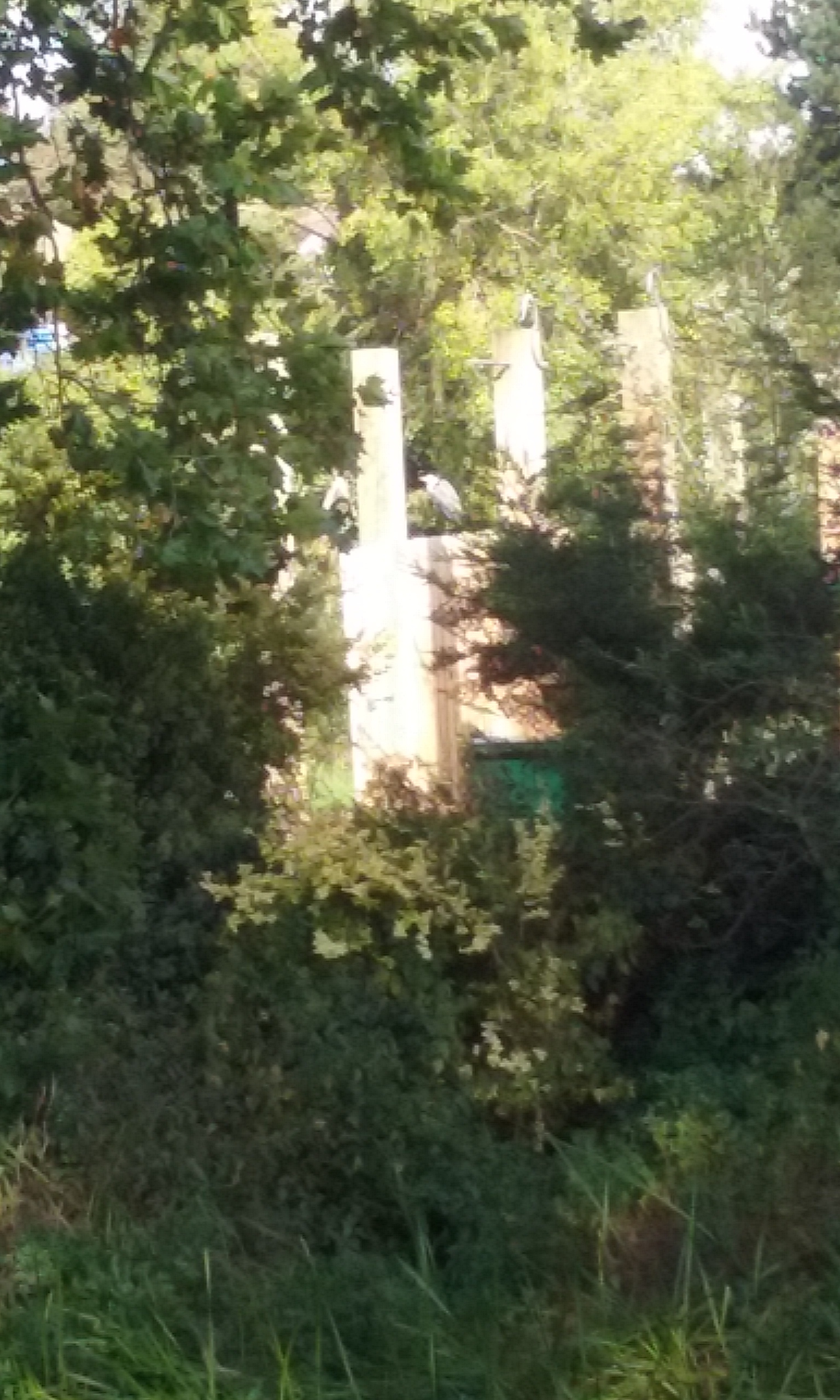
Let’s play Blow-Up. Can you spot the heron? Click on photo to enlarge.
Raising his head, Jonah looked across the river and spotted through a narrow clearing in the forest, perched on a tall palisade, a large heron. At first he thought it was a statue, the bird was so still. But then it moved its beak. What, he wondered, was going through the heron’s mind? Pointless speculation. The heron knew nothing of Anna-Belle, knew nothing of his troubles, lived in a parallel universe in which instinct ruled the day, not love. Herons always got what they wanted, he mused.
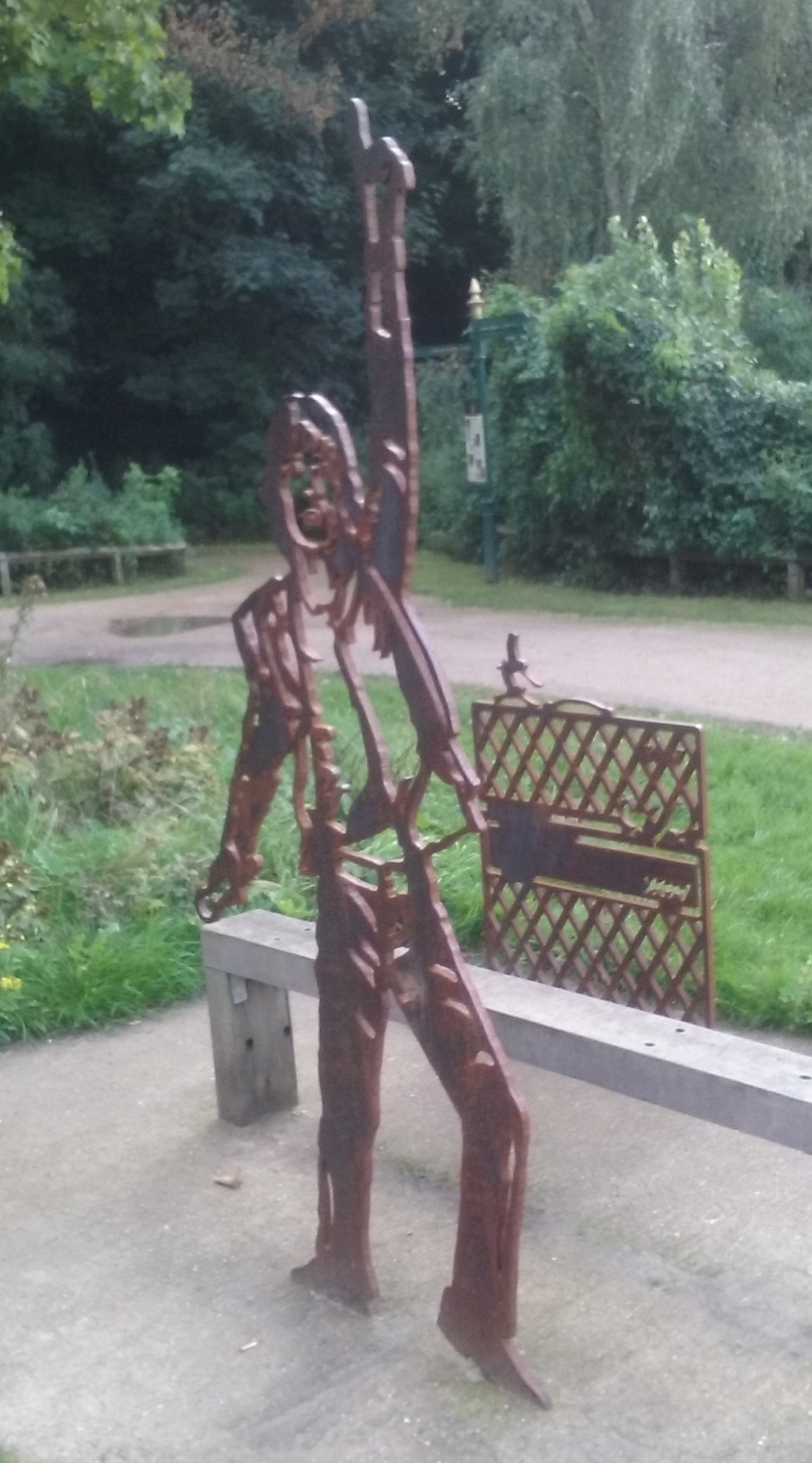
On his way into the park, Jonah had stopped off at the Library to enquire about the location of the no-expenses-spared monument to Mick Jagger. He’d often heard of the existence of this tribute to a local hero, but had never managed to locate it. He spoke to Chris, a volunteer librarian and was told that the Brancusi-inspired art work dedicated to Jagger was at the far end of the park, where it tapered off into woodland, close to the Brooklands lake. Why had it been sited in such a remote spot, Jonah asked. That would be because the council wanted to discourage Japanese tourists from trampling all over the flower beds, Chris explained. Some things are logical and some things are not, Jonah thought to himself.
Monument to Mick Jagger
Nevertheless, the sun was out and the air in his lungs was fresh and wholesome, so he picked himself up and sticking close to the mighty river, he trudged off in the direction he had been told to follow. And sure enough, after a good thirty minutes trek, with sweat breaking out across his brow, there it was, Mick Jagger in all his glory, beautifully captured, microphone in hand, in an exhilarating dance pose, craftily wrought in wrought iron. The thick crust of rust on the iron merely conspired to enhance the natural quality of the sculpture which would not have been out of place on the sea front in Cannes, where the Stones had spent some of their time in tax exile in years gone by and best forgotten now. There it was finally! And next to it a monument to Vox amplifiers, a product manufactured in Dartford in the fifties and which had helped fuel the rock and roll revolution, delivering decibels to the millions. Thoughtfully, a narrow bench had been provided for those whose knees felt a little weak at the sight of this magnificent, astonishingly lifelike representation of their idol. Jonah stood in contemplative silence. He thought of Anna-Belle for a moment and muttered a silent prayer. You can’t always get what you want.
Darenth flora
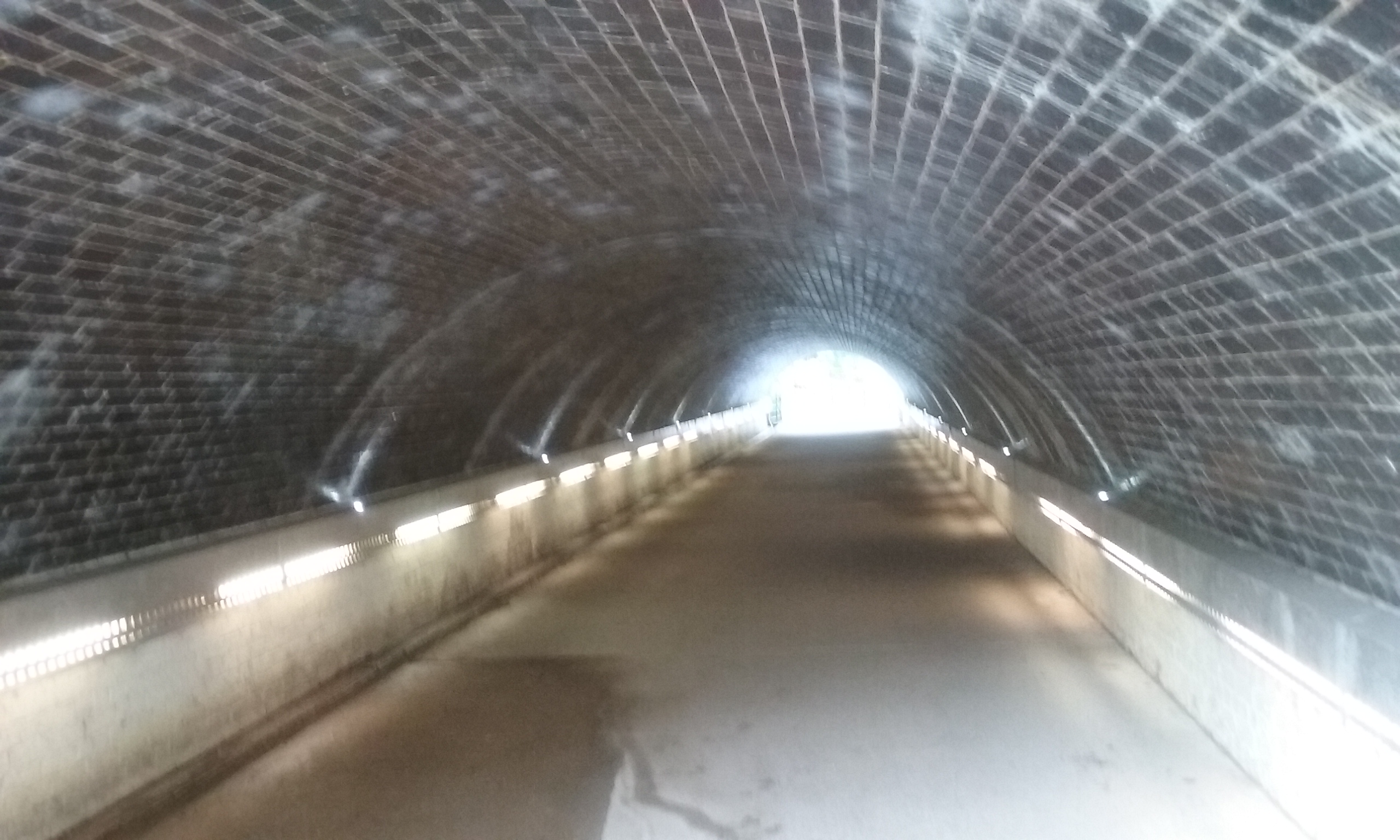
Despondently, he resumed his long march by the riverside until he came to a long long tunnel. He paused at the mouth of this cavernous construction. Suddenly there was music, sweet music, the celestial sound of Handel’s Water Music, emanating from this vast, brick-lined vault. He could not believe his ears; music, the food of love! And in the background the gushing sound of rushing water merrily tipping over the weir. And as he advanced into the dark tunnel, right there before his eyes, at the very end, as though an epiphany, a message from the gods, at the far end, a brilliant patch of light appeared: at last there was hope and there was light. Something inside Jonah trembled and for a moment his vision blurred and his head began to spin. Was he about to swoon? Was this his footpath to Damascus? It was as though his whole life had been building up to this moment of revelation. All the bitterness, all the hurt he had suffered at the heartless hands of Anna-Belle, just slipped away, dropped from his shoulders like a hairshirt he was no longer obliged to wear. His soul was naked and pure and bright. Here before him, life was renewed. He was free, free at last. Free of Anna-Belle, free from the past, free from the endless pillow-pounding sleepless nights, free from the grey drudgery of loveless days. Nothing would ever be the same. He had found it. Eldorado. Nirvana. The grail. Now nothing but the untrammelled future lay before him. Fresh pastures green. New love. He had found it. Just what he needed. Sweet, soft music to his ears. The light. The light at the end of the tunnel.
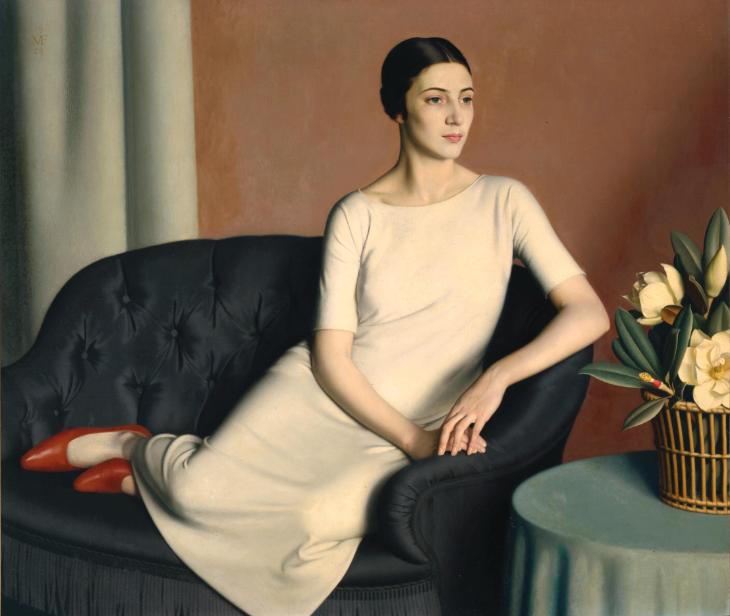
Marguerite Kelsey, a professional artist’s model in the 1920s and 1930s, was renowned for her gracefulness and ability to hold poses for a long time. Her dress was made by the artist’s mother, and the shoes were chosen and purchased by Frampton for this portrait.
The simple, short-sleeved pale tunic dress worn with low-heeled shoes and her straight hair were all essential elements of the fashionable garçonne style created by the couturiers Coco Chanel and Jean Patou from the mid-1920s.
The subject’s pose is deliberately artificial, as is the rendering of the magnolias in the basket and indeed that of all the furnishings. Light was, as for most artists, absolutely crucial to Frampton, and according to Marguerite Kelsey several sittings for this portrait were abandoned when the light was poor.
In reality, what Frampton captures here is a moment of transition between classical elements and modernism and the overall effect, enhanced by the beautifully smooth brushwork, is vaguely surreal.
The model with her quizzical expression, appears almost to be floating on the sofa like a version of Botticelli’s Venus, the sofa substituting for the seashell. The balance provided by the colours of the drapes and the tablecloth make this an utterly satisfying composition.
Worth a trip to Tate Modern just to see this stunning work of art!
Meredith Frampton (1994-1984) was born in St John’s Wood and was the only child of the sculptor George Frampton and his wife, the painter Christabel Cockerell. Educated at Westminster School, Frampton eventually studied art at the Royal Academy Schools. During the First World War, he served in the British Army on the Western Front with a field survey unit and also worked on the interpretation of aerial photographs. After the war he established himself as one of the most highly regarded British painters during the period.
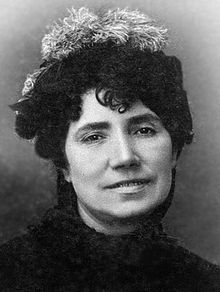
Two poems for this season of mists and mellow fruitfulness, written by the renowned Galician poet, Rosalía de Castro (1837-1885). Rosalía was born in Santiago de Compostela, in the Spanish province of Galicia and wrote both in Spanish and Galician. At the time the Galician language was considered to be inferior, a language to be used by the peasantry and not in polite, sophisticated society. However, the highly educated Rosalía de Castro, an advocate of women’s rights, was also a key figure in the Galician romantic movement, known today as the Rexurdimento, or renaissance.
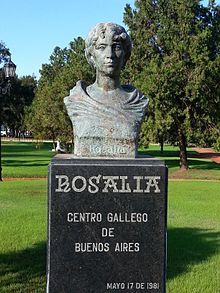
The poetry is inevitably marked by the romantic mood of the day in which expressions of saudade (nostalgia) and melancholy were dominant. Nevertheless, it is for her great poetic gift in the Galician language that she is most remembered today and for that reason I have included the Galician text of the second poem translated below. Galician is a language in its own right, though closer to Portuguese than to Spanish, and the Galician people are as proud of their cultural and linguistic heritage as the Catalans of Catalonia are of theirs. Such is the enduring fame of Rosalía de Castro that a monument to her was erected in the Paseo de los poetas in a park in Buenos Aires in 1981.
Bust of Rosalía de Castro in the Parque 3 de febrero, Buenos Aires
I don’t know what I’m forever seeking
I don’t know what I’m forever seeking On earth, in the air, or the heavens above; I don’t know what I’m seeking; But it’s something I’ve lost, I don’t know when, and cannot find, Although in dreams invisibly It dwells within all I touch and see. Happiness, I can never recapture you On earth, in the air, or the heavens above Although I know you are real And no mere futile dream!
*
Cold Winter Months
Cold winter months That I love with all my heart; Months of brim-full rivers And the sweet love of the hearth Months of storms, Image of the pain That afflicts young hearts Cuts short the lives in bloom. Comes after the autumn That makes the leaves fall Among them let me sleep The sleep of not being. And when the beautiful April sun smiles once again Let it shine upon my rest No more upon my pain.
Meses do inverno fríos
Meses do inverno fríos, Que eu amo a todo amar; Meses dos fartos ríos I o dóce amor do lar. Meses das tempestades, Imaxen da delor Que afrixe as mocedades I as vidas corta en frol. Chegade e, tras do outono Que as follas fai caer, Nelas deixá que o sono Eu durma do non ser. E cando o sol fermoso De abril torne a sorrir, Que alume o meu reposo, Xa non o meu sofrir.
World Exclusive from the cutting edge of journalism
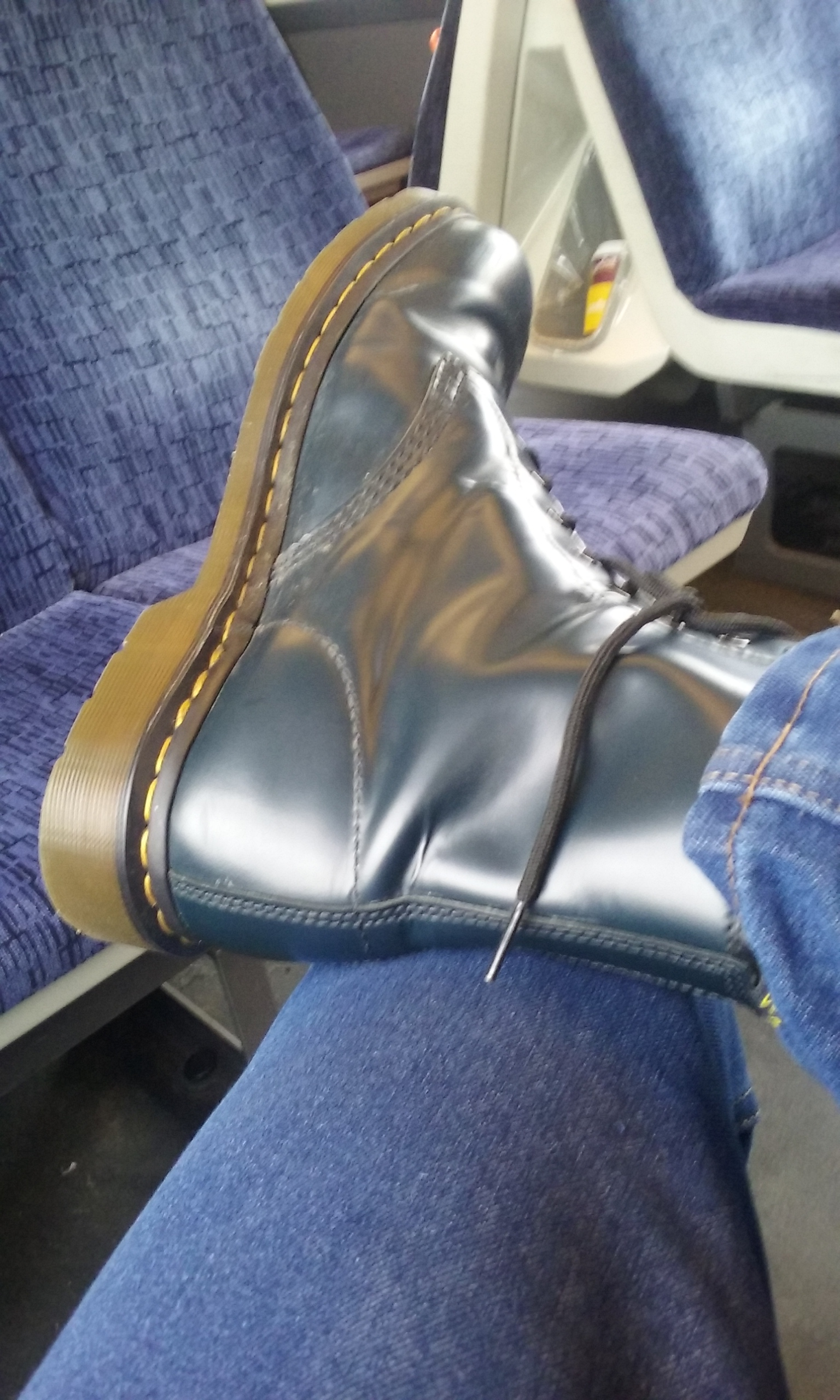
Blogsworth’s boot
Shanks’s pony. That’s the appropriate name for the means of transport favoured by our intrepid blogsworth as he travels ceaselessly across the great metropolis of London Town and beyond, to bring exclusive reports and features to our valued readership. But does he secretly have a convertible Audi TT hidden away in the garage to be used on rainy days or to swank it up and down the King’s Road on sunny Sunday afternoons with the roof off, you may ask? He does not! Ecological to the core, our man insists, come rain or high water, on putting the footwork in wherever he goes. No stranger to the demands of fashion and colour coordination, the observant reader will note from the accompanying photo that the boots are always selected to combine with whatever means of transportation they are partnering with on any particular occasion. In the case illustrated, the boot was chosen in order to match the luscious celestial blue upholstery of Southeastern Railways’ carriages. The assignment, on this occasion? A trip to the mediaeval town of Dartford to check out the checkout operation at the relatively new branch of Aldi. Working undercover he purchased three rib-eye steaks and a bag of mixed, prewashed salad leaves and some mashed potato, all destined for an afternoon barbecue at the brother’s house. But the opportunity was used to interrogate Sharon on the second till from the left as you enter the store.
“So, Sharon,” he asked, as his purchases whizzed past the barcode reader, “are you the fastest girl in the store, I mean fastest checkout operative, I should say, forgive me.”
And he blushed.
Sharon, turns out, is British, (twenty-seven years and nine months old, born in Wilmington, will be twenty-eight on the third of December), and she thus gives the lie to the rumour that all the discounter’s employees are sourced in Eastern Europe. Around 5’ 2”, blonde hair, worn short, nails with fashionably clear varnish but for the tips which are white; and as she answered you could hear that she was a proud custodian and practitioner of the Queen’s English, with just a hint of the delightful Dartford Loop twang.
“No,” she said. “That would be Stanislaus. He’s loads faster than me.”
“But how do you know?”
“The tills record our times, see, and calculate how many customers and how many items we process per hour. So they always know who is the fastest and who is dragging their fingers.”
“And is there a reward for the fastest?”
Sharon pauses and looks at him, conscious that he’s wrecking her chances, but unable to avoid a grimace of sheer disbelief. She has deep brown eyes, suggesting that the blonde hair may not be natural, and beautiful lashes. No wedding ring but wrong time to ask her for a date, he judges
“No. No rewards. No prizes. But we do get a right telling off [she used a more colloquial expression here] if we’re too slow.”
Niceties over, he paid quickly, marshalled his goods and left the store in a flash.
*
But back to the oil fat acid petrol and alkali resistant soles on the stylish DM boots. The famous Dr Martens air soles, to be precise. Rumour has it that a customized version of the same celestial blue boot (size 13) was provided by the company to Pope John Paul II, a celebrated advocate of the footwear. It seems that not content with splashing himself every day with Lourdes holy water as soon as he stepped out of his Vatican bath, the pontiff requested that some of his own supply of bottled Lourdes holy air be surgically inserted into the cushioned soles of his boots, and the manufacturer was only too willing to oblige this distinguished Eastern European customer. Whether there is any truth in this rumour, we’ll never know since the purveyors of boots to the papal feet were sworn on the Holy Bible to secrecy. So a leak? Cobblers, you might say, raising your eyebrows. Not to be trusted with the affairs of state.
The African artist, Lubaina Himid was born in 1954 in Zanzibar, Tanzania. Her art focuses on themes of cultural history and reclaiming identities and she was one of the first artists involved in the Black Art movement in the 1980s.
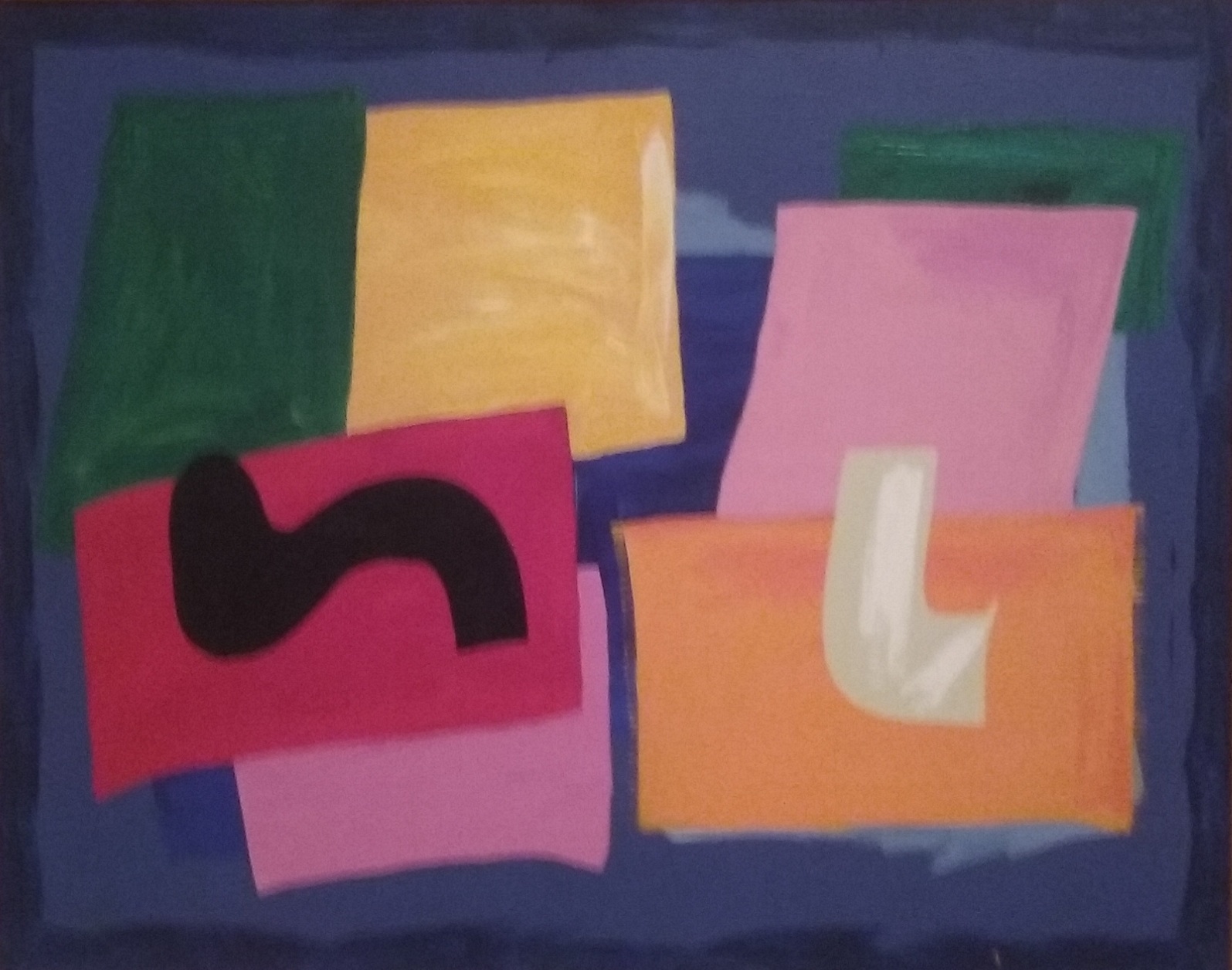
Lubaina Himid, Carpet, (1992, acrylic on canvas)
Her own description of her 1992 painting, Carpet, draws out the composition’s allusion to patchwork and cloth, and the idea that cloth can bear the traces of the activities for which it is used:
Patterns, colours, cloth flapping, beating in the wind. Robes wrapped against the sun and the cold of the night. Fabric highly coloured, woven, sewn together. Umbrellas tents canopies flags banners. The patterns on the cloths hold the clues to events.
To me these words give it away. I have never been to African, but the African presence in many countries in Central and South America is unmistakable. Travelling on buses through those regions, one of the most common and striking sights was to see brightly coloured washing hung on lines or fences or even bushes to dry. What to the European eye would seem to be rather brash colours, in African cultures is simply a statement of the vitality and beauty of life. Africa is, after all, the bedrock of European culture and its influence on painting and music is too obvious and too fundamental to be ignored.
Think of Carpet as a statement of life and appreciate how the blocks are not symmetrical nor posed symmetrically on the canvas upon which the letters appear to dance, and you get the idea of a buzzing dance floor capturing thus the vibrant energy of African culture. Another way to look at it would be to see the canvas as shorthand representation of our DNA code. Homo sapiens, emerged from Africa, as we all know, and these are the genes represented on the canvas, the genes too of all the wonderful creativity that has spread throughout the world.
Don’t believe me? Well get down to Tate Britain and see for yourself.
Ever since I began to write poetry, back in my teens, Saturday has always been a very special day: a day of reflection on the events of the week that went before and a taking stock of my life in general. It is my favourite day of the week for that reason. I have also found that whatever situation I am going through at any particular time, whether challenging or not, the writing of poetry never fails to raise my mood. My habits have become ingrained. I wake at six each morning and write before I do anything else, except perhaps make a coffee. Those first few moments before the bustle of the day begins are very precious, and I prefer not to dissipate them.
Just to add a note on the blog: the readership is slowly building, and it is now being read in Canada and the USA, in India and Israel, in Puerto Rico and Brazil, in Argentina and Japan and throughout Europe. If you read something which you appreciate, please share it with your contacts. Happy Saturdays!
For Saturday
Wake at first light to the sound of trains in the distance to the thrum of jets overhead and to birdsong muted by the rippling breeze : the slow tyranny of moonlight has faded into this grey dawn in which all my dreams have run aground Shall I look back on these times with kindly eyes ? Others have destinations but these streets these urban woodlands have become my exile Others’ lives have movement mine has been to ascend the barren calvaries of love burdened by the solitary rose that would not yield its petals : the soul has moments of escape the body never— this body bound to the dust of its dust Wisdom tells us that there are two heavens : one for the body one for the soul I have attained neither to date though I have listened with all my heart to the breath of butterflies and once held the intricacies of love within my grasp






 johnjosephlyons