The last waltz in Buenos Aires

Calle_Florida,_Buenos_Aires
Calle Florida, Buenos Aires

During the ten years I lived in Brazil, I visited Argentina on five occasions, spending at least two weeks in Buenos Aires each time. I loved the city, and I loved the people, the long-suffering people of Argentina, who had endured the most savage and macabre of military dictatorships of all the dictatorships of South America.

Within a few years of returning to democracy in 1983, the country was yet to suffer further at the hands of the dictatorship of international capital, which led ultimately to a virtual overnight devaluation of the country’s currency in 2002 and stripped the value of millions of people’s savings. Despite the terrible years of political and economic attrition, the population remained dignified and proud of its cultural heritage, proud of the tango and of its immensely rich artistic culture and its love affair with books. While it was rare in Brazil to see people on the public transport system reading a book, in Argentina the opposite was true, and in Buenos Aires, at least, there was a bookshop on every street corner.

I wrote the poem below in my hotel room one afternoon and it was inspired more by the crisis in my relationship at the time than by the problems of the Argentinean economy. The hotel, ironically, was called Casa calma (the calm house) but for me it was anything but calm. I knew that that particular visit to the country was going to be my last, certainly, my last with that particular partner.

As to the form of the poem, inspiration came from two sources. The concept of ‘the first of the last times’ I borrowed from a poem by an elderly Nicaraguan poet, José Coronel Urtecho, whom I had met some years previously in his home, a few months before his death. The poem was called Panels of Hell, and my translation of that text was commissioned and published by Harold Pinter. The second source was from the catechism lesson I was taught as a child in primary school:

Q. Which are the four last things to be always remembered?

A. The four last things to be always remembered are: Death, Judgment, Hell, and Heaven.


 The Last Waltz

What will be the first of the last things
The first word of the last words
The first day of the last days
The first kiss of the last kisses;
What will be the first breath
Of the last breaths, the first sigh
And the first of the long goodbyes?
Here in Buenos Aires the streets
Are haunted by those who have
Gone before, by those who have walked
These noble streets that fell in recent years
Upon such hard times, a sad dreary elegance
Now clinging to so many crumbling façades.
This clear blue sky and crisp ocean air
Known to Borges, known to Cortázar,
Which weathers the skin in the daily bounty
Of those who survive. This may be the first
Of the last memories, the first taste
Of the last tastes to tantalize my palate
The first of the last loves to be made
In the first of the last beds. And as I wake
And dress in the first of the last clothes
Put on the shoes that may be blessed
To take the first of the last steps,
I recall the sibilance of Emily’s valley-licking train,
A vector of sound in the long speechless distance
A vector of thought, a rugged nugget of words
Condensed around an ecstasy of emotion:
From distance, the sensation of intimacy,
From a silence broken, the tactile meaning of words
Of love, the first of the last words of love,
The first of the last brushes of skin against skin,
Of lip against lip. This is, and always was a merry
Macabre dance, whether upon a lush city stage,
A retarded Calvary or in the empty heart of the pampas:
Our steps are numbered, even as the band is poised
To strike up the very first chords of our very last waltz.

John Lyons

Buenos Aires 31 October 2011

Herman Melville – all cut up

melville
Herman Melville

In the 1960s, encouraged by the American poet and painter Brion Gysin, William Burroughs began to experiment with a cut-up technique of writing. He would take a page from a novel by Graham Greene, for example, and cut it into four columns A, B, C and D. He would then rearrange the columns in an order such as C, A, D, B. and glue them to a sheet of paper so that he was able to read the text across the lines of the page CADB as though the words had been written in that order. What interested him was to see what new images and combinations were created in this new arrangement of words.

In an interview, Burroughs stated: “Any narrative passage or any passage, say, of poetic images is subject to any number of variations, all of which may be interesting and valid in their own right. A page of Rimbaud cut up and rearranged will give you quite new images. Rimbaud images—real Rimbaud images—but new ones.”

Some months ago I tried a variation of this technique. Instead of cutting up pages, I consulted a concordance to the work of the American writer, Herman Melville, author of Moby Dick. I searched for usages of the words, ‘bone’, ‘dust’, ‘love’, ‘dream’ and ‘rose’. The text below is a compilation of those references as they occurred in my research.


Dust on the moth’s wing

She was bone of his bone
and his very bones
are as whispering galleries
He laid her bones
upon some treacherous reef
with the bones of the drowned
Not dust to dust but dust to brine
he is dust where he stands
he had dead dust for ancestors
the penalty we pay for being
             what we are—fine dust

Did I dream a snow-white skin
firmament blue eyes :
this beautiful maiden
who thinking no harm
and rapt in a dream was a dream
We dream not ourselves
but the dream dreams within us
How the firefly illuminates its body 
for a beacon to love
Long he cannot be
for love is a fervent flagellant fire
love is all in all—all three : red rose
bright shore and soft heart
             are full of love

Loved one love on
who fell into the very snares of love
Love the living not the dead
great love is sad
             and heaven is love

Dreams dreams golden dreams
: noon dreams are day dreams
Are all our dreams then in vain?
What dream brought you hither Romeo
And sweet Juliet what dream is it
that ails your heart ?
We are but dolls of joy and grief :
breathe grow dream die
             —love not

This earth’s an urn
for flowers not for ashes
Brush your tears from the lilies
and howl in sackcloth and ashes
as thoughts of eternity thicken
Duration is not of the future
but the past : we must build with
the calendar of eternities
Sad rose of all my days : a song sung
             on lips of dust

He’s seized the helm
eternity was in his eyes
Dash of the waves against the bow
and deep the breath of dreaming
Such perils that lie
like a rose among thorns
Her delicate white skin
tinted with a faint rose hue
             like her lips
like rose pearls that once bruised
against my aching skin
             left love stains

Your rose, my sweet
I unfold its petals
and disclose a pearl
yet the full-blown rose
is nearer to withering
than the bud : and Emily asked
             how far is it to hell ?

John Lyons

Hilda Hilst – a Brazilian feminist legend

Hilda Hilst young
Hilda Hilst

Even today, the poet, playwright and novelist Hilda Hilst (1930–2004) is one of Brazil’s most important writers. In her fiction and poetry she tackled themes of sexual longing and intimacy that, in the days when she began her career, were often taboo, particularly for a woman writer; and she wrote with great delicacy and intelligence, but also with great courage. She did not deliberately court controversy, but she was always determined to be honest and frank, both in her written work and whenever she appeared in public. A strikingly beautiful woman in her younger years, she retained her good looks until the very end of her life, by which time she had become an imposing champion of the right of women to own their bodies and their desires.

The three poems translated below were taken from the book Do Desejo (About desire), first published in 1992. Hilst’s intention is never to shock but to get at the essence of her feelings without flinching. And the language of her poetry, in the original Portuguese at least, is exquisitely beautiful. Virtually unknown in this country, she deserves to be read widely.


To see you. Touch you

To see you. Touch you. What a blaze of masks.
What contortions, what a face you pull 
Like the passioned friezes of ancient rugs.
How gloomy you become if I resume 
The tortuous path I pursue : a desire
Unreined, a vibrant but liberal adoring of you.
And how dark I become if you wolf down 
My words and my residues. I’m ravished by hungers 
Immensely dense agonies, moons all-ablur 
Blades, a tempest. To see you. Touch you.
Wisdom.
Cruelty.

 * 

Try me again

And why would you want my soul
In your bed?
I spoke oozing, delicious, coarse
Obscene words, because that’s what we wanted.
But I didn’t fake climax pleasure lust
Nor did I deny that the soul is off elsewhere, seeking
The Other One. So I ask you again: why would
You want my soul in your bed?
Enjoy the memory of intercourse and what worked.
Or try me again. Oblige me.

 *

The night mares

I saw the night mares galloping among the vines
And in pursuit of my dreams. They were proud, erect.
Some had bluish patches
Their backs shone like the night
And the mornings died
Under their scarlet legs.  

I saw them chomp at the hanging grapes
And their lips were black and dew-covered.
In unison they snorted.

I saw the night mares amid the rubble
Of the landscape that was me. Saw shadows, elves and hidden traps.
Ribbons of rock and straw between the carpets
And a boundless pit that swallowed up my name and my portrait.

I saw tumultuous crowds. Intense.
And within one of them, wide awake, I saw myself.

Translations by John Lyons
Missing out. . .

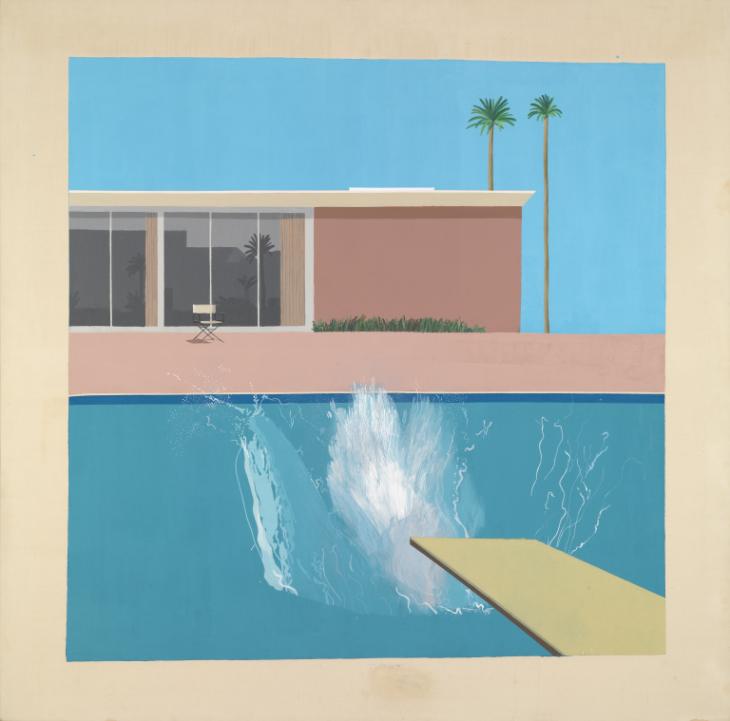
A Bigger Splash 1967 David Hockney born 1937 Purchased 1981 http://www.tate.org.uk/art/work/T03254
David Hockney, A Bigger Splash (1967), acrylic on canvas. Click to enlarge.

I have chosen David Hockney’s painting, A Bigger Splash (1967) from the Tate Britain collection, to accompany a new poem by Molly Rosenberg. The connection is perhaps rather tenuous, but both the poem and the painting deal with absence.

In Molly’s sensitive poem, a personal loss is registered and there is a tense equilibrium between the absence of one life and the presence of another. Hockney’s composition, however, captures the sad, dreary perfection of a Californian day by the pool. Here the pastel colours are deliberately drained of life, and the hard geometrical edges of the draughtsmanship are used to highlight the lifelessness of the scene. What is missing from this painting is the richness of life, there is no hint of a body anywhere. The splash that occurs is tantamount to an attack on the vapid soullessness of the scene, an act not of vandalism but of defiance and rebellion, a yearning for life.


Missing out

Glint of shining Aqua
At times almost blinding.
A boy figure stands
At the edge of the pool.
Elongated limbs that will stretch
With the promise of years to come.
The grandchild he so longed for, yet never saw.
Impatient, he left before age could claim him.

Corn-coloured hair ruffled beneath the surface
Drifts like weeds on the riverbed.
Honeyed limbs, silky smooth
Bejewelled with crystal drops.
He’d have held your small soft hand in his.
Delighted as you tightly clasped
your arms around his neck.

Molly Rosenberg

Hall Place – a fragment

Hall Place


Hall Place

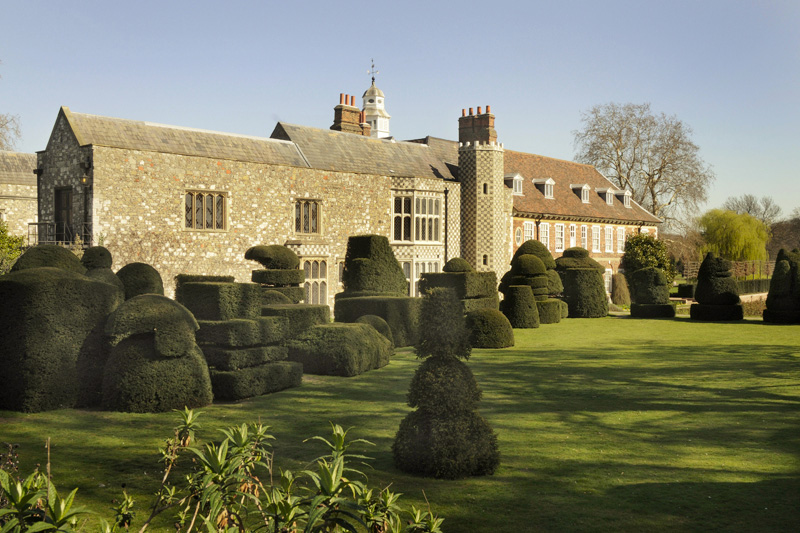
Mansion by the Cray
               17th century red brick
conjoined to Tudor checkerboard
               of flint and rubble
A rectangular rose garden
               sweeps down to the river
So many years of my life
               drained away here
Across from the topiary
               a wide open pasture
where families graze
               where lovers lie
in the summer-long grass
               where the restless wander
up to the rockery
               wormwood and wild garlic
poinsettias and marigolds
               It’s a place to visit
when life no longer crowds you out
               or weighs upon your shoulders
its trees have known generations
               and sheltered them
with kindly indifference
               from scorching summer suns
from sudden seasonal downpours
               Ducks abound—
one of the main attractions
               their ugly offspring
reminding us that quite possibly
               we may with age improve
Only the majestically sumptuous swans
               keep their distance
aristocratic to the core
               their blood never mingling
never consorting with lesser species

Over the weir
               the waters rush
creating a stream of brilliant white foam
               the suds of which
gradually subside
               into a mirror-smooth surface
These waters once held
               her reflection
her short dark hair that barely
               touched her shoulders
held our reflection as we kissed :
               into these waters
we poured such innocent love

                perhaps our dreams
and as evening fell
               home we tramped
hand-in-hand
               across the narrow
gravel pathway
               back into the abrasive
bustling world
               in which so little
stands still for long
               in which next to nothing
not even love
               lasts forever

John Lyons

Madeleines – a Proustian experience

SONY DSC
Madeleines

In Marcel Proust’s monumental study of voluntary and involuntary memory, In Remembrance of Things Past, the narrator, now an adult, describes how the taste of a madeleine cake brings flooding back to him the days of his youth in Combray where he grew up.

So what better for a dreary Bank holiday Monday monsoon than a fine cup of tea with madeleines to dip, if you so desire, associated hopefully with the memory of an August Bank holiday in days gone by when the sun shone.

Here is the recipe I use, and it never fails. And if you want to enjoy the Proustian experience, see the extract from the novel below:


For 12 madeleines – Preparation time 20 min.

Ingredients
75g melted butter
75g sugar
75g wheat flour
1 large egg
2 tsp baking powder
1 tsp rose / orange blossom water (optional)

Method
Pre-heat the oven to 200 C.
Mix together the egg with the sugar, then add the rose / orange blossom water.
Add the flour and the baking powder and stir well.
Add the melted butter. Stir well.
Pour some mixture in the madeleine mould. Make sure you don’t fill it to the top.
Bake for exactly 10 min.
Keep an eye on the madeleines so they don’t burn.

When done, take the madeleines out and leave to cool a little before you unmould them.


From Marcel Proust: In Remembrance of Things Past

Marcel_Proust
Marcel Proust

Many years had passed during which nothing of Combray, except what had to do with the theatre and the drama of my going to bed there, had any existence for me, when one winter’s day, as I arrived home, my mother, seeing that I was cold, offered me some tea, something I didn’t normally drink. At first I refused, but then, for no particular reason, I changed my mind. She sent out for one of those short, plump little cakes called ‘petites madeleines,’ which look as though they’ve been moulded in a fluted scallop shell. And so, tired after a tedious day with the prospect of a depressing day to follow, I mechanically raised to my lips a spoonful of the tea in which I had soaked a morsel of the cake. No sooner had the warm liquid, and the crumbs with it, touched my palate than a shudder ran through my entire body, and I stopped, intent upon the extraordinary changes that were taking place. An exquisite pleasure had invaded my senses, but individual, detached, with no hint of what had caused it. And at once the vicissitudes of life had become indifferent to me, its disasters innocuous, its brevity illusory—this new sensation having had on me the effect which love has of filling me with a precious essence; or rather this essence was not in me, it was me. I had ceased now to feel mediocre, accidental, mortal. Where had it come from, this overpowering joy? I was conscious that it was connected with the taste of tea and cake, but that it infinitely transcended those flavours, could not, indeed, be of the same nature as theirs. Where had it come from? What did it mean? How could I grasp and define it?

. . .And suddenly the memory came to me. It was the taste of the little piece of madeleine which on Sunday mornings at Combray (because on those mornings I didn’t go out before mass), when I went to say good morning to her in her bedroom, my aunt Léonie would give me, dipping it first in her own cup of tea or tisane. The sight of the little madeleine had recalled nothing to my mind before I tasted it; perhaps because I had so often seen such things since, without tasting them, on the trays in patisserie windows, that their image had dissociated itself from those Combray days to take its place alongside others more recent; perhaps because of those memories, so long abandoned and put out of mind, nothing now survived, everything was scattered; the shapes – including that of the little scallop-shell of pastry, so richly sensual under its severe, devout folds – had either been obliterated or lain dormant so long that they had lost the power of expansion which would have allowed them to resume their place in my consciousness. But when from a remote past nothing survives, after the death of people, after things have been destroyed and scattered, still, alone, more fragile, but with more vitality, more ethereal, more persistent, more faithful, the smell and taste of things remain a long time, like souls, ready to be recalled, waiting and hoping for their moment, amid the ruins of all the rest; and bear unfaltering, in the tiny and almost impalpable drop of their essence, the vast structure of memory.

Adapted by John Lyons from the Scott Moncrieff translation of 1922 

This road. . .

This blog is primarily dedicated to the writing and the translation of poetry, although during the so-called ‘silly season’ of the summer, I have strayed and wished to experiment with other types of writing, not excluding some stretches of straightforward nonsense which I have categorised as drivel. Some of this drivel, the story of Jonah and Anna-Belle, for example, has served its purpose as a sort of catharsis.

Furthermore, (and perhaps there is no need to state the obvious) I am no art critic, and it may have seemed a little presumptuous on my part to offer my views on a handful of paintings. Nevertheless, I have dared to write about those paintings that did catch my eye during visits to London galleries, in the knowledge that although I might be completely misguided in my interpretations, at least I have expressed my belief in the fundamental value of art. It has been a valuable exercise for me at least.

Writing is central to my life, and it is the activity most capable of lifting my spirits if I ever feel dejected. The moment I begin to write, the world around me disappears and I remain totally focused on the lines in front of me. That does not mean to say that whatever I write is necessarily of any value to anyone other than myself. The lines below were written this evening.  


This road

This road takes me back
            into myself
back into my country
          into my intimate landscape
along paths where wheat and barley grew
          where oak was planted
where elm and chestnut
          offered me shade
and where love was once possible

This road takes me
          past a home I once occupied
beside ditches and warrens
          and streams that meandered
carelessly into the future
          a home where I was content
and where one road
          led naturally to another
to where a friend once lived
          or to where I first kissed a girl
her body pressed tightly
          against mine
so that I felt the purity
          of the energy
that coursed through her veins
          that made her skin glow
and I savoured the tenderness of her lips
          as I looked into her eyes
on a day that I wished
          would never end

In a sense it never did

This road took me to Paris
          to Madrid and later
to destinies far beyond
          to climates I never imagined
and to challenges I never knew
          that I would face
But this road remained
          always a path
that led back
          to the home I loved
and to those I loved
          with all my heart

John Lyons

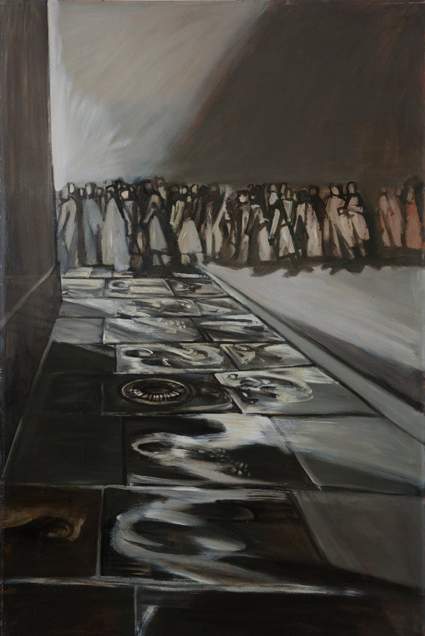
Edward Middleditch – Crowd, Earls Court (1953)

The English artist, Edward Middleditch (1923–1987), was a painter, draughtsman and printmaker and one-time Keeper of the Royal Academy. Despite initially being a conscientious objector at the outbreak of World War II, he did eventually see active service in France and Germany with the Middlesex Regiment; he was wounded and also received the Military Cross

crowd
Crowd, Earls Court, 1953 (oil on board)

Middleditch took his motifs from the natural world: grasses, water, feathers, opening petals, reflections, and in particular he sought to capture the way observed patterns in water currents and light gradually shift.

This preoccupation can be seen marvellously in his canvas Crowd, Earls Court (oil on board, circa 1953). In this study, what captures the eye initially are the swirling patterns of light on the pavement in the foreground. The human subject, relegated to the second plane, is a tightly packed crowd that appears to be trying to flee from the canvas. Beyond the crowd, to the left, there is a burst of light that emanates from an unseen source behind the wall. The entire energy of the painting travels up from the pavement, up towards the crowd and beyond, as though the crowd is being swept along by the power of the light. The clothes worn by the figures in the crowd, although indistinct, suggest something Biblical, and one wonders whether the explosion of light that appears to be attracting them may not be a Messianic figure.

The subdued use of colour further enhances the power of the draughtsmanship in this composition that I found to be truly mesmerizing. I’m sure that once you have seen this richly suggestive painting for yourselves, at Tate Britain, Earls Court will never look quite the same.

A sad note from the editors

Schreck
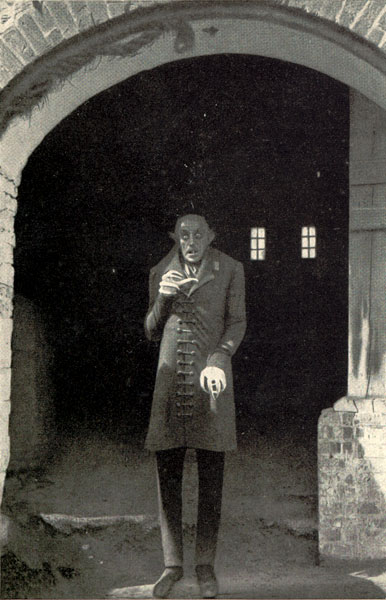
Count Dracula at his country estate

We regret to announce the immediate cessation of our agreement with the author of the Jonah and Anna-Belle saga. It would appear from everything that Dr Van Helsing has told us that our poor colleague’s recovery may at best take a lifetime, and at worst may never happen. 

In addition, recent figures have shown that the readership for the installments of this sorry saga has dwindled almost to nothing. It seems that the busy busy people of today’s digital Candy Crush age have no interest in the lives and loves of our eponymous heroes. Some will even go as far as to say “good riddance” when they read this news. So be it! Jonah and Anna-Belle are now doomed to go their separate ways for all eternity!

The pastiche of Bram Stoker’s language used in the portrayal of the Dutch Dr. Van Helsing, (originally summoned to Whitby by Jonathan Harker to protect Lucy and Mina from the attacks of Count Dracula), has fallen particularly flat. It may have been worth a try, and there is no dishonour in admitting that it failed miserably to capture our readers’ imagination. Bram Stoker’s ground-breaking Gothic novel is, however, still heartily recommended.


Dr Van Helsing’s bulletin on health of Jonah author

The distinguished Dutch psychiatrist, Dr Van Helsing, has kindly just sent us this bulletin on the health of our dear colleague, the author of the saga of Jonah and Anna-Belle, who has been returned to the secure NHS facility in Whitby, following a two-day absence, after absconding from those premises. Some readers may recall that he was found only last night in the vicinity of Bromley South railway station.

In the interests of forensic science we have refrained from sub-editing the good doctor’s English for fear that we might reduce the powerful impact of this woeful narrative:


Whitby secure NHS facility, Saturday 29 August 2015

window bars
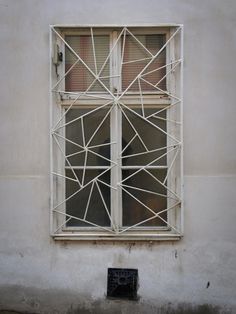
Exterior view of window bars

So I go pay visit to the patient in his room, and he is pale and thin and his green eyes are drawn and he is sit on the corner of his bed closest to window. He don’t react when I enter his room and so I stand in silence and I observe his mannerism. First he count the fingers of the left hand “One, two, three, four, five.” He stare at the fingers and say: “Nothing changes.” Then he repeat the exercise with his right hand, like so: “One, two three, four, five.” And again he say “Nothing changes.” This procedure he repeat a number of times as if never going to stop.

And now I step forward and I ask him, “My dear boy, what never change?” Here he look at me with those deep sorrow filled eyes of his and he say: “Nothing. Nothing changes.” And he turn and look away out the window. “Who is Jonah?” I ask him. He answer without look me in the eye. “Jonah is a sailor.” “And Anna-Belle,” I ask. “Who is Anna-Belle?” He pause, he turn now to look me again in the eye and he say. “Why Anna-Belle is the girl of Jonah’s dreams, of course.” “Yes, yes, my dear boy. But do these people really exist? This Jonah and this Anna-Belle, are they not mere figleafs of your fertile, dare I say febrile imagination?” Now he look at me hard and enquiring, from head to toe he look at me, and then he say: “Of course they are real. I created them, and they are real and I hate to see either one of them suffer.”

I am truly amaze and baffle, I never see a case like. So dysfunctioning, so severe! He appear not to distinguish between reality and the stuffing and nonsense of fiction, so it is as though this Anna-Belle and this Jonah are living and breathing humane beings. Most astonishing for a man of his quite obvious sensitiveness and intellect. Most concerning.

So I say to him, thinking to go along with his delusion in order observe the path it lead, I say to him, “Tell me about this Jonah and this Madame Anna-Belle. Why you so worry about them, why you absconded from this place? What you hope to achieve?” Now he smile at me and open up, and relax spread wide upon his gentle features and he take deep breath and he talk: “Jonah and Anna-Belle were old friends from their childhood days. They grew up more or less side by side in two families that were very close. But life separated them and for years and years they never saw one another nor heard a word. Until one day they meet again and discover that neither of them is currently married. And Jonah sees that Anna-Belle is just as pretty and lively and feisty as ever she was in their youth and he feels the old spark reignite and he falls for her. They have this great common history, and as the days pass, the banter between them when they converse is electric and it is as though they were never apart, and it feels too that they should never have parted and that now they have rediscovered each other they should be together for ever and ever, and part no more. Nevertheless, there is a fly in this ointment, an imbalance, if you like: despite the deep deep feelings that Jonah professes to her, Anna-Belle does not fully reciprocate, and she insists on dating someone else and fails to respond to Jonah’s heartfelt pleas.”

Here this delicate over-sensitized soul pause to wipe a tear from his left eye, and I take advantage of the moment to jump in and I say to him, “But my dear boy. This is the stuffing of fairy stories, the stuffing of Hollywood. You surely cannot believe this ‘happily ever after’ finale crap, it is like the believing in the Santa Klaus or the Teeth Fairy, or the little leprechauns at the end of the Irish gardens.

Suddenly he grow tense, his fists clench. He lift his little green eyes and point them dagger-like right into mine and he say: “Dr Van Helsing. If you are not going to take me seriously, I will not say another word to you. Ever. EVER!”

At this point my face redden slightly and a cold sweat come upon me and I realise I push too hard: a mark has been stepped across and it better to press no further in my elucidations. And so I say to him in my best bedside, “Yes yes, now you should get some rest, my dear boy, and not overexert your mental facilities. We can continue our conversation in another time.” And so diploma-like I withdraw, but as I so do I perceive that his eyes have once again swung round to focus upon the window, and upon whatever else he see beneath the blue sky way beyond the bars. Such a sad sad situation! Where will it end?

Signed Dr Van Helsing, M.D.