What is known

What is known

Say that it is she alone who matters
         she who moves through her day
with delicate passion and decision
         Say that she has known blue skies
and wide oceans and yet faced
         all the challenges
of a fragmented life and a love
          – perhaps more than one –
that turned to dust
         despite her truth
and despite her beauty

Say that in her inner strength
         she has much for which
to be thankful
         much to celebrate :
throughout phases of the moon
          the changes of the light
and the waywardness of seasons
         she has kept to her course
without flinching

She was born to be
         an enlightened rose
to enhance the freshness
         of green leaves and to stroll
to the sound of gulls
         across a sun-bleached Atlantic beach
with grace and dignity
         Say that she is laughter
and tenderness and that
         in her reflection
there is no shadow

Say that she is everywhere to him
         say that she is everything
and add that she has brought calm
         to a restless heart
that she has brought music
         and liberated unconscious permissions
Say that in his mind
         there are words for her
that he has yet to express
         words with which to reflect
the visible elements
         of her gentle soul

John Lyons

Cusp

Cusp

First taste of winter
cool breeze from the north

days are shorter
nightfall falls sooner

catches us unawares :
at daybreak condensation

on the windows
Where did the summer go

where did the time
the mystery of new love

the hand held
the lips kissed

that innocent belief
that all would be well

well and truly well
with the world ?

John Lyons

Chagall by Blaise Cendrars

Blaise Cendrars by Modigliani


The French poet, Blaise Cendrars (1887-1961), lost his right arm during the Battle of the Somme in 1915. An important member of the Montparnasse community of writers and artists, Cendrars was an inspirational influence on many American writers, including John Dos Passos and Henry Miller. His friendship with the painter, Marc Chagall, is reflected in the poem below.


Portrait – Marc Chagall

He sleeps
He wakes
Suddenly, he paints
He takes a church and paints with a church
He takes a cow and paints with a cow
With a sardine
With heads, hands, knives
He paints with a bullwhip
He paints with all the dirty passions of a small Jewish town
With all the heightened sexuality of provincial Russia
For France
Without sensuality
He paints with his thighs
His eyes in his arse
And suddenly it’s your portrait
It’s you reader
It’s me
It’s him
It’s his fiancée
It’s the local grocer
The milkmaid
The midwife
There are tubs of blood
The newborn are washed there
Insane skies
Mouths of modernity
The Tower as corkscrew
Some hands
Christ
He’s Christ
He spent his childhood on the Cross
He suicides every day
Suddenly, he no longer paints
He was awake
Now he sleeps
Chokes on his tie
Chagall’s astonished to be still alive

Blaise Cendrars

(translation by John Lyons)


We who in winter

We who in winter

We who in winter
         wrap ourselves
in warm wools
         expose ourselves
to the summer sun
         with wanton abandon

Life in the particles
         that vibrate
in the gestures
         that carry us forward
and in the love that burns
         through us
a wildfire of emotions
         a necessary desire
to conquer and to consume
         to contain
and to consummate

Love is not lip-service
         it creates its own cosmos
its own culture
         as it propels the limbs
into essential action
         Though it thrives
in time and space
         it lives beyond them
and fears neither
         the turbulent night shadows
nor the cold crystal cloud
         that falls in flakes
upon the unwary soul

Knowing
         doing and being
are the lover’s
         perennial watchwords
sea        earth     sky
         water    fire    and air
elements intended
         for coalescence
wholeness
         out of singularities
and its disclosure
         comes from words
from the intimate fabric
         that binds the beauty
of the molecular rose
         to the melancholy thorn

John Lyons

Quiet house / calm world

Quiet house / calm world

Quiet house
         calm world
warm summer night
          : if she is there
it is one world
         if not
it is another
         I reach to touch
her cool soft skin
         She sleeps
I hear the purr
         of her breath
beneath the sheet
         her body shifts
Restless
         she grapples
with unthought
         thoughts
seeking reconciliation
         with herself
a resolution
         Her life
is a proposition
         in which rooms are filled
with music and art
         her day is a sunshine
an incantation
         In her sleep her lips move
as she mouths her dreams
         she is dialogue

A red sky above the city-scape
         time adrift by the river’s edge
It is always only ever now
         and the heart is precise
momentary
         a pulse of possibilities
love is what the future holds
         one body folded into another
solitude is for the planets
         I brush her hair aside
her eyes open
         and I enter
it encompasses all
         there is no exit

She sat in the chair
         sipped her coffee
birds had gathered on a barge
         moored mid-river
she sat and shared herself
         with time
I will own this day
         she said
I will be this day
         I will make it mine
and I will be yours
         I will locate my eyes
and fix them upon you
         never lose sight of you
I will take a line
         from your words
and it will be my mantra
         I will romance you
in ones and twos and threes
         and I will be
what beauty is to you
         and I will be your truth
and I will live up to it
         for all time

John Lyons

In the beginning

In the beginning

there was blue
         there was the past
there was the horse
         and the clown

and a white rainbow
         there was a word
and the word was blue
         an ocean that filled
the earth and the sky
         and all things swam
the sky in the sea
         the sea in the sky
man in woman
         woman in man
all locked in the kiss
         of coupledom

there were mountains
         and valleys and rivers
and wide lakes
         and fields in which
wheat grew and houses
         where bread was made
there were roses in bloom
         orchids in the backyard
there was all that was
         ever needed for life
and for love
         fish from the blue depths
fruit from endless orchards
         belief in the goodness
of all who are true
         to their word

In the beginning
         there was knowledge
but knowledge grew
         it enveloped the earth
it brought peace
         it buried the past
it rendered hope
         redundant and
brotherhood
         and sisterhood
soon became
          bywords

In the beginning
         there was love
but love too grew
         and covered
the face of the earth
         entered the genome
and so asserted
         its authority
as the essence
         of being
and its expression
         our second nature

In the beginning
         there were angels
who sang and gave glory
         to the human spirit
that conquers all
         when it embraces love

Observe the lilies
         of the field
pure in the light
         hearken to the sparrows
that laud life
         in their simple song
this is the beginning
         of the beginning

John Lyons

The social life

The social life

The serrated edge
         of gruff fox voices
chattering
         late into the night
celebrating
         partying
under a lacklustre
         moon

Occasionally
         the tone rises
as though
         tempers have flared
teeth bared
         but it’s probably
just high spirits
         foxes shooting the breeze
after a hard day’s graft
         letting it all hang out
—and who could begrudge them
         that moment in time ?

John Lyons

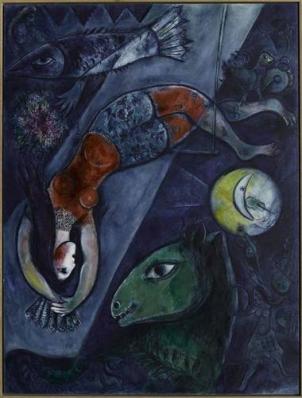
Chagall – early impression

chagall

Chagall – early impression

Chagall’s blue
         sea of aching origin
transmigration
         of genes
across Europe
         across continents
flight of all things
         in constant flux

Swirl of blue vortex
         earthwomb
from which all life
         emerges
fiery cadmium placenta
         a canvas dripping
with minerals
          Mother and child
in the hills above Nice
          a brush with destiny
instrumental colour
         the hands from which
melody flows
         Pegasus dashing
across the seasky
          repeated layers of love
tenderly applied
         the groomed bride
floating within her sex
          circles of satisfaction
zones of curved comfort
         joy inviolate
against the terror
         of time’s crude cross

John Lyons


Parallelogram

Parallelogram

Hushed beauty of the red rose
and yet she gasps in awe

breathes in the scent
and sighs deeply

soft petals that will be revealed
to unborn generations

that will be fed into fresh narratives
of love and tenderness

A rose carried from place to place
a gesture of the hand and of the heart

Love being that warm condensation
that repairs the shattered hours

that soothes the haunted imagination
A bloom unblemished amid the settling dust

At first light a silhouette a shade
in the receding shadows of the night

the blush of passion faded on their flesh
content they lie entwined at last at rest

John Lyons

Noises, by Juan Gelman

Juan Gelman
Juan Gelman

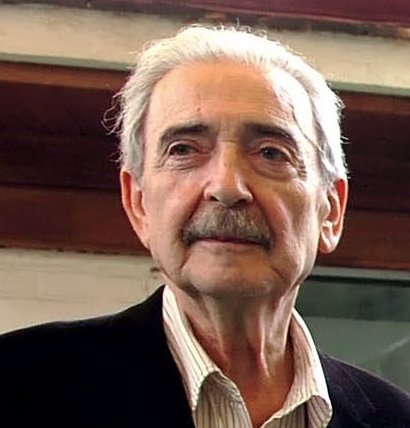
The poet Juan Gelman was born in Buenos Aires in 1930. The third son of Ukrainian immigrants, his father, José Gelman, had been a social revolutionary who participated in the 1905 revolution in Russia before finally settling in Argentina.

Gelman himself was an ardent political activist and in 1975 briefly became involved with the Montoneros, later distancing himself from the group. Following the 1976 military coup, Gelman was forced into exile. In 1976, his son Marcelo and his pregnant daughter-in-law, Maria Claudia, aged 20 and 19, were kidnapped from their home. They became two of the 30,000 disappeared, the people who vanished during the period of the military junta and the so-called Dirty War.

In 1990 Gelman was taken to identify his son’s remains (he had been executed and buried in a barrel filled with sand and cement). Later still, in 2000, Gelman managed to trace his granddaughter, who was born in a clandestine hospital before Maria Claudia was murdered. The baby had been adopted by a family that supported the military government. Maria Claudia’s remains have not been recovered. The poem below was published in 1991. In 2007 Gelman was awarded the prestigious Miguel de Cervantes Spanish language prize. He died in 2014.  


Noises

those footsteps are they looking for him ?
that car is it stopping at his door ?
those men in the street are they lying in wait ?
there are all sorts of noises at night

in the midst of those noises day breaks
nobody can stop the sun
nobody can stop the cock crowing
nobody can stop the day

there’ll be nights and days he might not see
nobody can stop the revolution
nothing can stop the revolution
there are all sorts of noises at night

those footsteps are they looking for him ?
that car is it stopping at his door ?
those men in the street are they lying in wait ?
there are all sorts of noises at night

in the midst of those noises day breaks
nobody can stop the day
nobody can stop the sun
nobody can stop the cock crowing

Juan Gelman

(translation by John Lyons)