Words make us they are the flesh of our hopes our dreams our expectations nothing exists without articulation not the sea not the shore not the salmon rising in the river nor the red rose that blooms in your garden and each day each moment is the creation of that moment and the love we make we remake time and time again because life is always one step ahead of history and so I long for your kiss as though I had never been kissed before : long for the soft curve of your body within my grasp
we never tire of roses much less of love life is eternal composition love its one true expression words merely the medium
The essential poem one that relates the clouds and the trees to an earth that would otherwise be barren the words that enter into the very dynamics of what it is to exist and to be breathingly alive attuned to the beauties of light that plays on the calm sea surface or the breeze that ruffles the leaves of the forest
words that make sense words that draw colours together and moves shapes into a moving composition in which the subtle harmonies outlast the darkest thunder
the lover chooses words out of desire out of hunger for the opulence of flesh upon willing flesh and a kind of fulfillment that makes sense of the horizon and the movement of planets of wheat raised from the soil that feeds the necessitous soul : the essential poem is a song condensed from loving energies informed by lip and finger a tactile clairvoyance that knows from the softness of her breast that life without love is utter desolation
Mid-September walking down Fitzjohn’s Avenue in Hampstead pavements carpetted in dry brittle leaves autumn with a vengeance and I think be articulate be vocal be demonstrative and beware you may indeed find what you are looking for and yet lose what you have money is a broad church ambition too and love is not a lifestyle
Then on to Maresfield Gardens to the house where Sigmund Freud lived his final years and which he called ‘our last address on this planet’ and I wonder where he thought he was headed perhaps to the Western Lands of Egyptian mythology and how we are to the best of our knowledge the only conscious beings in the universe and for that reason its centre although it has no centre and with consciousness the need to express to understand and share our inner thoughts and our feelings to represent them in language and in every conceivable art to communicate through broad verbal gestures and I read Sharon Olds and the outpourings of raw emotion in her poetry as daughter mother and partner acutely perceptive and confessional centred as she is on the intimacies and obsessions around her sexuality and filled with vital images that remind me that I too have seen healing sunshine penetrate another body seen the light absorbed in the hair and under the skin and into the smile and known that love is not an object nor an attitude of the will or the mind but an irresistible gravitational urge or movement towards another being I too saw one such sit legs crossed by the open window and watched as recollections of the past percolated through her sensibility her hair swept back and on her thin lips an expression of unfinished business and why this world in which so little is ever truly owned except perhaps in the nakedness of love and the conviction that it is the only thing that mitigates against the final handful of ash and dust tossed pointlessly
from the Brooklyn Bridge or some such height
Late swell of summer sun with the beauty and silence of vast autumn migrations abandoned lives hung in wardrobes epic manifestations of the providential body and each word each chosen action weighed in the balance praying for the wisdom God help us to know love when we see it to respond to love when we feel it and again why this world and was any of this all the chaotic stuff of years anything other than really necessary to quote Wallace Stevens a thoroughly necessary life and a necessary love and longing to lie secure and at ease in the accuracy of her necessary arms and to be finally acknowledged
It is words that bind us words that shape our lives words that capture our gestures words that guide our minds out of the darkness The rose for all its beauty is inarticulate and carries no inherent message its wordless script is but a summer long its status springs entirely from the words of our imagination in love or sorrow it assumes the mantle that our emotions assign Without the rain there is the sadness of the rain that haunted the verse of Verlaine the sobbing sound of notes from the violin falling upon the silent city a city that is perhaps no more than a congregation of words a text of intelligence a single multi-tongued voice and so it goes—words words watery words awash with meaning words in which reality is pinned to the ground words with the aid of which our dreams reach for the stars
Poetry is a way of looking at the world of scrutinising the world in all its facets the world and its shadow its black clouds and its bleached bones as well as the flowers and the trees and their shadows
a man a woman and a blackbird and their shadows a verbal cross-examination of what is seen and felt and thought and touched the pursuit of truth and beauty
momentary beauty immortalized in the mind of mortal flesh So much depends upon this unique art a red wheelbarrow or a Grecian urn so much depends on the energies harnessed
the bird a nest the spider a web man poetry one crystal-cut word in relation to another the fraternal art that brings daffodils and roses and a blackbird whistling that throws off the cowl of winter and ushers in love
Beauty is dangerous as it is troublesome the embodiment of truth in the memory it defies all oppression defies all oppressors and refuses to take no for an answer
the energy that binds one thing with another the energy that moves in me and through me and all around me the energy that I carry forward into new enterprises new manifestations of myself and my interaction with all the other energies that surround me
The pulse in all things in Attic shapes in the rose in her lips and in my song
When was it Wallace asks that the particles became the whole man ?
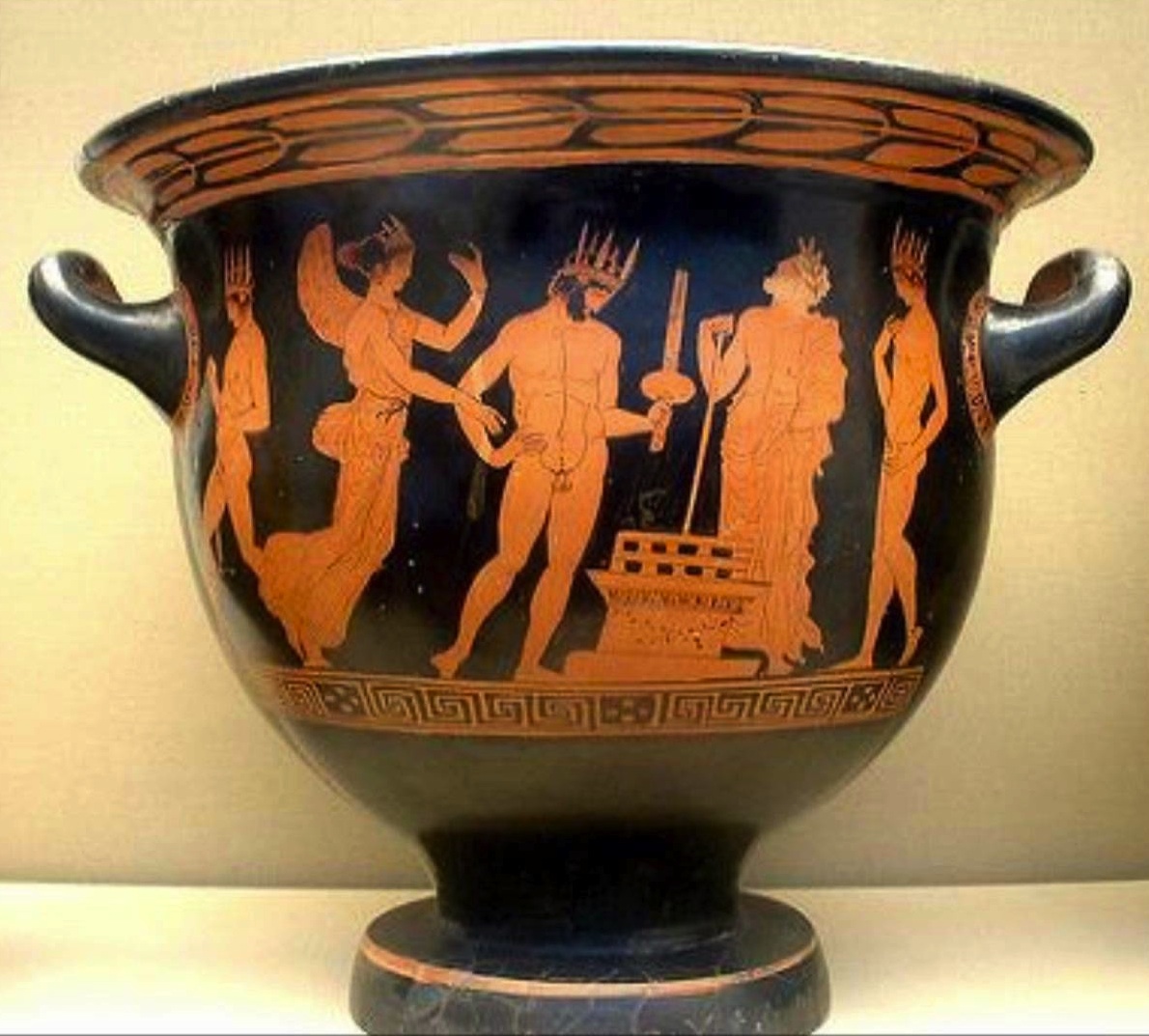
Whose hand shaped the clay into what became the Grecian urn ? Clay working upon clay Whose hand hardened it in the fire so that it would be there for all time ?
A breathing human passion The energy to create and so direct those energies to a precise purpose earth to earthenware clay to Keats poet to poetry truth to beauty
To say that we live in prehistoric times is no joke : what is history if not dead time a past buried in a chromatic wilderness in which nothing may be reversed nothing achieved ?
A burnt match floating in a greasy pool of rainwater a hair on a pillow case now lost beyond extinction a lost lover who may be held in the memory for only so long before the breath fades before the shifting sands envelop every recollection
Be minimum with your words economic in your actions resolve to move forward to emerge from the tunnel into the hurly-burly of the present write a new text of the world full of warmth and affection : the past is a scribble of fret and fear and fate that cannot be absolved
Make your world personal exercise the courage of your convictions and adulterate nothing Hers was a beauty that time could not slay an angel of reality on the edge of night my Morning Star
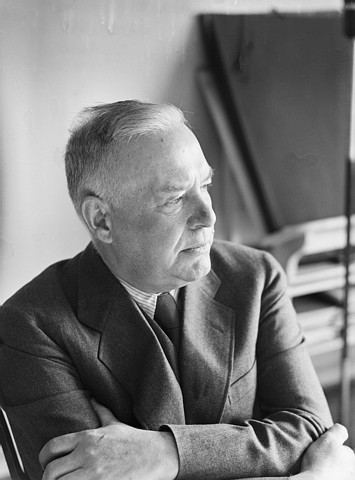
Often when I am faced with the challenge of writing a poem in the moment, I will turn for inspiration to the poetry of the great American poet, Wallace Stevens, whom I featured in an earlier post on this blog, (see, “A study of two pears”).
This morning has been no different. Initially I considered writing a few lines on the painting, “Studies for a portrait of T.S. Eliot,” by Patrick Heron, which I saw recently in the National Portrait Gallery, but I decided against this as it would require further re-reading of Eliot’s poetry and would therefore take too much time. Instead I turned to the Collected Poetry of Wallace Stevens and read two short poems. The first, “Adult Epigram,” is copied below: the second, “Men Made Out of Words,” is available on the internet.
What one learns from the work of Stevens is that poetry is many things and that no single definition can do it justice. Today he reminds me that poetry is often human revery, propositions which come to us as we meditate on our experiences, propositions torn by our dreams amid the clash of sparring realities: nevertheless he concludes that the whole human race is a poet, the whole race being made out of words, adding that poetry may not always make immediate sense but that this is not the fault of poetry and it is a strength rather than a weakness.
ADULT EPIGRAM
The romance of the precise is not the elision Of the tired romance of imprecision. It is the ever-never-changing same, An appearance of Again, the diva-dame.
Wallace Stevens
What Lies Beneath
What lies beneath the veneer of words what thoughts what feelings what expectations ? I read myself I have become my own book my own text my autumn and my winter months my future and my past all wrapped into this present These are mere words and yet I feel them at times as caresses at times as mortal wounds the casket of my body wracked with discomforts : and yet hope flowers still desire and love well up within me
Life and its propositions all in the mind I hear the wood-doves sing against the backdrop of waters
that rushover the weir I hear the howl of the wind lashing against my skin
If there is justice in the world where is it concealed ? If there is peace who has purloined it ? If there is love who will reveal it and live it to the hilt untainted by niggard judgments and petty jealousies ?
Poetry is the sensethat the world does not always make : it cuts
to the quickand is of the essence I once glimpsed in the shallow book of her affections the facsimile of a smile the feigned beauty of a gesture sensed the sullen softness of a kissnever meant to be given beheld a bed of perfumed lace and Egyptian linen made ready for the maze of love
only for that love to be denied
John Lyons
Note: this poem is slightly revised from the text posted earlier this morning.
 johnjosephlyons