Blackberries – a seasonal poem

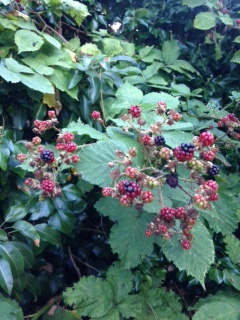
blackberriesThe Japanese haiku is a poem which replaces a few simple brushstrokes of the painter with a few simple words. It is a style of observational poetry built from short strokes of language.

Art is about observation and consciousness and the transference of that consciousness into an expressive form to create an aesthetic object. Sounds complicated, but it can be as simple as the representation of a bison on a cave wall, or as a poem by Molly Rosenberg, inspired by the picking of seasonal fruit.


Blackberries

mary_berry

Tearing skin
on sharpest thorns,
spots of crimson
stained on white shorts.
Deep green leaves,
folded, curled,
hiding the treasure
embedded within.
        A glint
of purple blackness,
first a single berry
then a cluster,
more and yet more
appear amid the cruelty
of the thorns
and the gentleness
of the leaves.
After the stabbing
and the pain
the sweetness
of the reward.

Molly Rosenberg

The Old Man and the Sea

Hemingway_book“He was an old man who fished alone in a skiff in the Gulf Stream and he had gone eighty-four days now without taking a fish.”

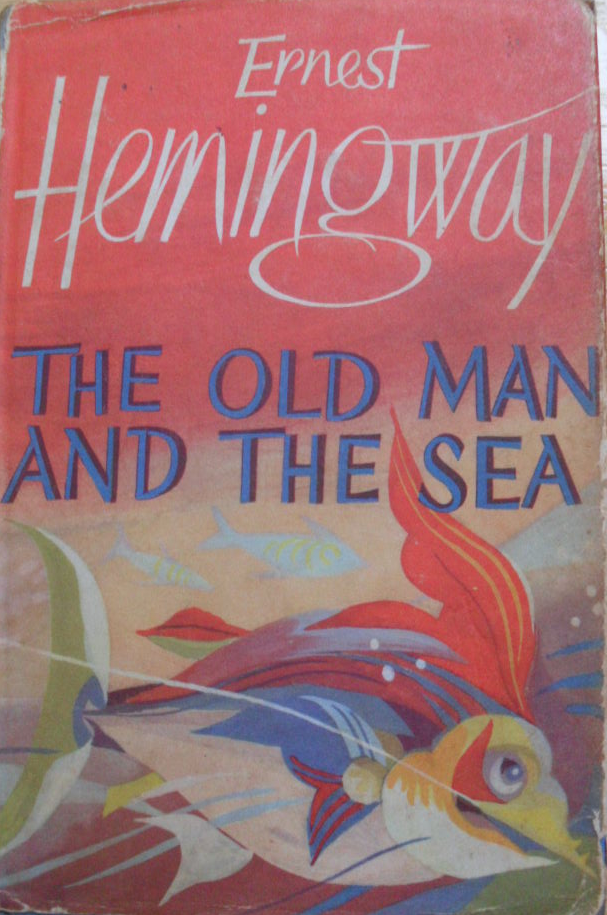
I first read the opening lines from Ernest Hemingway’s novel, The Old Man and the Sea, in 1963. My father had come home from the school where he taught English and handed me a brand new copy of the book. He said: “John, I think you’re going to like this. Give it a read.” I still have that book (pictured) and have read it many times since, and it is a text that never ceases to bring me great pleasure. It is the last book Hemingway wrote and quite different from any of his previous work. It has the stature of a book from the Bible.

Hemingway tells the tale of Santiago, an aging fisherman who, having gone for such a long time without landing a big fish, has lost all credibility in his community and all faith in himself. Fishing all alone one day, he does finally hook a huge marlin. After a fierce struggle, he defeats the fish and lashes it to the side of his boat, but he then has to battle the elements and ward off the attacks from predatory sharks that wish to feed off the fish. By the time Santiago reaches the harbour, little more than a carcass survives, though the head, the backbone and the tail remain as testimony to the immensity of his catch. The following day, Santiago’s fellow fishermen congregate around the skiff to applaud his achievement.

There are many ways to interpret this parable of persistence, but to me the novel has always been about Hemingway’s struggle as a writer, the struggle against writer’s block, the struggle to defeat the blank page and to land a big book that could stand alongside his earlier successes.tribe

By coincidence, in August 2003 I was invited to give a lecture at the University of Passo Fundo in the south of Brazil during a weeklong literary festival. I chose to talk about the inclusion of women in literature, focusing briefly on the writings of Emily Dickinson, Charlotte Bronte and Jean Rhys. On the coach trip taking various participants in the festival from the city of Porto Alegre to Passo Fundo, a Brazilian academic came up to me and introduced me to the writer, John Hemingway, grandson of Ernest. In the course of the week we spoke very little, but on the return coach trip we sat together and in a journey of three hours, we became very good friends and have remained so to this day. John wrote a magnificent memoir of his relationship with his father, Gregory, entitled Strange Tribe. This is essential reading for anyone interested in the Hemingway clan.

Following our first encounter, I did not see John again until I caught up with him in the first week of July this year when I travelled to the San Fermín festivities in Pamplona. But more of that further down the line.

Tomorrow I will post a story I wrote in 1996, centred on the relationship between Gertrude Stein and Ernest Hemingway.

So, is he a healthy eater? Lunch on a plate!

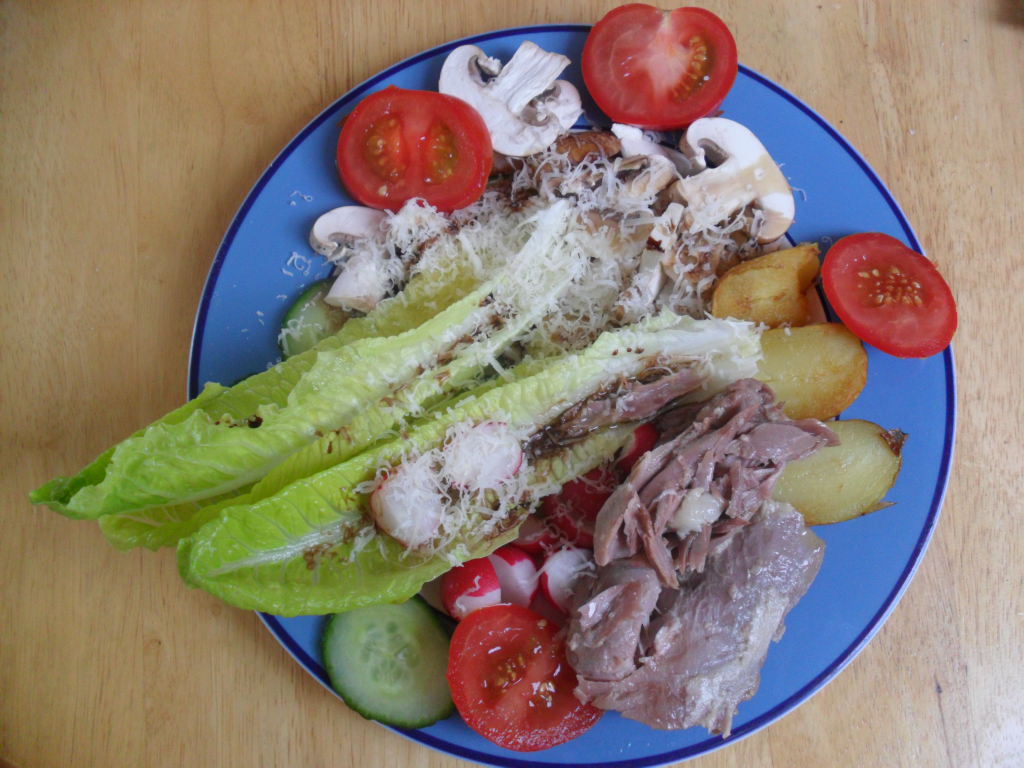
See for yourselves! On the plate (as illustrated):salad

1.5 new potatoes
5 fresh radishes
3.5 cm of cucumber, sliced
3 chestnut mushrooms, raw and thinly sliced
1 salad tomato
6 small Romaine lettuce leaves
1 confit duck leg, skinned and boned
All this topped with finely grated Manchego cheese, and drizzled with a fine balsamic vinegar and Spanish extra virgin olive oil.
Salt and pepper.

So what do you think? Our blogsworth has always found that when the heart is under tremendous emotional stress (you have no idea!), the heart requires the utmost dietary care, and he applies this knowledge meticulously.

Keep on pumping!

Click on image for mouth-watering enlargement!

The Fox and Hounds – a healthy dialogue

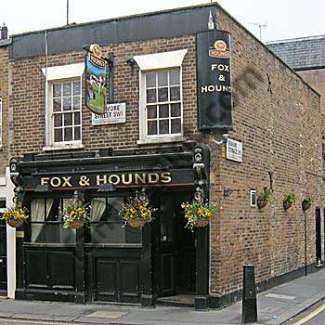
So two old friends, Erasmus and Tom More, are sitting one sunny afternoon in the Fox and Hounds, lovely little Chelsea pub just off Sloane Square. The two mates are ensconced in the cosy blue sofas right at the back, near the dartboard, and they’ve already a had a few, so a nice little argy-bargy is developing. Erasmus is sipping on one of those non-descript completely characterless continental lagers, could have come from anywhere, which is why Tom calls them ‘bastard beers’. He always sticks to the same old same old pint of Irish stout (no names please).


fox pub

TOM MORE: So what I’m saying is. Is. . .
ERASMUS: I heard you the first time.
TOM MORE: No listen, listen up. What I’m saying is that during the War, you know, 1945 and all that, the housing stock was bombed to blazes, right? So come peace, not enough houses, right? Temporary accommodation on all sides, right?
ERASMUS: Yeah, s’ppose so.
TOM MORE: So emergency house building programme, right? Local authority housing going up left, right and centre.
ERASMUS: Yeah, I know but what’s your point, what is your point?
Tom takes a long swig of his beer, emptying it with a final gulp and a belch. He then places his glass down and stares into it for a moment, as though the answer lies at the bottom of the glass, in the dregs.
TOM MORE: My point is. . . my point is this. Who caused the recession? Go on, who caused it? Who caused the banking crisis, go on, go on, who was it?
ERASMUS: You’re going to blame the bankers aren’t you?
TOM MORE: Dead right I am. Look at state of the country, look at what they did. But did they go to the wall? They did not. We baled them out and they still got banks today, ain’t they, us taxpayers baled them out. And then what do we get? In the wake, so to speak? We get bloody austerity, more and more of it. Left, right and centre. And food banks, and more and more kids living in poverty and people unable to afford a decent home to rent, never mind buy.
ERASMUS: But you can’t blame everything on the bankers, it’s a much more complicated situation and you just simplify everything like you did in that dreadful book of yours. Utopia. No-hopia, I call it, more like, cloud-cuckoo land, biggest load of.
TOM MORE: Well there you’re wrong see. I don’t just blame the bankers, no I don’t. I don’t. I blame the politicians too, see. Who allowed the bankers to do what they did, run rings round us, get away with blue murder, although in fact the bankers’ books were all in the red (little joke, sorry)?
ERASMUS: Come off it, what about the world economy, the world downturn, what about Greece, and Spain and God knows where, and China and what about Ireland, yeah what about Ireland?
TOM MORE: Now don’t get personal, leave Ireland out of it for the mo, right, no need to get personal, did I say Netherlands, did I? What I’m saying is this. Is austerity an emergency or not? Is rising child poverty an emergency or not? Is the lack of available affordable housing an emergency or not? Answer me that. What is and is not socially acceptable in this bloody day and age?
ERASMUS: O for God’s sake.
TOM MORE: Answer the bloody question, will you, yes or no?
ERASMUS: No, now let’s change the subject.
TOM MORE: What you mean no? How can you say that? What I’m saying. . . I’ll just say this. . . no. . . no let me finish. . . no please let me finish. What I’m saying, and it’s the last thing I’ll say, promise, what I’m saying is quite simple. War time, they bomb the country to bits, right? Smithereens, economy in ruins, rations, the works. So what do we get? Emergency rebuilding, homes up in record time, free school milk, welfare state and all that. Sixty odd years later the bankers bomb the economy to smithereens and what do we get? Go on. . . tell me. . . what do we get? Zilch, nothing, niets, nichts, nada. Last election, economy on the mend, so-called, and what do we get? More austerity, you couldn’t make it up. And they win, they get elected. . . Jesus wept!

Great little pub, by the way. Won’t hear a word said against. Staff very friendly!

Duane Hanson says howdy!

sackler_cowboy entrance

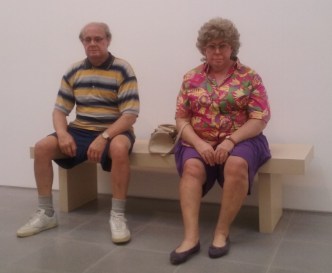
To enter the exhibition of sculptures by the American artist, Duane Hanson (1925–1996), currently at the Serpentine Sackler Gallery, is to enter a world in which the ordinary has been transformed into the extraordinary. Eschewing the world of typical icons, of the rich and the famous, Hanson preferred to capture the beauty of what is familiar, the beauty of those who surround us everyday, on buses, on trains, in the streets, and among the populations that visit museums and galleries. For although these lifelike sculptures portray working-class Americans, by extension they portray everyone of us. Beauty is truth, truth beauty!

This highly political, democratic art is intended to draw attention to the abiding dignity and the nobility of everyman and everywoman, the common people “who don’t stand out”, the voters, the humble citizens, those who engage in unskilled or manual or blue-collar occupations, a house painter, a man who cleans the streets with a broom and hand cart, an elderly couple who in their days of retirement sit on benches in parks or wait for buses, people engaged in ordinary life. There is an installation of children sitting on the floor playing board games with their mother; another of workmen on site in their hard hats.

As one critic has pointed out: “Duane Hanson invites people to see things as if for the very first time, things that they have ignored or simply have not seen because they lead such blinkered lives.” Art adds vision, which is conscious being. Art is enrichment of the human soul, art moves individuals spiritually and emotionally, and all art is an act of solidarity, we’re all in this together!

And if you’re thinking “sounds a bit like Madame Tussaud’s,” forget it, no comparison! The hyper-realistic nature of Hanson’s sculptures results directly from his scrupulous artistic approach. Using polyester resin, he would cast figures from live models in his studio, paying attention to every detail, from body hair to veins and bruises. The sculptures were assembled, adapted and finished meticulously, with the artist hand-picking clothes and accessories. So breathtaking you can almost hear them breathe!

duane_couple

The directors of the Sackler Gallery have said in their publicity material: “Duane Hanson’s iconic sculptures of ordinary people will literally stop visitors in their tracks this summer. Beyond the stunning realism, the power of Hanson’s work lies in his unwavering focus on and sympathy for the human condition.

Believe me, they ain’t kidding! ¡Adiós, amigos!

Hell freezing over. . . ?

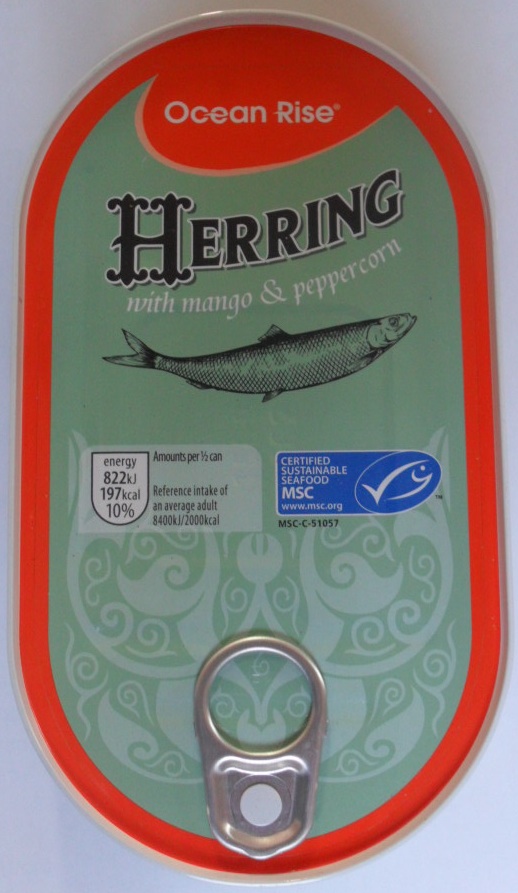
herringSo did our blogsworth sit upon his crestfallen hands this sunny summer’s afternoon and pine away the hours with heavy heart? He did not. He lunched heartily upon herring in an exquisite mango and peppercorn sauce, with a side of lettuce firm to the bite and a modest helping of potatoes, fresh and tender on the palate. Whereupon with feet shod in his dear DMs, he capered down to the tracks and rode the railway all the way into London town.

Dislodging from the Tube at Lancaster Gate, he strolled into the sumptuous grounds of Hyde Park and struck out in the direction of the Old Magazine, home now, and proudly so, to the wonderful Sackler Gallery.

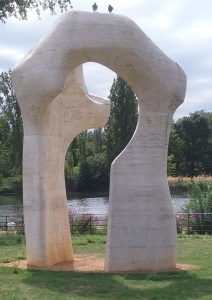
moore_arch

En route he could not fail to admire the ornate Italian Gardens, which in 1860 had been commissioned by Prince Albert as an adoring gesture of love for his beloved Queen Vic. Our hero’s heart sank a little!

But next, a majestic white swan on the lake rode beside him and led him on, and on, until he passed The Arch, a 6-metre sculpture by Henry Moore: created in 1978, from Roman travertine marble, it recalls the towering stone blocks of Stonehenge or the triumphal arches of antiquity. To think that it had been inspired by a mere fragment of bone the size of a small bird, made our hero think.

And so finally on to the Sackler Gallery, to take in the very different but equally remarkable sculptures by American artist, Duane Hanson, on exhibition until 13 September, more of which on the morrow.

That evening, as he lay beneath his duvet, one eye about to follow the other into the depths of sleep, he sensed a sudden chill. Temperature falling? Hell freezing over? Who could say? He would die an unrecovered optimist!

What we talk about when we talk about love

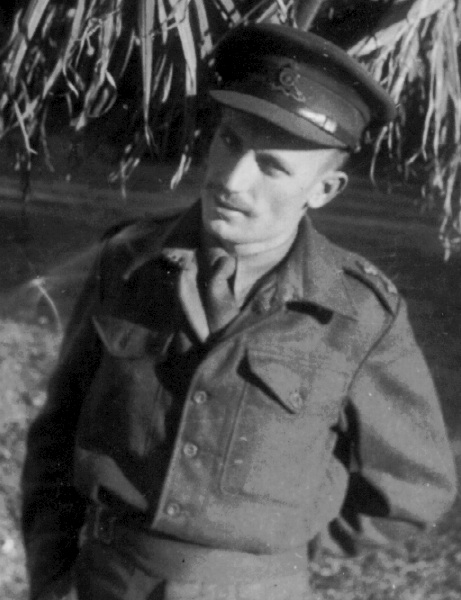
CaptainI mentioned the American short story writer, Raymond Carver in an earlier post. The title of one of his stories, “What we talk about when we talk about love”, has always stayed in my mind. Most of Carver’s stories talk about love, and in this particular story the examples of love all appear to be dysfunctional, raddled by drink. The love I witnessed between my parents was quite the opposite and it has always been for me exactly what I talk about when I talk about love.

An example of this love can be glimpsed in an extract from a letter my father wrote to my mother early on in their marriage, but the feelings it expresses were reciprocal and never diminished, never dated. My parents were not what I would call outwardly sentimental in their devotion to each other, they were simply devoted. There was always humour, and always love.

The context of the letter is as follows: in 1946, my father, then a Captain in the Royal Artillery, found himself posted to Egypt. He’d married my mother in Belfast in 1944, and my oldest sister, Annette, had just been born. Omitted from the letter is the substance of my father’s meeting with the Colonel he mentions: this was to discuss his future intentions now that the War was over, and whether he would remain in the Army.


AEC 48 Canal Sth Dist.
Fayid. M.E.F
7-4-46

My dearest,

Yesterday I went to Cairo. It was an awfully hot day, and I sweated blood. First I went to BTE. I saw the Colonel. . . .

[. . . ] I had lunch and went for your shoes. Meech, the chap in my tent and I searched I don’t know how many shops. I couldn’t find the exact copy, tho’ I could have had them made for £4. However, I thought that you didn’t necessarily want white, as in the picture, but that type. And I thought, pure white would get dirty (practical eh?) so I would buy you a pair you could wear with anything, and would look smart as long as you had them. I think they’re lovely, and I saw nothing like them in any of the shops I called at. The same shoes would be hard to find in England, and be quite expensive. They cost £3-7-6! So they are not a cheap pair. They have cork inside, so they should be very comfortable. Tomorrow I will have them sewn up. I also have something else for you —— something of my own —– I didn’t buy it, so don’t expect anything like that. It’s something special. Not very good, but it’s what it means. You’ll understand, you’re like that. And I love you very much, my dearest —- adore you. I think you’re the most beautiful adorable girl in the world. That’s what my present depends on. It isn’t good but it comes from me as a token of my love, my devotion, and a tribute to your beauty, darling Marie.

How are you feeling, and how is the darling baby? Do write to me soon, darling, only a line. Because it means so much to me to hear from ‘you’. Oh if you knew how much I love you darling. But I think you know a little about it. You are my whole life, my dearest.

God bless you, my darling love.

Your own devoted Bill
xxxxxx

Lesnes Abbey – a poem set in ancient woodland

lesnesabbey

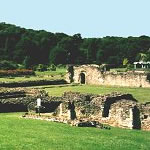
Located in the London Borough of Bexley, Lesnes Abbey was founded in 1178 by Richard de Luci. De Luci had been involved in the murder of Thomas Becket in Canterbury Cathedral in 1170, and it is assumed that the foundation of the abbey was an act of penance. In any event, de Luci spent the last four month of his life in retirement at the abbey and was buried in the grounds.

I have visited the abbey on so many occasions and in the company of a number of people who were so very dear to me in my emotional life that its history has become a part of my history. The grounds and the shape of many of its trees have become permanently lodged in my affective memory.

In addition to a formal flower garden, the site of the ruins is backed by extensive remnants of the ancient woodland that gave its name to the location.

The poem below was inspired by the extraordinary beauty of that woodland. Sometimes a simple poem may be composed of little more than a list of things or attributes, and this is what I sought to do here: to select some of the characteristics of this delightful stretch of nature and to assemble them into phrases that would be carried forward by the rhythm.


Lesnes Abbey

In the ancient woods
     around the Augustinian abbey of Lesnes where
            Richard de Luci’s crime was laid to rest,
      daffodil, bluebell, violet and wood anemone
            thrive, along with foxglove, heather,
willow herb,
      red campion, figwort, dogs mercury, ramson,
            St Johns wort, yellow archangel and yellow iris.
      Here the shadows of hornbeam and mulberry
            and larch and swamp cypress are also
to be found,
      and in silence or above the raucous cry of the magpie
            or the great spotted woodpecker’s fevered drill,
      the chirrup of the robin, the song thrush, the blackbird,
            the wren or the collared dove may be heard.

Fernando Pessoa – what’s in a name?

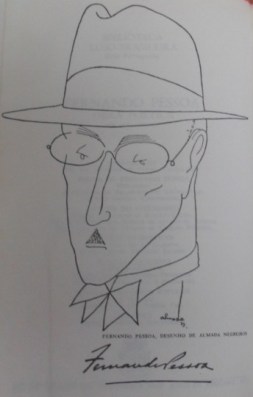
pessoaI began to study Portuguese as an optional special subject, in my second year at Oxford. The Portuguese tutor in literature was Tom Earle, and it was he who first introduced me to the poetry of Fernando Pessoa, the colossus of 20th Century Portuguese poetry. Pessoa spent his early childhood in Durban and grew up completely bilingual. He wrote a number of poems in English, notably a sequence of sonnets in the Shakespearean mode. But he is far better known for his poetry in Portuguese.

Pessoa (his surname means ‘person’ in Portuguese) is famous for having written under the guise of around seventy-five heteronyms. Far more than simple pseudonyms, Pessoa imagined entirely different personae for these fragments of personality within himself and described the experience of being possessed by the different characters at different times and being driven to write in a style markedly peculiar to each individual.

Below, I have chosen to translate poems written by four of these heteronyms: Pessoa himself, Ricardo Reis, who wrote odes in a more classical style, Alberto Caiero and Álvaro de Campos. The selection is insufficient to give anything more than a taste of Pessoa’s craft, but interested readers will find plenty of information online to sate their curiosity.

In the end I was not able to complete my special subject, but the phenomenon of Fernando Pessoa has been with me all my life, and his poetry a constant source of pleasure.


It’s raining. There’s silence

It’s raining. There’s silence, because the rain itself
Makes no noise but falls gently.
It’s raining. The sky sleeps. When the soul’s a widow
Which you can’t know, feelings are blind.
It’s raining. Who I am (my being) I disown. . .

So calm is the rain that drifts in the air
(there seem to be no clouds) so that it seems
Not to be rain but a whisper
That of itself, with a whisper, forgets it exists.
It’s raining. No wish to do a thing. . .

No hovering wind, no sky that I can sense
It’s raining far far away and indistinctly,
Like a certainty that deceives us,
Like some big desire that lies in our face.
It’s raining. I feel nothing inside. . .

Fernando Pessoa

*

Come sit with me, Lydia, by the river’s edge

Come sit with me, Lydia, by the river’s edge.
Quietly watch it flow and understand
That life goes on, and our hands aren’t clasped.
(Let’s clasp hands.)

Then think, as children who have grown up, that life
Flows by, never lasts, leaves nothing, never returns,
But flows on into a far-off sea, at the foot of the Fado,
Beyond the gods.

Let’s unclasp hands because no point in us tiring.
Enjoy it or not, we flow on like the river.
Better to understand how to move silently with the flow
Without major upsets.

Without love, nor hatred, nor passions that cry out,
Nor longings that over-excite the eyes,
Nor cares, for regardless of cares the river flows on,
Will always run down to the sea.

Let us love without fuss, thinking that we could,
If we wanted, exchange a kiss, an embrace, a caress,
But it’s better just to sit side by side
And listen and watch as the river flows by.

Let’s pick flowers, you gather them and keep them
In your lap, and let their scent soften the moment
This moment when at peace we have no beliefs,
Innocently decadent pagans.

At least, if once there were shades, you should remember me
But not let my memory burn or hurt or move you,
Because we never clasped hands, nor ever kissed
Were never more than children.

And should you hand the dark boatman his coin before me,
There’ll be nothing to bring me pain when I remember.
Gently my memory will recall you thus – by the river’s edge,
My own sad pagan with flowers in your lap.

Ricardo Reis

*

That lady has a piano

That lady has a piano
Which is nice but not the flow of rivers
Nor the murmur the trees make. . .
Why must one have a piano?
It’s better to have ears
And to love Nature.

If I could crack the whole earth

If I could crack the whole earth
And feel it had a palate,
I’d be happier for a moment. . .
But I don’t always want to be happy.
You have to be occasionally unhappy
In order to be natural . . .

It’s not all sunny days,
And the rain, after much drought, is required.
So I treat unhappiness and happiness the same
Of course, as one not surprised
That there are mountains and plateaux
And there are rocks and grass. . .

What’s required is to be natural and calm
In happiness or unhappiness,
Feel like someone who notices,
Think like someone who walks,
And when you’re dying, remember that the day dies,
And that the sunset is beautiful, beautiful the night that remains. . .
So it is and so be it. . .

Alberto Caeiro

*

Magnificat

When will this inner night, the universe, pass
And me, my soul, have its day?
When will I wake from being awake?
I don’t know. Impossible to stare
As the sun on high glares.
The stars shimmer coldly
And can’t be counted.
The heart beats so remotely
And can’t be heard.
When will this theatreless drama
Or this dramaless theatre pass
So I can go home?
Where? How? When?
Cat staring at me, eyes agog with life, what do you hold deep inside?
He’s the one! He’s the one!
Like Joshua he’ll order the sun to stop, and I’ll awake;
And then it’ll be day.
Smile, as you sleep, my soul!
Smile, my soul, it’ll be day!

Álvaro de Campos

What’s in a name, Shakespeare? A ramble, a rant!

corbynThe name Labour Party, for instance, the party that grew out of the Labour Movement to represent the interests of labour, of trade unions, and those working people who actually built this country’s infrastructure and prosperity, often with their bare hands. The surge of grassroots support for Jeremy Corbyn has nothing to do with nostalgia, although there are those among us who do pine for the days when there were no food banks, when housing was affordable for all, when access to higher education was free, when the unemployed were not being constantly harassed, when disabilities were not always being poked to see if they were genuine, when NHS waiting lists were not so horrendously long, when there was, in short, a momentum in the country to move towards an ever fairer society, in real terms.

Year in year out we witness the pomp of parades in honour of those who died in the two World Wars. How easy it is to pay lip service at such events. Did these men and women make their sacrifices in the name of child poverty, zero hours contracts, austerity measures that employ the devices of hunger and lack of heating in order to whip the so-called workshy into excruciatingly low paid jobs? In times of war there was austerity for all: nowadays it is targeted using the latest computer technologies like the latest cruise missiles and our very language is corroded by the use of truly nauseating terms, “the working poor” for example.

The Labour Party did not perform badly at the last election, it seems to me: for the most part, the Labour Party did not participate in the last election. Where was the voice of working people? Under the Miliband band of brothers it seemed more like a Conservative Party by any other name. Career or conviction politics, you pay your money (taxes) and you make your choice. And don’t even think of mentioning Chilcot, or the banking debacle.

As I have said in a previous post, my own politics developed purely out of literature, and the aesthetics of John Keats and the beauty and truth arguments. These views were later bolstered by the Justice and Peace movement and liberation theology. I still have a book on my shelves written by José Porfirio Miranda, a Mexican Jesuit, entitled Marx and the Bible. It presents an extremely erudite and persuasive linguistic analysis of the Bible, highlighting its true prophetic role, which had nothing to do with predicting the future and everything to do with the promotion of social justice, defence of the orphan, the widowed, the dispossessed.

The British National Assistance Act of 1948 heralded the greatest social revolution the world has ever known, with not a single bullet fired. The values enshrined in that legislation are the values for which I believe our servicemen and women fought in those World Wars and for which so many died. We dishonour them by turning the clock back. Under austerity, child poverty is expected to grow in this most powerful of world class economies. What Labour Party in its right mind (and conscience) could possibly even consider not opposing such measures with all its might? So bring it on, Jeremy, we have nothing to lose but our deep sense of shame.