The politics of poetry

katrinaThe poem below was written in response to the Katrina disaster of 2005. Poetry, as Keats famously pointed out, is about beauty and truth, in other words it is about life in all its aspects because there is no area of life where beauty and truth are irrelevant. All that we value in our lives is concerned with beauty and truth. That includes the relationship we have with our loved ones, with our fellow citizens and the world’s wider population. We are all in this together and we have rights and responsibilities as individuals under the charter of the United Nations.

So how should a poet engage with the world, a poet obsessed with love and beauty? The answer, I believe, is so simple, as William Burroughs would say: the poet is no different from anyone else, the poet should be engaged with his immediate circle and his wider world. Beauty and truth are synonyms. Lies are ugly. Poetry celebrates beauty and denounces ugliness and does so by employing the stylistic tricks of its trade, or should I say, of the medium, just as journalists do theirs, film makers theirs, artists theirs, musicians theirs. Politicians also have the tricks of their trade, and we should be wise to them. Always! Beauty is truth, truth beauty, that is all you need to know!


Paradise Lost

Your words,
       Mr President, have grown charcoal-
               brittle, they stain your lips
       as you speak them, and bring no
               comfort to those who hear;

let us
       at the very least, carbon-date
               your thoughts, your notion
       of what is right and wrong,
               your black-and-white

world,
       we who have not drowned
               but who looked on in horror
       as you abandoned a people
               who were surplus to

requirements!
       Where were you when the saints
               came marching in and the waters
       rose and the wind howled and
               the levees which had kept

despair
       at bay were finally breached?
               A serpent appeared in the rose
       garden and said DO NOTHING
               as your daddy did, surrender

dignity,
       surrender truth and, as your
               daddy had done, botox
       the lies until you can smile
               in the face of death,

turn up
       your nose at the stench of decay,
               turn a blind eye on the strangers
       upon whose kindness your office
               once depended. Democracy is in

the eye
       of the beholder, but the dead are
               disenfranchised. Katrina Katrina
       to the tune of an old blues song, on
               a blue piano, until the end of time.

6 September 2005

Clarice Lispector – the soul of sensibility

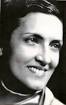
claricelispectorOne of the joys of learning to speak Portuguese was to be able to read the wonderful books written by Clarice Lispector, Brazil’s greatest novelist. Her writing displays a hyper-sensibility akin to that of Franz Kafka: she notices every detail, she feels everything, but she does not judge her characters and she never slips into sentimentality. She is her own person and for all the tribulations and trials she writes about, she is affirmative. She would concur with a character in one of the novels by the Colombian, Gabriel García Márquez, “Life is the best thing that’s been invented.”

Born in the Ukraine in 1920, Clarice was taken to live in Brazil at the age of two months and ultimately became a Brazilian citizen. She studied law and worked as a journalist in Rio de Janeiro where she began to write fiction. She was also a very popular newspaper columnist and it is in these columns that many of her observations first appeared. She died in 1977.


♦ In another life I once had, aged fifteen, I entered a bookstore, which seemed the world where I would like to live. Suddenly, one of the books I opened contained sentences that were so different that I just stood there, captivated, reading away. Thrilled, I thought, but this book is me! Only after did I discover that the author was considered to be one of the finest writers of her generation: Katherine Mansfield.

♦ I only write when I want, I’m an amateur and I want to remain amateur. A professional is someone who has an obligation to himself or to another to write. But me, I make a point of not being a professional, to preserve my freedom.

♦ To eradicate your own defects can be dangerous. You never know which is the defect holding up the whole building.

♦ There are times in life when we miss someone so much that what we most want is to drag that person out of our dreams and hug them.

♦ Surrender, as I have surrendered. Dive into what you don’t know just as I have done. Don’t try to understand. Living surpasses all understanding.

♦ But there’s life, which is to be lived intensely, there’s love. Love which should be lived to the very last drop. Fearlessly. It won’t kill you.


The Passion According to G.H., is perhaps Clarice Lispector’s most widely read novel. It is a highly rewarding if not a particularly easy read.

The summary on Amazon reads thus: G.H., a well-to-do Rio sculptress, enters the room of her maid, which is as clear and white ‘as in an insane asylum from which dangerous objects have been removed’. There she sees a cockroach – black, dusty, prehistoric – crawling out of the wardrobe and, panicking, slams the door on it. Her irresistible fascination with the dying insect provokes a spiritual crisis, in which she questions her place in the universe and her very identity, propelling her towards an act of shocking transgression. Clarice Lispector’s spare, deeply disturbing yet luminous novel.


Colonia del Sacramento, Uruguay – two poems

ColoniaSacramentoWhile living in Brazil, I spent several vacations in Argentina, and on every occasion I crossed the River Plate by boat from Buenos Aires to the beautiful town of Colonia del Sacramento in southwestern Uruguay.

Founded by the Portuguese in 1680, the settlement’s strategic location meant that it was much prized by the Spanish as well as the Portuguese and so it passed back and forth from crown to crown until finally in 1809 it was included as a permanent municipality within the newly independent Uruguay.

Its architecture is a mixture of Spanish colonial style and rural Portuguese streets which run down to the shore of the River Plate. The remnants of many buildings from the colonial era have survived, but what lends Colonia its particular mystique is the spiritual silence which dominates the historical quarter of the town. The town’s relative isolation and the lack of vehicles circulating in its narrow, cobblestoned streets set it apart from the bustle of modern life, and its proximity to the river means that it enjoys wonderfully fresh air all year round.
colonia 3
Trinities in Colonia del Sacramento

There are long straight streets lined on either sideColonia-Del-Sacramento-Plaza-Trees-1024x682
with majestic lime trees. A raw soul-searching wind
blows up from the south across
the vast empty expanse of the River Plate. It rakes
an empty hand through the withered leaves piled
in the gutters. This is autumn. A single grey squirrel
scavenges for food across the lawns of the town square.
Centuries ago, these trees were planted and pruned
in an inspired act of faith. Three sturdy limbs emerge
from each trunk reaching heavenwards in supplication:
give us this day our daily bread. Some brittle rusty leaves
still cling to the branches; they shiver and scratch hopelessly
in the breeze. So much silence now. Soon the last leaves
will fall. These were the prayers of yesterday, of yesteryear.
So much silence now. The last leaves will soon fall.
No bird song will be heard. So much silence.

*

Still-life in Colonia del Sacramento

There is a stillness and a silence in these streets,
some of which are paved with wedge stones quarried
from the river shore, with a gully running down the middle
–in the Portuguese manner– to gutter away the excess rain.
Here and there separating one backyard from another,
a free-standing dry stone wall, the thin broad slabs
cut and laid so long ago by anonymous hands.
Lawns are trimmed to the point of manicure,
and vibrant clusters of white and lilac hydrangea
soak up the gentle afternoon sun. Under the sycamore
shade we sit and observe small pockets of time
ferried in by visitors who appear to survive on
their own oxygen. The Governor’s house near
the main square has been reduced to its foundations;
the once magnificent Convent of San Francisco
is in ruins; the Viceroy’s residence is just a roofless,
empty shell. Colonia, on the banks of the world’s
widest river, has become a monument to human
mortality, drawing no distinction between the beauty
of life and its own conserved and perpetuated death.

The pity of war

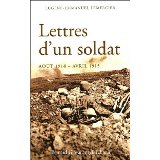
soldatBoth my grandfathers fought in the First World War and both were wounded. My paternal grandfather from Dublin, who served in the Royal Horse Artillery, received a bullet wound in the leg during a campaign on the Western Front. Apart from piercing the flesh it did no lasting damage. My maternal grandfather from Cork, who served in an Irish regiment, was much more seriously wounded on the beaches of Gallipoli. He had one lung removed in a field hospital by the water’s edge before being evacuated. When he died in 1969, the registrar of births and deaths in Tralee, Co. Kerry, made a point of recording the cause of death as heart disease and pulmonary pneumonia exacerbated by a wound received during World War One. I can remember as a child putting my tiny fist into the hollow of my grandfather’s back where the lung had been cut out.

The recent centenary of the Gallipoli fiasco prompted me to write the poem below, based on the death of a French soldier, Eugène-Emmanuel Lemercier. I first came across the name of Lemercier in the Collected Poems of Wallace Stevens, who dedicated a sequence of poems to the fallen French artist. My poem draws on that sequence and also on the letters that Lemercier wrote to his mother from the Western Front.

La mort d’un soldat

Si tu voyais la sécurité des petits animaux des bois—souris, mulots! L’autre jour, dans notre abri de feuillage, je suivais les évolutions de ces petites bêtes. Elles étaient jolies comme une estampe japonaise, avec l’intérieur de leurs oreilles rose comme un coquillage.
If you could know what security the field-mice enjoy ! The other day, from my leafy shelter, I watched the evolutions of these small animals. They were as pretty as a Japanese print, their ears pink as shells.
Lettres d’un soldat, Eugène-Emmanuel Lemercier (1886-1915)

On a ridge outside
       the village of Les Éparges
            a French combatant
a former art student
                      and an orphan
raised by mother
           and grandmother
                      sits in his dug-out
clutching his rifle
           to his chest
                      The dugout is camouflaged
           with leafy branches torn
                      from the surrounding bushes
This is early March
           1915
                      and many men have died
in this most murderous
           of theatres
                      though many more
are yet to die
           He sits in his dugout
                      and admires the clear
blue sky overhead

The war has been silent
           these past two days
                      : the calm before the storm
           Through the foliage
he notices
                      two field mice at play
how pretty they are
           in their rough and tumble
                      the interior of their ears
the delicate sea shell pink
           of a Japanese watercolour
                      In one of his letters home
he writes
           of the beauty
                      of these mice

The driving rain
           the drip  drip   drip
                      of willows in the rain
The silence of the birds
           that wait out the rain
                      sheltering
in the willow leaves
           The mice that scamper
                      for cover
their small pale ears
           glistening
                      in the rain
At night
           a full moon looms
                      above the enemy lines
A soldier’s death
           is close to nature
                      he notes
A month later
           he is dead

Shortly before he fell
           /during another lull
                      in the fighting/
he reported hearing
           the call of cranes
                      returning home
at sunset
           His body
                      was never found
Julio Cortázar, a poem from Salvo el crepúsculo [But for the twilight] (1984)

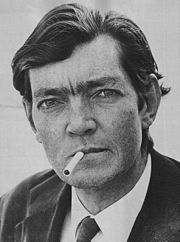
CortázarKnown as one of the most accomplished prose writers of the so-called Latin American Boom in fiction, Julio Cortázar was also a consummate poet. The poem translated below is taken from the last of his works to be published during his lifetime. Born in the Argentinian embassy in Brussels in 1926, Cortázar lived for most of his adult life in Paris, though he never lost his close identification with his homeland nor with Latin America in general. Famous for his wit and humour in his novels and short stories, Cortázar’s lyrical voice is endlessly inventive.

If I have to live

If I have to live without you, let it be hard and bloody,
the soup cold, my shoes tattered, or that in the midst of opulence
let the dry branch of the cough rise up, barking out to me
your misshapen name, a foam of vowels, tearing at my sheets
with its fingers, so that nothing brings me peace.
Not even from that will I learn to love you more,
but cast out from happiness
I’ll know how much joy you once gave me just by being near.
I believe I understand this, but I’m wrong:
it will require frost on the lintel
for the person sheltering in the doorway to understand
the light in the dining room, the milk-white tablecloths and the smell
of the bread thrusting its brown hand through the slit.

So far from you now
as one eye from the other,
from this assumed adversity
the look you deserve will finally be born.

Carlos Martínez Rivas

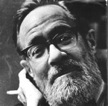
CMRI first met the Nicaraguan poet Carlos Martínez Rivas in San José, Costa Rica, in January 1977. I had just arrived in the country from Nicaragua where I had spent some weeks in the commune run by Ernesto Cardenal on the island of Solentiname in the south of Lake Nicaragua.

Carlos was staying as an unpaid guest at the Sheraton Hotel. He had little money but his prestige as a poet was such that the hotel chain felt honoured to house him.

I showed Carlos some of the poetry I had been writing in English and we became friends immediately. It was mid-morning and Carlos wanted to give me a copy of the only book of poetry he ever published, La insurrección solitaria [The solitary insurrection] but since he had no copies he invited me to accompany him on the long walk from his hotel to the offices of EDUCA, the university publisher located on the campus of the University of Costa Rica. It was a long walk under a gorgeous blue sky and Carlos was delightful company. His only advice to a young poet was to always carry a pen and notebook. He asked after many of his friends whom I had just met in Nicaragua. He had an acute intelligence and piercing blue eyes which were nevertheless very gentle when he spoke of people.

When we got to the offices of EDUCA, Carlos asked for a copy of his book in which he then wrote a long dedication to me to record our meeting. I felt very honoured to be addressed as a poet by such a brilliant master. The greatest, ultimately unrequited love of Carlos’s life had been the Costa Rican poet, Eunice Odio, and many of the poems in his book were inspired directly or indirectly by her, in particular a poem entitled “La puesta en el sepulcro” [The placing of Christ in the sepulchre].

I saw Carlos on several occasions during the week I spent in San José. And in 1983, while attending a solidarity conference in Managua, I called in at his house and invited him out to a restaurant. He was still a penniless poet and his home was quite spartan. There was a large trunk in the living room which when he lifted the lid revealed a mass of papers: there was all his unpublished poetry, virtually a lifetime’s work.

At the restaurant Carlos insisted on ordering the cheapest meal, a spaghetti with a basic sauce, but he thoroughly enjoyed himself with our conversation and with flirting with all the young waitresses who clearly adored him. On this occasion he also dedicated a new edition of his only book to me and I have kept both copies with pride.


Cecília Meireles

meireles

For the Brazilian poet, Cecília Meireles, the writing of poetry was not so much a vocation or a trade nor even a compulsion. Her poetic voice was as much a part of her nature as singing is to the cicada. Recognised as one of the most important poets writing in Portuguese, she also painted and was an inspiring teacher

Acceptance

It’s easier to rest your ears amongst the clouds
and hear the passing of the stars
than to press them to the ground and catch the sound of your steps.

It’s easier, too, to cast your eyes upon the ocean
and to observe, there in the depths, the silent birth of shapes,
than to hope to appear to be creating with simple gestures
signs of eternal hope.

Neither the stars, nor sea-shapes, nor you, interest me any more.

Over time I’ve developed my song:
I don’t envy the cicadas: I too shall die from singing.

*
Motive

I sing because the instant exists
and my life’s complete.
I’m neither happy nor sad:
I’m a poet.

A sibling to all things fleeting,
I feel neither pleasure nor torment.
I drift through nights and days
on the wind.

Whether I destroy or construct,
whether I’ll last or fall apart
— I don’t, I don’t know. I don’t know
whether I’m here to stay or passing through.

I know I sing. And song is everything.
The rhythmic wing pulses with eternal blood.
And one day I know I’ll be mute:
— nothing more.

Cecília Meireles (1901-1964)

“I am a writer. . . .”

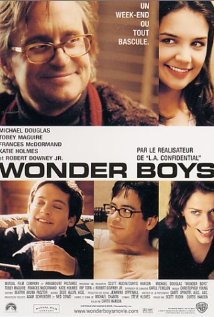
wonderboysThere is a marvellous moment in the film, Wonder Boys (2000), where one of the characters, a pompous but renowned novelist, played by Rip Torn, and known by a single initial as “Q”, walks to the podium to address a university audience during Writers Week, and solemnly declares: “I am a writer. . . .”

This is greeted by a very loud belly laugh from James Leer (Toby Maguire), a student in the creative writing class run by Professor Tripp (Michael Douglas). Well, all of us who make that claim about ourselves run the risk of being labelled pompous and yet we are all writers.

Towards the end of this school year I gave some English lessons to a very sensitive and charming autistic boy, aged 16, and I encouraged him to explore the possibilities of creative writing. On each occasion we met, he would tell me the news that Shakespeare was dead and that he didn’t want to be a writer. To the first statement I would reply, “Good, cuts out the competition”. The second statement I would answer by picking up an issue of National Geographic entirely dedicated to dinosaurs (he was intensely interested in the reptiles) and point to the text. “There’s no escape from text. We all have to write. We’re all writers.” In fact, over the weeks I saw him, the boy produced some very fine pieces of writing, albeit under protest.

Over the coming months I intend to reveal a little about the reasons why I write and the processes I use to create my poetry. But for the time being, here is an example of one of the poems produced by my autistic pupil:

The perfect days of summer

Holiday with my family
         waking to the sound of waves
Cereal with fresh milk
         resting on the beach
throwing water
         at friends’ faces
a cold drink
         a seat
               an umbrella
Marvellous views
         of the land and the sea
Use suntan lotion
         and insect repellent
Lunch in a Turkish
         seaside restaurant
Going for long walks
         new places
               new faces
different sounds
         different smells

Looking forward
         to returning
         back to London
         back to my room
         back to my computer
         in the basement
back to friends at school
with my very own photos

This blog seeks, among other things, to celebrate the work of those poets and other writers who have had the greatest impact on my own poetry, and in this first post I have chosen a poem I wrote in 2004, inspired by my reading of Marianne Moore. Beneath the apparent simplicity of her poetry there is great sophistication: her delivery via the rhythm is smooth and controlled like the action of a great baseball player standing at the plate, and the final flourishes of her poems are often akin to those of a glorious home-run. Just as cricket was important to Beckett and Pinter, baseball was Marianne Moore’s chosen sport, and its influence is everywhere you look in her lines. William Carlos Williams, in his Selected Essays, describes Marianne Moore’s talent thus: “It is a talent which diminishes the tom-toming on the hollow men of a wasteland to an irrelevant pitter-patter. Nothing is hollow or waste to the imagination of Marianne Moore.”

moore

Marianne Moore

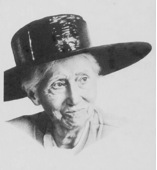
The face
         that has come down to us
                   through the photographs
         is of an elderly lady–white hair
                   beneath a broad-brimmed black

boater.
         A face that bears the soft creases but not
                   the deep lines of age; the eyes incisive
         and captivating as any disenfranchised tiger’s;
                   a wry, generous smile tightly-

pursed
          in the knowledge that silence
                   is a most auspicious friend
         to the judicious poet.
                   Her poetry: a

space
         in which we would-be
                   steeplejacks
         might immerse ourselves
                   and grow ever so youthfully older,

in
         contempt only of all that is
                   small-minded, artificial,
         artless and
                   conspicuously untrue.