A poem of thank you

stein

A poem of thank you

It was a very pleasant day yesterday
           and it is pleasant that today
is as warm as yesterday
           a blue sky is always welcome
long hours of sunshine
           the birds were in good voice yesterday
and today is no different
           I heard the foxes in the early hours
they were planning their day
           they sensed it was going to be
a very pleasant day
           a day as warm as yesterday
it was no surprise to me
           it is no surprise to me

naturally the world is never
           always full of bad news
there is always some light
           some hope to cling on to
and there is always room
           for love and gratitude
and so I gave my love a kiss
           and she agreed that it was
a very pleasant day yesterday
           and that so it would be today

John Lyons
 

The murder of Federico García Lorca

Gelman
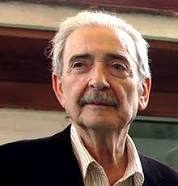
Juan Gelman (1930-2014)

Reds

it’s raining on the Río de la Plata and it’s almost
36 years since they killed Federico García Lorca but
what’s the relationship between that
outer reality and this inner unreality? or
what’s the relationship between that outer unreality
and this inner reality?
 
I don’t know the river’s gray line  
looks like the knife with which they slit the sky
looks like the knife with which they slit childhoods in Azul
slit childhoods in Santa Fe and other places in the republic
sometimes forever or always forever
it’s one of the country’s great agonies
 
that’s for sure in the west
the sunsets are not inflamed by the sun here
children’s blood inflames the republic’s sunsets  
children from Salta children from Tucumán little angels
blood evaporated or fallen swept away by the sunset
each and every each and every day
 
and what’s that got to do the death of Federico García Lorca
with the execution of Federico García Lorca in Granada in 1936?
or the sunset in the west of Spain
that is inflamed not by the sun but from the blood
of Federico García Lorca poet
each and every each and every day
 
I don’t know I don’t know
“child, you’re going to fall into the river!” said Federico García Lorca
“when he was lost in the water I understood” said Federico García Lorca
“within the rose there’s another river” said Federico García Lorca
but why does his blood inflame
Granada each and every day every day?
 
and the children of Azul Santa Fe Tucumán Salta
why do they inflame the sky of the republic
beneath which they have forgotten them or pretend to forget?
why did they fall into the river were lost
in the water went to the river of another rose from
ugly poverty?
 
what’s the relationship between that
outer reality and this inner unreality? or
what’s the relationship between that outer unreality
and this inner reality?
when did they kill Federico García Lorca in Tucumán?
when was he shot in Azul Santa Fe Salta?

Juan Gelman

(Translated by John Lyons)


In this poem, Juan Gelman – of Ukrainian origin and one of Argentina’s greatest poet – draws a parallel between the murder of the poet Federico García Lorca by Franco’s fascist troops at the start of the Spanish Civil War and the slaughter of innocents in Argentina during the so-called Dirty War (the name used for the period of United States-backed state terrorism in Argentina from 1976 to 1983). Azul, Santa Fe, Salta and Tucumán are representative provinces of Argentina, though the military dictatorship spread terror throughout the country.

Vietnam


espriu
Salvador Espriu (1913-1985)

Vietnam

I’m not young and I’ve always seen
injustice and fear all around me
It’s always been this way,
I gratefully learned  
from the heavy books of the good old days.
I live in a country that’s not free,
very tired, cruel, corrupt, very cowardly,
I have to live in an unworthy country
but the rest of the world is no better.
 
And I can raise only a few fragile words
against the contempt of the lords of power,
the princes’ lips are just smiling,
barely a smile that comes from oblivion
and then dictate forever
icy laws of fear and force,
a firm support  
most generous crutches
upon which the lame  
may walk towards death.
 
How will I fight with nothing
but useless words,
what good is the cry of the dreamer?
I wake up slowly and in silence I contemplate
the great bonfire lit in the far south,
the shame and dishonour of all peoples
It will spread everywhere  
and in it we shall burn,
now someone has understood
but soon everyone will know
that we’re completely lost.

Salvador Espriu

(translated by John Lyons)


“Vietnam” by the great Catalan poet, Salvador Espriu, was written in 1968, ostensibly as a denunciation of the Vietnam War, but was aimed more particularly at fascism and the corrupt regime of Franco’s Spain which sought to suppress Catalan culture.

The great sculptor

The great sculptor

Never forget that nature
           is the great sculptor
we are surrounded on all sides
           by beautiful shapes
most so common
           that we take them for granted

Yesterday I walked across
           a gently undulated park
tramped through a field of daisies
           and admired the breathtaking
splendour of so many trees
           the shape of which
was known from the seed :
           love too known
from the moment
           it seeds in our hearts

John Lyons


Sonnets to Orpheus, Sonnet x

Sonnets to Orpheus

Sonnet x

I greet you who never left my heart
ancient sarcophagi through which
the happy waters of Roman days
flow like a wandering song.
 
Or those as open as the eyes
of a happy shepherd upon awakening
– full of silence and the sucking of bees –
around whom enchanted butterflies flutter;
 
I greet all those wrenched from doubt,
mouth again agape who already knew
what it means to be silent
 
We know, my friends, don’t we know?
Both configure the hour that wavers  
on the human face.

Rainer Maria Rilke
(translated by John Lyons)


Die Sonette an Orpheus

Sonett X

Euch, die ihr nie mein Gefühl verließt,
grüß ich, antikische Sarkophage,
die das fröhliche Wasser römischer Tage
als ein wandelndes Lied durchfließt.

Oder jene so offenen, wie das Aug
eines frohen erwachenden Hirten,
—innen voll Stille und Bienensaug—
denen entzückte Falter entschwirrten;

alle, die man dem Zweifel entreißt,
grüß ich, die wiedergeöffneten Munde,
die schon wußten, was schweigen heißt.

Wissen wirs, Freunde, wissen wirs nicht?
Beides bildet die zögernde Stunde
in dem menschlichen Angesicht.

Rainer Maria Rilke

Reflections on a frosted glass

Reflections on a frosted glass

What does it take
           for us to be as we are
fully and freely
           to love as love is intended
and to create beauty
           in every thought
word and deed
           of our existence ?

poetry and dance
           the voice and movement
of angels
           leaps of the imagination
into the darkness out of which
           all creation emerges

Love is not a thing
           it is the soul of our being
impossible to be defined
           or circumscribed
by words alone
           What does it take
to be who we are bound
           to be ?

John Lyons

Stardom

stardom
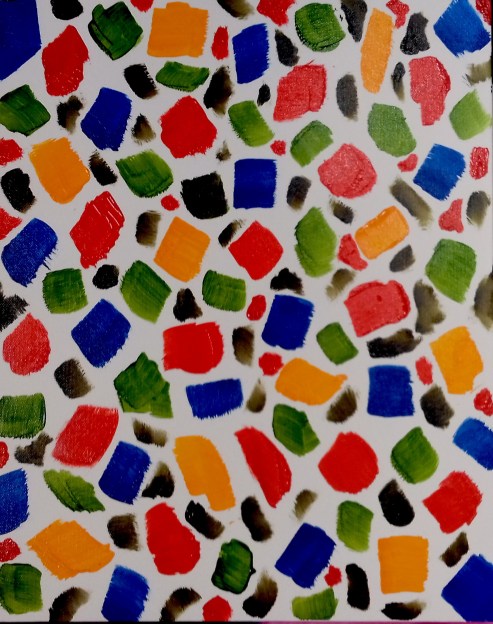
Stardom, John Lyons (50 x 40 cm, oil on canvas)

Stardom

I carry my silence with me
           it’s a place in which trees
and plants and the whole
           of nature exist without words
the pure being unqualified
           by thought or even feeling

in this place there is love
           that demands no expression
love as the air moves
           through my lungs
love as the blood courses
           through my veins
love that resolves
           the mystery of the universe
so that I no longer ask
           why stars ?
we – you and I – are the light
           that illuminates
the darkness
           we are warmth

I cannot see everywhere

           that I am
I can only be
           as I am

John Lyons

Infant poem

Infant poem

Lookee here
a new-born poem
swaddled in words
it has nothing to say
it just is

in time
it will shed time
but for now
just let it be

see how it gurgles
and foams at the mouth
its whole life ahead
one of laughter and love

in time
it will shed time
but for now
just let it be

John Lyons