For Saturday

Ever since I began to write poetry, back in my teens, Saturday has always been a very special day: a day of reflection on the events of the week that went before and a taking stock of my life in general. It is my favourite day of the week for that reason. I have also found that whatever situation I am going through at any particular time, whether challenging or not, the writing of poetry never fails to raise my mood. My habits have become ingrained. I wake at six each morning and write before I do anything else, except perhaps make a coffee. Those first few moments before the bustle of the day begins are very precious, and I prefer not to dissipate them.

Just to add a note on the blog: the readership is slowly building, and it is now being read in Canada and the USA, in India and Israel, in Puerto Rico and Brazil, in Argentina and Japan and throughout Europe. If you read something which you appreciate, please share it with your contacts. Happy Saturdays!


For Saturday

Morning Sunlight shines into Forest, slightly misty Atmosphere

Wake at first light
       to the sound of trains
in the distance
       to the thrum of jets overhead
and to birdsong muted
       by the rippling breeze :
the slow tyranny of moonlight
       has faded
into this grey dawn
       in which all my dreams
have run aground
        Shall I look back on these times
with kindly eyes ?
       Others have destinations
but these streets
       these urban woodlands
have become my exile
       Others’ lives have movement
mine has been to ascend
       the barren calvaries of love
burdened by the solitary rose
       that would not yield its petals :
the soul has moments of escape
       the body never—
this body bound
       to the dust of its dust
Wisdom tells us
       that there are two heavens :
one for the body
       one for the soul
I have attained neither
       to date
though I have listened
       with all my heart
to the breath of butterflies
       and once held
the intricacies of love
       within my grasp

John Lyons


Blow-Up

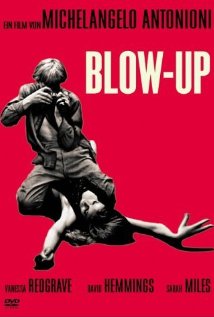
blow_upBlow-Up (1966), was directed by Michelangelo Antonioni, and featured David Hemmings, Vanessa Redgrave, Sarah Miles and Peter Bowles. There are also appearances by Jeff Beck and Jimmy Page, and by Janet Street Porter, and others.

The film is very loosely based on a short story by the Argentinian writer, Julio Cortázar (who makes an uncredited appearance as a homeless person) . His original story, Las babas del diablo [The devil’s drool], describes an incident witnessed on a bridge: a young boy appears to be running towards his mother who has her arms outstretched to greet him. When the observer in the story steps back, however, he notices a man waiting by a car with an open door, and it becomes obvious to him that the scene is one of attempted kidnapping of the boy.

Perception. What we see and what we want to see, in film and in art and in life. Illusion and self-delusion. And from our point of observation, from where we are standing, what information do we have, and is it the correct information, and is it sufficient to make a judgment of the situation we are observing, or the emotions we are experiencing? In film, in art, and in life: how do we arrive at our judgments, how do we assess the honesty of other people’s feelings, their words, their actions when so much is façade and pretence and evasion and deception? Is it all pointless carnival, as the frolicking students (who appear at the beginning and end of the film) would suggest in their seemingly inane mimes? A going through the motions?

The basic narrative goes like this: David Hemmings is taking photos in a park in Charlton when he spots a couple kissing. He takes photos of them. When the woman (Vanessa Redgrave) notices him, she runs after him and demands he hand over the camera. Hemmings refuses but says she can have the photos when he has developed them. Once he does develop them, however, he notices that a fourth person was present at the moment he snapped the couple kissing. By blowing up the exposures, he discovers that there was a man in the bushes with a gun pointed at the presumably illicit lovers. He returns to the scene and discovers the dead body of Redgrave’s lover. Inadvertently Hemmings has captured a murder on camera.
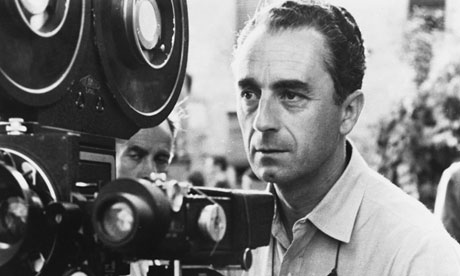
Camera obscura … Michelangelo Antonioni during the filming of L'Avventura (1960).
Michelangelo Antonioni

Perception. What we see and what we want to see, both objectively out in the world, and internally in our emotional lives. Although set in the swinging sixties, a time which on the surface purported to be full of novelty and fun and new-found freedoms, nobody in the film is happy and there are no deep human connections: there is wealth and poverty and demonstrations on the streets of London. The people with money and access to drugs and an incessant party life seem no happier than the men emerging from the doss house at the start of the film. Everything is veneer, false appearances, of little value.

Values. The film presents a critical meditation on the bankrupt spiritual and emotional values of contemporary society and the individual. What is at stake is honesty, that fundamental virtue which according to the 18th century French writer, Voltaire, is the cornerstone of human society. Dishonesty destroys relationships on a personal level and can destroy the very fabric of society.

Insofar as any film can be important, Blow-Up is important, a cinematographic masterpiece. But you have to look beneath the veneer to appreciate it!
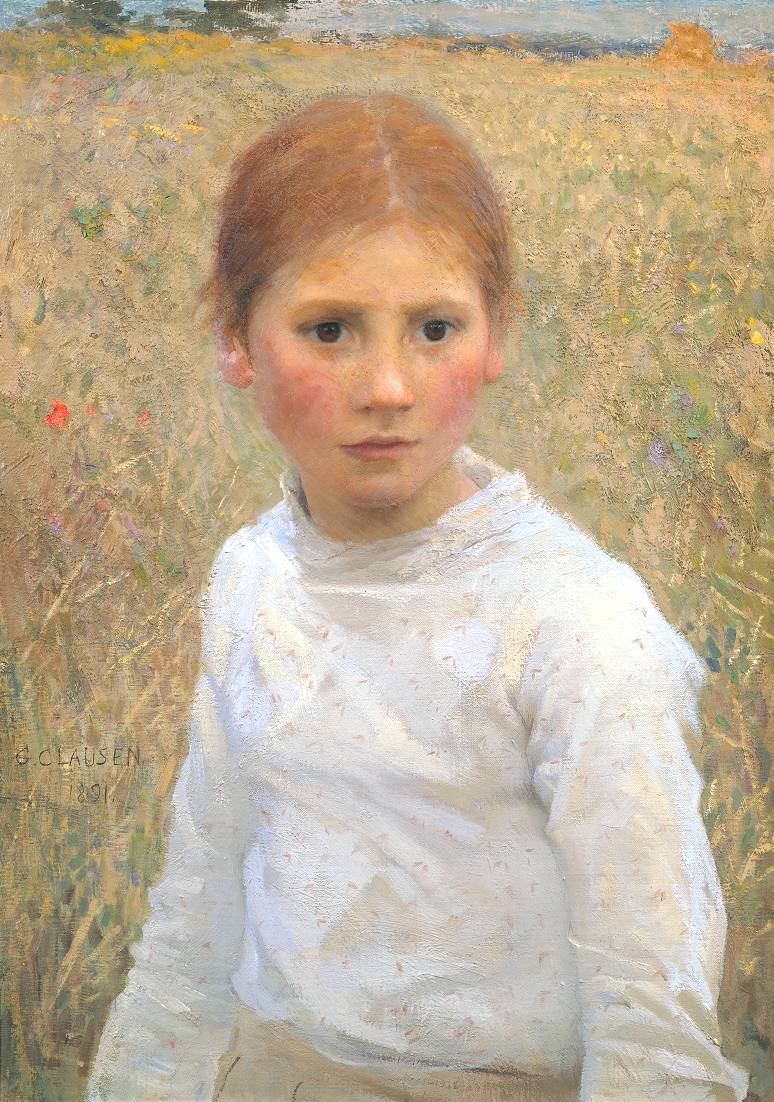

Brown Eyes – George Clausen

Brown Eyes 1891 Sir George Clausen 1852-1944 Presented by C.N. Luxmoore 1929 http://www.tate.org.uk/art/work/N04484
George Clausen, Brown Eyes (1891) oil on canvas

One of the artists to catch my attention during my recent visit to Tate Britain was George Clausen (1852-1944), an English painter, who was born in London, and was the son of a decorative artist. He studied design in South Kensington from 1867 to 1873 and later went on to Paris to study under two rather traditional artists, William-Adolphe Bouguereau and Tony Robert-Fleury. Despite their conservative approach, Clausen would have learnt from them the importance of technical skills. However, while in Paris it was perhaps inevitable at the time that he would also come under the influence of the impressionists who completely rejected the academic style propounded by Clausen’s teachers.

George Clausen’s paintings concentrated on peasant figures and landscapes, though, as with the French impressionists, his real concern came to be the rendering of light in open air settings or in the shady shelter of a barn or stable. His portrait of a young peasant girl, entitled Brown Eyes, painted in oils on canvas in 1891, is an absolute delight. On the one hand it presents a perfect classical triangular composition, in which the girl’s white blouse dominates: however, the girl’s intense expression adds real depth and energy, and one wonders what has caught her attention as she looks out from the canvas over the shoulder of the observer. The field in the background provides a beautiful natural contrast, delicately captured with fine brushstrokes. So don’t delay, get down to Tate Britain and see for yourself the magic of this portrait, which is just one of the many treasures held in the permanent collection.


One final observation, although it is always well-attended, possibly because of its location in Pimlico, Tate Britain is not swamped by crowds in the way that other galleries can be. So if you’re looking for a leisurely, unstressed Sunday afternoon but want to appreciate some true artistic masterpieces, I can highly recommend the venue.


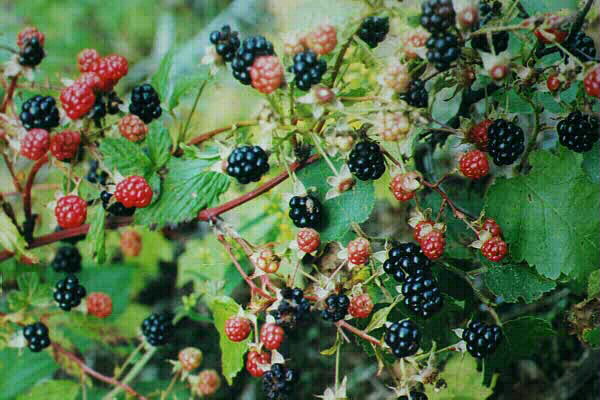
Wild blackberries

blackberries_wildThis week I have been revising a book of poetry that has been 18 months in the writing. Sections of the poem have been read by a very good friend of mine, Paul Taylor. I asked him as he was reading to mark the text wherever he found the lines confusing or simply dull. I am now working my way through the pages, sometimes rewriting passages he has marked as uninteresting or simply cutting them out if they no longer seem relevant to me.

It is always useful to have an editor, someone who can be trusted and whose judgment is based on wide reading and long years of experience. On this page I would like to express my gratitude to Paul for the task he undertook with great enthusiasm and completed with great professionalism. The lines  below, written over a year ago, nevertheless echo a poem submitted to the blog mid-August by Molly Rosenberg. According to Paul Taylor, my short poem is actually a metaphor for love. Who knows?


Wild blackberries

Wild blackberry canes
                   barbed brambles
heavy with fruit
                   thrive on the steep banks
of the railway cutting
                   goodness that grows
innocently
                   out of the soil :
but easy access to them is barred
                   by dense patches of nettles
so the berries gather dust
                   ripen and then fall back
into the undergrowth
                   to be eaten by birds
and by the large colonies of fox families
                   that have pitched their tents
at various stations
                   along the line

John Lyons


Kestrel

Kestrel2So much of nature is driven by instinct, and no more apparent is this than in species that prey on other species. An ocelot, for example, will hunt in the rainforest for mice, agoutis, monkeys, opossums, armadillos, anteaters, snakes or turtles. But it may also fall victim to a larger predator, a jaguar for example. In one way or another all life feeds on life: organic creatures require organic sustenance! It is a fascinating sight to see a kestrel hovering in the air as it fixes its gaze on a rodent down below, only to plummet seconds later to make the kill.

Instinct, however, is not to be confused with human passion, the passion that can lead to love at first sight (or vice-versa), that can lead to an all-consuming hunger that may override good sense and ignore any social or financial considerations as it homes in on the object of its desire.


Kestrel

The single kestrel
                   that hangs in the air
enthrals the eye
                   the sheer beauty
of it plumage
                   the pin-point accuracy
of its eye
                   the effortless power
in its talons
                   as it seizes its prey
in one fell swoop

Is love
                   any less dead eye
any less ferocious
                   in clinging on
to the object of affection
                   the warm flesh
of the beloved ?

Did Orpheus not descend
                   into the very mouth
of hell
                   to retrieve her ?
Immaculate love
                   wipes the slate
kick-starts a new millennium
                   a re-enactment
of first things
                   first kiss first taste
first immersion
                   in the warm
beating blood and fibre
                   of another

John Lyons


Pablo Neruda – The saddest lines

young neruda
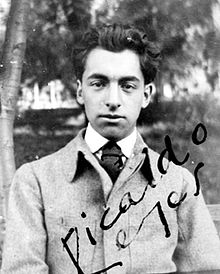
A young Pablo Neruda

 A couple of years ago, one of my students was in Panama participating in an international tennis tournament. In order for him not to fall behind, we agreed to continue classes over Skype during the period of his absence. One night we studied three love poems by the Chilean poet, Pablo Neruda, one of which I have translated below. When the class was over, I asked Patrick to go down to the hotel lobby and find one of the Spanish-speaking girls who was also taking part in the tournament and to read the poems to her. Always game for anything, Patrick found a Venezuelan girl, Valeria, and read the poems to her. She was extremely moved by the experience. My intention was to show my student that poetry was not written for the academic environment but was intended to be read as a normal everyday activity, and that love poetry could be extremely effective, particularly in the context of relationships with the opposite sex. He certainly got the message and so did Valeria. 

The poem translated below was taken from Veinte poemas de amor y una canción desesperada [Twenty Love Poems and a Song of Despair] a collection which was first published in 1924 when Neruda was only nineteen. It has since become the Chilean poet’s best known work and has sold more than a million copies and been widely translated. Neruda was awarded the Nobel Prize for Literature in 1969.


Poem 20

Tonight I could write the saddest lines.

Write, for example: “The night is shattered,
and blue stars shimmer, far away.”

The night wind veers in the sky and sings.

Tonight I could write the saddest lines.
I loved her, and sometimes she loved me too.

On nights like this I held her in my arms.
I kissed her so many times under the infinite sky.

She loved me, sometimes I loved her too.
How not to have loved her big staring eyes.

Tonight I could write the saddest lines.
To think I do not have her. To feel I’ve lost her.

To hear the inmense night, more immense without her.
And that line settles upon the soul as dew upon the grass.

What does it matter that my love could not retain her.
The night is full of stars and she’s not with me.

That’s all. Far away someone is singing. Far away.
My soul is not content to have lost her.

As though to bring her close my eyes look for her.
My heart looks for her, and she’s not with me.

The same night chills the same trees with frost.
We, the ones we were then, are not the same.

I don’t love her, it’s true, but how I loved her.
I sought the wind to carry my voice to her ear.

Someone elses’s. She’ll belong to another. Like before my kisses.
Her voice, her bright body. Her infinite eyes.

I no longer love her, it’s true, but maybe I do.
Love’s so short, and the memory so long to fade.

Because on nights like this I held her in my arms,
My soul is not content to have lost her.

Though this may be the last pain she causes me,
and these the last lines that I write.

Translation by John Lyons


Postscript: When teaching this particular poem in class I would often link it to a Bob Dylan song “Most of the time” which can be heard on Youtube https://www.youtube.com/watch?v=SQbr4ISrjII. There are also excellent cover versions by Sophie Zelmani https://www.youtube.com/watch?v=Ts6gZFEiMkM and Bettye Lavette https://www.youtube.com/watch?v=n8Q5Mrokqfc. Enjoy!


Language in Bram Stoker’s Dracula

stoker
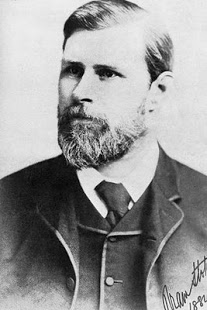
Bram Stoker

In the story of Jonah and Anna-Belle, I introduced someone called Dr Van Helsing. As I explained at the time, this character was based on the Dr Abraham Van Helsing, who is a major protagonist in the novel, Dracula, written by the Irish writer, Bram Stoker, and originally published in 1897. One should not underestimate the influence of this inspired and seminal work of Gothic fiction. An important element of Stoker’s story is psychiatry, and the lunatic asylum in Whitby where Dr John Seward, one of Dr Van Helsing’s former pupils, treats a patient called Renfield, a mad man under the control of Count Dracula. Renfield’s consumption of flies and spiders is itself a parody of vampirism.

In Samuel Beckett’s first novel Murphy, published in 1938, the eponymous hero is employed for a brief period in the Bedlam asylum where he strikes up a friendship with one of the maddest residents. Beckett’s novel also parodies horoscopes, and in my story of Jonah and Anna-Belle I sought to bring the two elements together in a similar manner. I was further inspired by a real daily horoscope I read for my own birth sign which alluded to vampirism, and advised me to be on my guard. This explains the insanity. Not my own, as one reader cheekily suggested, but fictional.

However, the point of this post is really to give an example of the defective grasp of the English language that Stoker bestows on the Dutch Dr Van Helsing, all part of the fun: after all, Stoker gives the doctor his own name, Abraham. Those who have not read the original text of this classic are really missing out on a comic masterpiece.

In the extract below, Dr Van Helsing is describing, in a memorandum to John Seward, the trip he made in the company of Mina Murray, Jonathan Harker’s fiancée, to Count Dracula’s castle in Transylvania. I attempted to capture something of the flavour of this language in the diction of my own Dr Van Helsing.


So we came down this road; when we meet other ways—not always were we sure that they were roads at all, for they be neglect and light snow have fallen—the horses know and they only. I give rein to them, and they go on so patient. By-and-by we find all the things which Jonathan have note in that wonderful diary of him. Then we go on for long, long hours and hours. At the first, I tell Madam Mina to sleep; she try, and she succeed. She sleep all the time; till at the last, I feel myself to suspicious grow, and attempt to wake her. But she sleep on, and I may not wake her though I try. I do not wish to try too hard lest I harm her; for I know that she have suffer much, and sleep at times be all-in-all to her. I think I drowse myself, for all of sudden I feel guilt, as though I have done something; I find myself bolt up, with the reins in my hand, and the good horses go along jog, jog, just as ever. I look down and find Madam Mina still sleep. It is now not far off sunset time, and over the snow the light of the sun flow in big yellow flood, so that we throw great long shadow on where the mountain rise so steep. For we are going up, and up; and all is oh! so wild and rocky, as though it were the end of the world.

Then I arouse Madam Mina. This time she wake with not much trouble, and then I try to put her to hypnotic sleep. But she sleep not, being as though I were not. Still I try and try, till all at once I find her and myself in dark; so I look round, and find that the sun have gone down. Madam Mina laugh, and I turn and look at her. She is now quite awake, and look so well as I never saw her since that night at Carfax when we first enter the Count’s house. I am amaze, and not at ease then; but she is so bright and tender and thoughtful for me that I forget all fear. I light a fire, for we have brought supply of wood with us, and she prepare food while I undo the horses and set them, tethered in shelter, to feed. Then when I return to the fire she have my supper ready. I go to help her; but she smile, and tell me that she have eat already—that she was so hungry that she would not wait. I like it not, and I have grave doubts; but I fear to affright her, and so I am silent of it. She help me and I eat alone; and then we wrap in fur and lie beside the fire, and I tell her to sleep while I watch. But presently I forget all of watching; and when I sudden remember that I watch, I find her lying quiet, but awake, and looking at me with so bright eyes. Once, twice more the same occur, and I get much sleep till before morning. When I wake I try to hypnotise her; but alas! though she shut her eyes obedient, she may not sleep. The sun rise up, and up, and up; and then sleep come to her too late, but so heavy that she will not wake. I have to lift her up, and place her sleeping in the carriage when I have harnessed the horses and made all ready. Madam still sleep, and she look in her sleep more healthy and more redder than before. And I like it not. And I am afraid, afraid, afraid!—I am afraid of all things—even to think but I must go on my way. The stake we play for is life and death, or more than these, and we must not flinch.


Dead Men Don’t Send Flowers

I had a friend years ago in Nicaragua, where the story was written, whose name was Irma Prego, a great wit and a brilliant short story writer. She would read all my stories and when she’d finished one of them she’d say, “But I want to know what happens next.” Well life is full of stories, full of scripts and personal narratives without endings. Sometimes we do get to know what happened next, there is a resolution, a definitive event or a decision that sends a clear signal that things are over, that the drama has gone off the boil, that people have gone their separate ways, that new lives and new narrative threads have commenced. While it is true that sometimes what you suspect will happen does actually happen, there are other times when life can completely surprise you, people can do an about-turn, have a change of mind, or a change of heart.

Whatever the case, stories are an essential part of life. We tell the stories of what is happening in our families and in our relationships and friendships in order to have an understanding of who we are, in order to place our emotions in context, so that a story is always a kind of reflection on our strengths and weaknesses, a kind of open-ended soliloquy. We read and listen to stories for the same reason: for the community of feeling, for the understanding of our own humanity. We identify with the lives of the strangers we meet in fiction because in fact they are not really strangers. This is one of the great lessons we get from James Joyce, whether in Dubliners or in Ulysses: Leopold and Molly are part of the family, along with Blazes Boylan, Stephen Dedalus, Buck Mulligan, Paddy Dignam R.I.P., and all the rest.


Dead Men Don’t Send Flowers

20_red_roses_bunchEverybody loved Nancy Holden. Nobody wanted her to die and when she did finally succumb to the muscle-wasting disease which over the last five years of her life had slowly reduced her to a cripple, everyone who knew her died a little too. It was an emotional occasion, her funeral. I helped carry her body to the graveside. And when it was all over, Patsy and I drove Dan back to our place. He was in a terrible state. Nancy was only forty-two years old. Dan slumped in an armchair in our living room and refused all offers of food—Patsy had prepared a chicken salad. There’s a time for eating and a time for drinking, it says in the Bible. I guess this is not one of those times for eating, he said. All afternoon he sat there, shaking his head as he poured more whisky into his glass. Forty-two is no age, he kept saying. She had her whole life ahead of her. Her whole life. I just can’t believe it! From time to time Patsy would call me from the room. She was concerned. Don’t you think he’s had enough alcohol for one day, she asked. I knew that she was saying this because she cared for Dan and not because of anything she had against heavy drinking. Honey, I said to her, he’s had enough whisky for a fortnight, but I’m not about to take the bottle from him, not today, not until he drops. Around five o’clock that afternoon he did drop. Not exactly drop. He just passed out. Patsy came in to look at him. His mouth was open and you could see the gold caps on his back teeth. The skin around his eyes was slack and discoloured. Such a sad, pathetic sight you could hardly bear to look.

Dan had once been our mailman. That’s how we got to know him. This was when me and Patsy first moved to Missoula and had no friends there. We’d been living down in California since we got married, trying to scratch a living on a small fruit farm just outside of Red Bluff. Trying and failing. Nothing we ever tried to do seemed to go right in California. The debts just grew bigger and bigger, no matter how hard we worked. Life was closing in on us, slowly but surely like some sort of vast sprung trap with huge, jagged teeth. Before our legs finally got caught forever, we decided to make a run for it. Montana was where we landed. Missoula, to be precise, and that’s where we began to rebuild our lives. Patsy got a job in a nursery and I was lucky enough to be hired by a building contractor. Been working ever since. God bless Montana, is what I say and I know Patsy says it too. Montana saved our lives. The Holdens were a bonus. After a few months they were regulars over at our house and on Friday nights we’d play bridge together. Nancy was the best bridge player I ever knew. She and Dan used to beat us every time. But it didn’t matter. Patsy and me weren’t playing to win. We were just glad to be alive and have company and not to have to worry about sudden frosts, or blight or the rising price of pesticides.

Some weekends I would head off hunting with Dan. He knows Montana like the back of his hand. The best hunting I ever did in my life was alongside Dan Holden. Teal, geese, pheasant, any kind of fowl you care to mention. And those weekends we were away, Nancy would move in with Patsy. She had her own bed made up for her in the spare room and over the bed she’d draped one of those colourful Indian ponchos she’d bought on a trip she and Dan had made to Guatemala. Patsy and I used to call that room Nancy’s room. God knows if we’ll ever call it anything else, even though she’s no longer with us. The poncho is still there along with some books of hers. Nancy was a real cultured woman and poetry was what she enjoyed reading most. Kind of strange that the men could be out in the country pumping leadshot into the wildlife while the women were back home swapping recipes and listening to Verdi and the like and reciting Emily Dickinson and Amy Lowell. Still, that’s life, I suppose, kind of strange, but never dull. What I liked about Nancy was the fact that she never looked down on anyone who had less education than herself. Patsy and I for instance, and Dan too. Looking at the pair of them you might have thought that she had married down. But that was not the case. Not at all. Dan has qualities all of his own. People marry for different reasons, and yet the only valid reason is when two people love each other. Nothing lasts without love. That ought to be obvious, but somehow, considering how many marriages fall apart these days, it probably isn’t anymore. Tramping through the sagebrush out on the benchland with our shotguns over our shoulders, Dan would often talk about himself and Nancy. Isn’t she something, he’d say to me, isn’t she someone really special? Yes she is, I’d say to him. She’s one of the best and you’re a lucky man. That I am, he’d say proudly, nodding and smiling at me as he thought of Nancy. She was a petite lady—barely five foot, I’d say—and she wore her crimped, honey-blonde hair in a long cascade that reached down her back almost to her waist. And she had fine features. You could almost see the culture in her bones, in her small, delicate mouth, in her sharp, inquisitive eyes. And Dan adored her. From the moment her illness was diagnosed he devoted as much time to her as was humanly possible. They may be the last years, he’d say to me, but I want them to be the best, the most comfortable of her life. Do you understand that, Ray? Yes, I’d tell him, I know just what you mean and you’re right. Nancy deserves nothing but the very best. And Patsy and I did what we could. Naturally we had to cut down on the hunting trips, but the two of them still came over to play cards, right up until the very last weeks of her life. And Nancy. . . Jesus, that lovely woman was an inspiration. She never complained, she never lost her good humour. She was determined, it seemed, to die the way she had lived: with dignity and patience. Sometimes Patsy would cry after the Holdens had gone home. She’d lie in bed and tears would stream down her face as she thought of what was happening to her friend, her sister—Nancy was like the sister she’d never had, the older sister with everything to give. Jesus Christ, she’d say to me, it just isn’t fair. Why Nancy? If life were about fairness this would be a very different world, I’d say to her. We might never have had to leave California, we might never have met Dan and Nancy. Life is swings and roundabouts. I said these things not because I thought they could be of any comfort to Patsy but simply because I had nothing else to say. And Dan, she’d say. What about Dan? Dan is such a good man. How is he going to cope when he’s all alone? Do you think he’ll cope, Ray? I didn’t know the answer to that one. Who can tell? But I remembered the way he used to speak about Nancy when the two of us were alone and to me it seemed most likely that he would not cope that well. This is not what I said to Patsy. To Patsy I said: Sure, sure he’ll get by. It’ll take time but he’ll make it. I’m sure he will.

A few days after the funeral, a dozen long-stemmed red roses were delivered to the house. It was a Saturday and I’d just finished installing a new radio-cassette player in the car. I looked up from the newspaper I was reading. Patsy tore open the little envelope and glanced at the message. It’s not signed, she said. And then she was thoughtful for a moment. I know these lines, she said, I’ve read them or heard them before. It’s from a poem. Listen to this. And she read me the message:

   Nobody knows this little Rose –
   It might a pilgrim be
   Did I not take it from the ways
   and lift it up to thee.

Must be from Dan, she said breathlessly, her face flushed and yet smiling. Only Dan would think of sending those words. I think they’re taken from one of Nancy’s books. God bless him, it’s his way of saying thanks. Don’t you think it’s a charming verse, she asked. I do, I said, yes I do. And I did. I’m going to call him, she said smiling. I’m going to call him right now and invite him over. Today or tomorrow. He can stay for lunch or for dinner. Poor Dan! You do that, honey, I said. What I love about Patsy: she’s all heart. Wisest move I ever made, marrying her. Lesser women would have walked out on me, the way things were going in California. It took courage to stand by me. Patsy has loads of courage, loads of sticking power. Call him now, I said. And tell him hello from me. Say how’s he doing. Then I returned to my paper. More bad news. Lay-offs up and down the country. Hard times and getting worse. I was glad my job was secure. And glad too that I’d gotten out of farming. Farmers were getting it in the neck all the way along the line. Jesus Christ, I thought as I read on, who’d be a farmer in this day and age. Who would?

About ten minutes later Patsy came into the room carrying a tall vase with six of Dan’s roses. She set the vase on the mantlepiece and took a few paces back to admire the flowers. Aren’t they gorgeous, she said. I put three in the bedroom and the others in Nancy’s room. That’s nice, I said. That’s a real nice gesture. She gave me a sweet, kind of nervous look. You call him, I asked. No reply, she said. I’ll try again later. But I could see she was disappointed. Come here, I said, finally casting aside the newspaper. Come and sit here. She walked over and sat on my lap. Could be he’s gone away for a few days. You never know. It can’t be easy. Living in that house. Then it struck me that these were not the right things to say at all. Patsy’s eyes filled up. I pulled her closer to me and began to stroke her hair, her fine auburn hair. She twisted around and hugged me tightly. For a while I just stroked her hair with slow, easy motions, trying to help her work the grief out of her system. Then gently I unfastened a few buttons on her blouse and reached inside. Her skin was cold.

All day Sunday Patsy tried to reach Dan but there was no reply.

And Patsy wasn’t sleeping. I’d wake at two or three in the morning and find her gone and when I looked for her, she’d be in Nancy’s room, lying on the bed reading one of Nancy’s books or sitting in the easy-chair with the Guatemalan poncho wrapped around her, blankly staring into space. I’d have to take her by the hand and lead her like a child, back to bed. And she was jumpy in the mornings, the least thing upset her and all she could talk about was Dan Holden.

Come Saturday she said to me: Ray, I don’t know what’s going on but this thing is driving me insane. It’s no good, I can’t seem to think straight anymore. And then she gave me one of her determined looks. I’m going on over to Dan’s place, see for myself. God, Ray, you don’t think…what if he’s done something foolish? Patsy, I said, not believing what I was hearing. No, no, she insisted. These things do happen, they happen when people get down, I know they do. They do things you might never imagine. I want to go, I have to go. Ray, please! I’ll admit, when she put things in that light it did make me think. She could be right. So we drove over there. But there was no answer when we tried the door. I strolled around to the back to look for signs of life.

I peered in through the kitchen window. Everything was neat and tidy. Nothing that might alarm you. But it was a strange feeling, gazing into someone’s house like that. An empty house but so full of memories. Hanging over one of the kitchen chairs I spotted a brown woollen shawl that Nancy had often worn when she visited us, and there were other things, like cups and dishes and jars, homely things that brought back so much. The times we’d sat around that table in the kitchen and talked! Just talked. The pleasure of talking of life, of love, the future, the way you do with close friends. Where the future is not the important thing, just the talking about it, the sharing of dreams, of hopes. And Patsy. Patsy had probably heard a hundred poems read to her at that same table while Dan and I chased Canadian geese through the great outdoors. I joined Patsy at the front of the house. She was staring up at Dan and Nancy’s bedroom. The curtains were drawn. He may be inside there, she said in a whisper. You really think so, I asked. You honestly think Dan’s the sort? Anyone, she replied. Anyone’s the sort if the pain is bad enough. How can you tell? Being brave is just a mask. There comes a point when the pain just takes over, forces you to choose the lesser of two pains.

A dozen red roses were lying on the doorstep when we arrived. And there was another unsigned card. We assumed the flowers were from Dan. Who else?

Back in the living room, Patsy was standing in front of the flowers. She didn’t hear me come in. I watched as she reached out and began to pull petals from one of the roses. She was muttering something under her breath. When I cleared my throat noisily to let her know I was there, it made her jump. She span around and looked at me but she was not smiling. She looked more beautiful than ever. My own rose: a tall, pliant body which I so loved to dress and undress, to caress, to bathe with, to lie with, to love. I held out my arms and waited for her to walk towards me. Instead she closed her eyes and sighed. She raised a hand to her right cheek and bowed her head. A silence opened up between us. I wanted to tell her about the florist but couldn’t speak. My hands were shaking. She needs to be alone, I thought, alone with the flowers. Perhaps I should just slip away and call the police. Something had to be done. I knew that now. On her face a haunted, remote look. I needed her and she was nowhere. I looked down at her feet. There were rose petals on the carpet. Patsy reached out and took another flower from the vase. One by one she pulled at the petals until the stem was stripped bare, and all the time her lips were moving, silently. Words, but words not meant for me.

Dead men don’t send flowers. Not in Missoula, at least, and the officer laughed at his own wit.

That night she slept in Nancy’s room. I lay awake thinking of Nancy and of how much pain her death had brought upon us all. How the world without Nancy was not the same place and never would be. One person and all that difference. Nothing lasts forever. Nothing endures. And Patsy, where was she? One confusion after another. I wondered too what had become of Dan, why had he sent the roses, and what did it all mean, and most of all I wondered how long it would be before Patsy returned to my bed.

John Lyons, 1992


Jeremy Moon – Call that art?

Untitled [8/71] 1971 Jeremy Moon 1934-1973 Purchased 2006 http://www.tate.org.uk/art/work/T12243
Jeremy Moon Untitled [8/71] (1971) acrylic on canvas

When you walk into Tate Britain you are given a choice as to which rooms you visit. There are hundreds of representational paintings in which the subject of the composition is immediately obvious, a portrait or a landscape, for example, where the artist has attempted to render a likeness, pretty much like our ancestors sought to render the likeness of antelopes and bison and human figures carrying spears on the walls of the cave in Altamira.

So what on earth was Jeremy Moon trying to render when he produced “Untitled [8/71]”? The answer is simple. He was rendering a visual format we are all so familiar with: a grid. We’ve all seen grids a thousand times, probably see them everyday and we take them for granted. Timetables are laid out in grids, many gardens have trellises and if they are lucky will have English roses growing up the trellis making a wonderful combination of geometric and non-geometric forms. Chess boards and so many other board games are based around grids. So in a sense, even Moon’s non-representational paintings actually represent something. The fact that he does not title many of his works, however, indicates that he does not wish to give the observer any preconceptions over and above what is obvious in the paintings, no verbal stimulus that would in some way limit the observer’s perception.

But anyone could paint this, you might say. To which I would retort, “Okay, if you say so. Go ahead and try. And if you really think it’s child play, get a child to reproduce it.” The fact is that tremendous technical skill is required to produce a work such as “Untitled [8/71]”. Perhaps what is disconcerting is that the palette is very restricted, unlike a Cézanne or a Dutch master. The plastic arts can suffer from the same prejudices that affect classical music. If individuals are brought up on a lazy, limited diet to believe that all classical music has to sound like Beethoven, all opera like Verdi, then it can be difficult to appreciate the avant-garde composers. The problem here is not one of ignorance but of education. Real education is essentially about getting human beings to think and feel for themselves so that they trust their consciousness and their emotions. The patina of knowledge acquired in the educational process is just that, a patina: knowledge is not the same as thinking and feeling. Art is the expression of thought and feeling, consciousness applied to an expressive medium. What thoughts or feelings does a portrait, so well executed that it looks like a photograph, stimulate in the observer? Or, why did artists down the years stop painting antelopes or bison on their living room walls? Not that I’m knocking representational painting. If anything, what I find disturbing is how conventional schooling so often fails to provide young people with sufficient opportunity to explore the arts. Hobbyhorse again! “Get down,” says uncle Toby.


Born in 1934, Jeremy Moon was killed in a motorcycle accident in 1973. There is a website dedicated to his work where you can see many of his beautiful paintings http://www.jeremymoon.com/. However, my recommendation is, get along to Tate Britain in Pimlico as soon as you can and see the work in the original.


A Good Man is Hard to Find – Flannery O’Connor

Robert-lowell
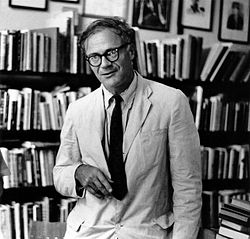
Robert Lowell

In a letter dated 10 August 1964, the American poet Robert Lowell wrote to his great friend, Elizabeth Bishop, another very distinguished American poet, about the death of Flannery O’Connor. Bishop was living in Brazil at the time.

“Did you read about Flannery O’Connor’s death? I gather she must have died of the bone disease, lupus, that plagued her all these years. It seems such a short time ago that I met her at Yaddo, 23 or 24, always in a blue jean suit, working on the last chapters of Wise Blood, suffering from undiagnosed pains, a face formless at times, then very strong and young and right. She had already really mastered and found her themes and style, knew she wouldn’t marry, would be Southern, shocking and disciplined. In a blunt, disdainful yet somehow very unpretentious and modest way, I think she knew how good she was. I suppose she knew dimly about the future, the pain, the brevity, the peacocks, the life with her mother. She was 38 when she died, and I think always had the character of a commanding, grim, witty child, who knew she was destined to live painfully and in earnest, a hero, rather like a nun or Catholic saint with tough innocence, well able to take on her brief, hardworking, hard, steady, splendid and inconspicuous life. I think the cards seemed heavily stacked against her, and her fates must have felt that they had so thoroughly hemmed her in that they could forget, and all would have happened as planned, but really she did what she had decided on and was less passive and dependent than anyone I can think of.”

In her reply to Lowell, Bishop wrote: “I feel awe in front of that girl’s courage and discipline.


Flannery-O'Connor_1947
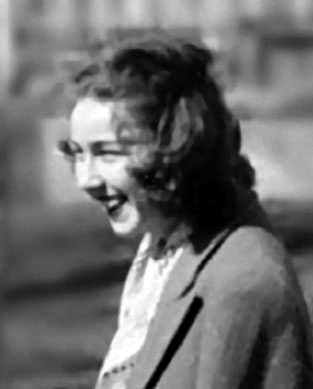
Flannery O’Connor

Flannery O’Connor was born in Savannah, Georgia, in 1935, and was diagnosed with the debilitating disease of lupus in 1951. At the time she was only expected to live for another five years: however, she managed to survive fourteen years and in that period she wrote two novels and dozens of short stories. Her stories are among the very best short fictions written anywhere in the world, and the generosity of Lowell’s appraisal of her character is well-founded. She worked as hard as her illness permitted, and by all accounts she never complained or wallowed in self-pity.

The extract below is taken from the title story of the 1955 collection, A Good Man is Hard to Find. If you are unfamiliar with the work of Flannery O’Connor, I would encourage you to find this collection and discover what happens when the family run into The Misfit, and if you are not blown away by her writing, I would suggest that you probably need to lose weight (if you know what I mean)!


A Good Man is Hard to Find (Flannery O’Connor)

THE GRANDMOTHER didn’t want to go to Florida. She wanted to visit some of her connections in east Tennessee and she was seizing at every chance to change Bailey’s mind. Bailey was the son she lived with, her only boy. He was sitting on the edge of his chair at the table, bent over the orange sports section of the Journal. “Now look here, Bailey,” she said, “see here, read this,” and she stood with one hand on her thin hip and the other rattling the newspaper at his bald head. “Here this fellow that calls himself The Misfit is aloose from the Federal Pen and headed toward Florida and you read here what it says he did to these people. Just you read it. I wouldn’t take my children in any direction with a criminal like that aloose in it. I couldn’t answer to my conscience if I did.”

Bailey didn’t look up from his reading so she wheeled around then and faced the children’s mother, a young woman in slacks, whose face was as broad and innocent as a cabbage and was tied around with a green head-kerchief that had two points on the top like rabbit’s ears. She was sitting on the sofa, feeding the baby his apricots out of a jar. “The children have been to Florida before,” the old lady said. “You all ought to take them somewhere else for a change so they would see different parts of the world and be broad. They never have been to east Tennessee.”

The children’s mother didn’t seem to hear her but the eight-year-old boy, John Wesley, a stocky child with glasses, said, “If you don’t want to go to Florida, why dontcha stay at home?” He and the little girl, June Star, were reading the funny papers on the floor.

“She wouldn’t stay at home to be queen for a day,” June Star said without raising her yellow head.

“Yes and what would you do if this fellow, The Misfit, caught you?” the grandmother asked.

“I’d smack his face,” John Wesley said.

“She wouldn’t stay at home for a million bucks,” June Star said. “Afraid she’d miss something. She has to go everywhere we go.”