Tonight you will be with me in Paradise

wade_blogNo, not the words spoken by Christ to the good thief as they were crucified side by side on Calvary. Tonight you will be with me in Paradise, if you accept the invitation, on a Wednesday evening around 8 p.m. to travel to the Paradise pub on Kilburn Lane, Kensal Green, just 100 yards up from the Ladbroke Grove – Harrow Road junction. It’s here that Wade Bayliss (pictured left) hosts the Island Experiment, London’s premier open mic venue.

Wade, a singer, musician and filmmaker, describes himself as a non-trepreneur, but he’s someone who makes things happen. He runs events, he’s working with the London Coffee Festival at the moment, and he plays and sings with the Island Experiment band and he’s been hosting open mics in the capital for seven years, the last two at Paradise, a venue he inaugurated. Every Wednesday evening musicians from far and wide come together at the Island Experiment and perform two or three songs, usually their own compositions, to a large, highly appreciative audience. What sets this open mic evening apart and makes it so special is the care and respect with which Wade and his co-host Wills treat the musicians who are performing. It doesn’t matter whether the individual is a complete novice or a hardened professional, every performer is introduced with great courtesy and every musical contribution is valued and warmly received.

So it being Wednesday evening, as it was last night, I pick up my Gibson acoustic and head off to Paradise. Prior to going on stage, however, I take the opportunity to talk to Wade, anxious to learn a little more about what drove him to set up The Island Experiment at Paradise. He’s an unassuming man, but he replies quite forcefully: “In a city so dominated by the banking economy, which is driving rents up and forcing more and more artists to abandon their art, because of the need to take full time employment just to survive, Londoners need the sort of opportunity provided by the Island Experiment at Paradise. It’s so easy for musicians to fall out of their musicality and when that happens it’s a great personal loss and a loss for us all.” Then he’s off, a bundle of energy, bounding onto the stage to introduce a new act or to thank a performer who has just finished. Incidentally, he has his own Jimmy Page story, so ask him when you go there!

The venue itself is an upstairs function room in the Victorian pub which has retained almost all of its old world charm. There’s a good-sized stage and a sound system which is always expertly managed; and at the back of the room a bar. The walls, with their ageing wallpaper, are oddly decorated with forty or more framed pictures of the Sacred Heart, of St Teresa of Avila or Lisieux, and many other devout images, which combined with the low lighting creates an atmosphere worthy of a true musical sanctuary, but believe me, the place can rock and it can roll depending on who is performing.

ZoZo_Blog1Before I go on stage I sit and listen to the gentle but firm voice of ZoZo (pictured right), a 23 year-old student at the Institute of Contemporary Music Performance who accompanies herself on guitar for two of her own songs. In the third year of her song writing degree, she has already established a calm stage presence which is bolstered by her highly attractive face paint. Later she tells me that she also has a penchant for wearing odd shoes. Born in Scotland and brought up in Spain, ZoZo speaks Spanish and Catalan and if you want to catch her, she’s usually at Paradise a couple of Wednesdays per month, and she is a genuine talent.

John_paradiseFollowing ZoZo, I get up on stage and sing two of my own compositions, for the second of which I’m backed by the excellent house band comprising Nick Harrison on drums, Tommy on lead guitar, and Patrick on bass. A wonderful, uplifting experience! These guys are so good and so modest!

One final observation: if you want to witness a truly multicultural environment, come to Paradise. The rich ethnic diversity of North Kensington is present in all its glory, and it is a tribute to Wade and Wills and to all who contribute to the evening that absolute interracial harmony prevails. They deserve a bloody award for the marvellous example they set!

So, if you’re looking for a really good night’s entertainment and you like live music, then make a point of visiting The Island Experiment at Paradise with your partner or friends or simply on your own: you will not regret it, I guarantee!

If you want to contact Wade, you can do so at wade_bayliss@hotmail.com. You can also learn more about ZoZo at www.zozoofficial.com.
So is it a blog or a blag?

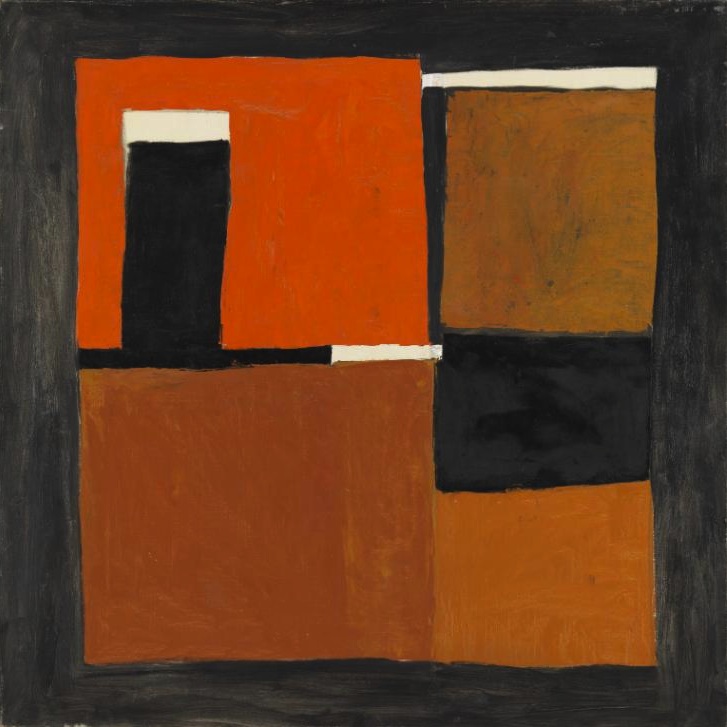
William Scott, Orange, Black and White Composition, 1953 (oil on canvas)

OBW_Scott

Bit of both, really. See I’m no art expert, have no training in the field and know little more than the next man or woman. But I use my eyes and I like to look. So what do my eyes tell me about William Scott’s Orange, Black and White Composition which hangs in the Tate Britain gallery in Pimlico? Well, loads. Firstly there are no squiggles, it’s all straight lines, all geometric but in a haphazard way: the square angles are not perfect 90 degrees and the lines are not drawn with a ruler. As there is nothing curved, nothing circular, the initial impression is one of hardness rather than softness.

And what about the restricted palette, just three colours? What does the lack of bright colours, the lack of pastels, for example, what does that tell us? In fact the colours are all muddy, earthy, iron and coal sort of colours.

Do we have to like a painting in order to appreciate it? I think not. We can find it interesting; we can enter into a dialogue with it, but not necessarily find it beautiful. However, it may tell us more about ourselves than we imagine if we look hard enough, and its beauty may slowly emerge. If we dismiss it out of hand that may be our loss. First of all the painting is a product and represents the cumulative effect of many decisions, many thought processes and yes, many emotions. It’s too easy to say, “Don’t like it,” when it hangs in a gallery crowded with other paintings that on the surface are far more attractive.

Whenever we see a frame we peer into its contents as though it were a window or mirror. Not all mirrors have shiny silvery surfaces. Hamlet, for example, holds a mirror up to his soul when he asks the old chestnut, and we call that a soliloquy, but in the plastic arts, paintings are soliloquies too! It’s all questions, questions, questions, and sometimes, but rarely. . . answers. Art is consciousness directed into an expressive form, shape, contour; it is a process of inclusion and exclusion, of affirmation, and a rejection of denial. Scott’s composition is essentially a frame with a view and with no view, a view of no view; it is opaque, there’s nothing to see, except perhaps what we see within ourselves as we observe it. Nothing really representational. It is abstract but the shapes are real and familiar. Personally, I find the painting endearing, the textures and the planes are an invitation that draws me in, perhaps to an inner landscape: hardness gives way to softness, and the simplicity with which he handles three colours is, to me, a virtuoso performance. So there!

Said enough? On your bike, sonny Jim? Stick to what you supposedly know? Blaggard?


scott_portraitWilliam Scott (1913-1989) one of seven children, was born in the Scottish port of Greenock. In her brief study of Scott’s art, Sarah Whitfield writes: ‘His parents lived in a small flat at the top of the tall granite tenement near the quay. And it was there he spent his early childhood. He never forgot the grim aspect of those impoverished surroundings. Scott himself wrote: “There were lots of bridges and tunnels, stations and steps, stone bridges you went over and iron bridges you went under – bits of ground between streets that had never been built on growing nettles.”’ When he was eleven years old the family moved to Enniskillen in Co. Fermanagh, by the banks of Lough Erne.

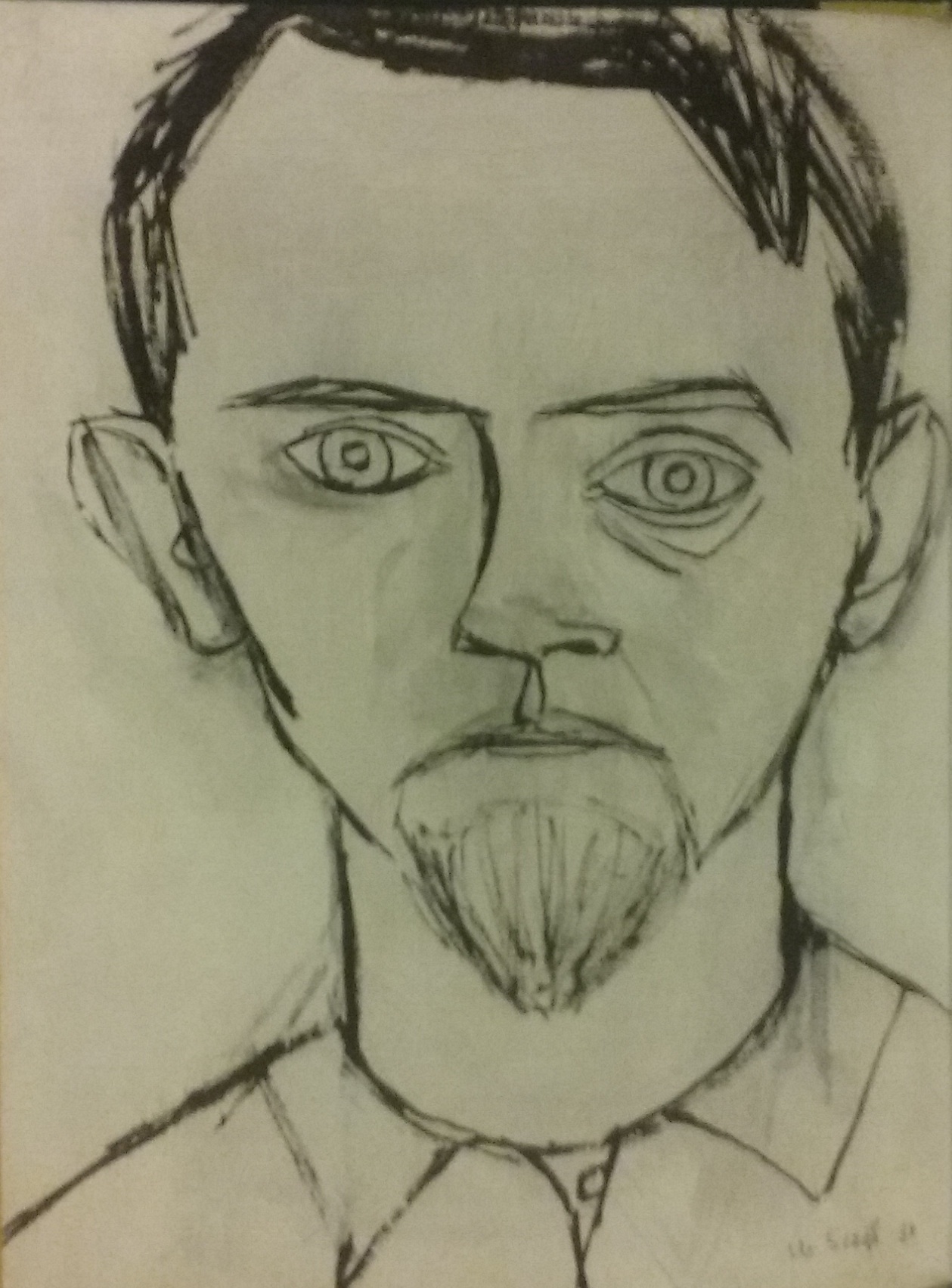
In the mid 1950s, Scott (pictured right in his self-portrait) criticized hard-edged abstract art as ‘too smartly done, too beautifully done, too tasteful, too perfect. . . so well done one loses a sense of humanity about it.’ He also spoke of his belief in ‘the beauty of things badly done’. Whitfield again: ‘His disregard for perfection also allowed him to stay nearer to the messy vitality of life, to keep hold of the struggle and tension that had gone into the making of a composition.’

A trip to the dentist – and all that involves

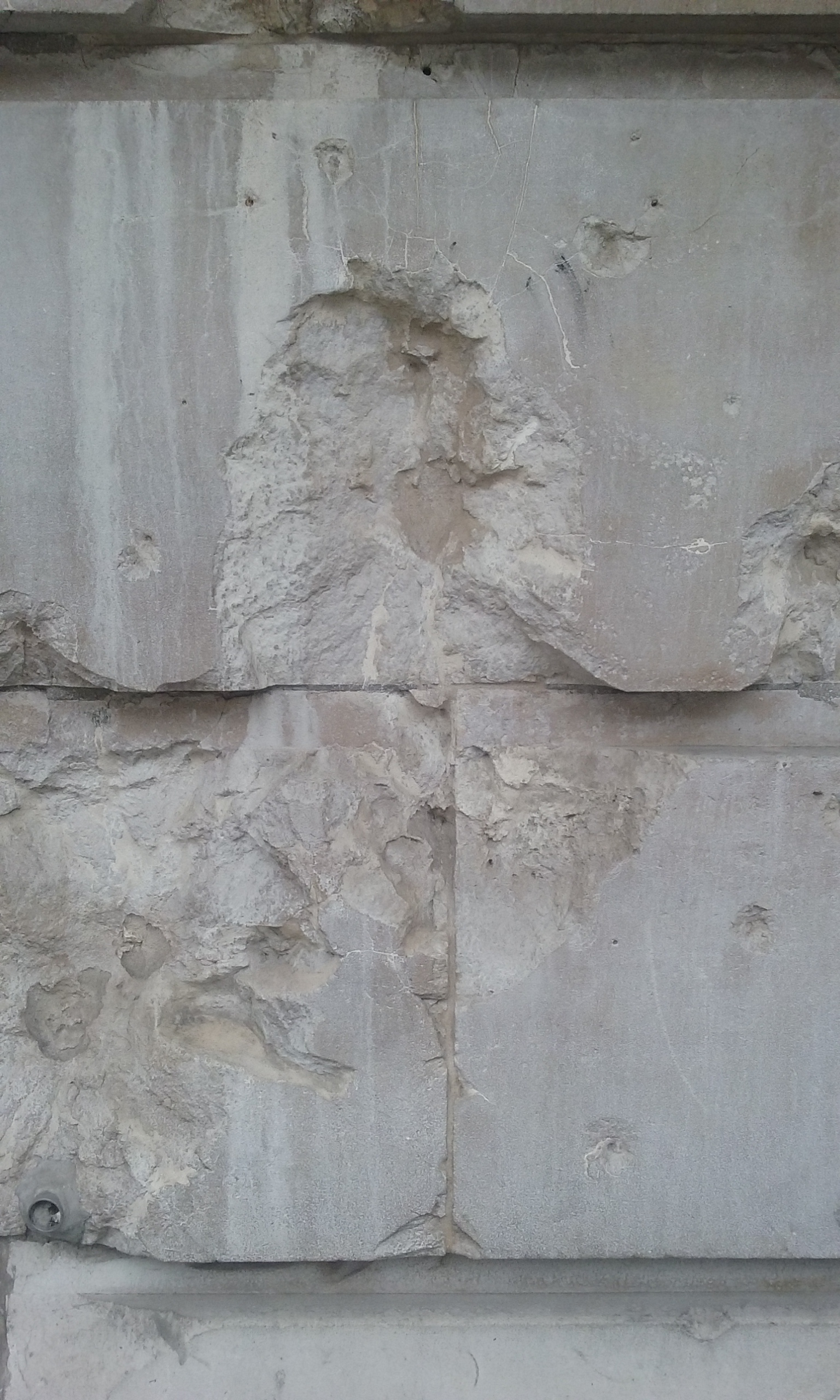
bomb damage

I breeze into the Science Museum this morning at around 10.30 and a pretty girl in a blue blouse at the desk where they ask you if you want to make a donation asks me if I’d like to make a donation. I reply, without breaking my stride or slowing in the slightest “Not at the moment.” And I walk on into the heart of the museum, have a quick look at some steam engines and space rockets and then ask one of the staff for directions to the nearest male toilet.

Much relieved, I then exit the museum and make my way to Imperial College Dental Centre, which as anyone who knows will know is round the corner from the museum in Prince’s Gate. Check in there, fill in the form and discover I’m thirty minutes too early for my appointment. So I head back out and re-enter the Science Museum.

On the main door I ask if anyone knows about bomb damage to the building during WW2. I’m advised to ask at Information, so I go back inside and there’s a huge queue, which I jump, and there’s the same girl, 5’ 2”, bright red hair, big smile, possibly 27, and she asks me to wait. I say, “I’m not in line because I’ve been sent to ask a question at Information.” She looks at me and says “You’re that guy who just breezed past me earlier this morning without stopping. I thought you must be someone important.” I smile at her as if to say “Dead right, sister, I’m a man on a mission,” and I ask where she’s from. “Italy,” she says proudly and with an even bigger smile. “What’s your name?” I say and she says “Katia.” “Very nice,” I say, and smile back at her before moving on through to Information where I ask my question about bomb damage, and still no one knows the answer, but I’m advised to return in 30 minutes. “Right,” I say, and I return to Katia, interrupt her talking to a couple with young children, give her another smile and say “I’m a scientist. I’m looking for information and I’ll be back.” She says “Great.”

So off back to the dental surgery, and as this is my first visit I’m surprised to see that the dentist treating me is called Dr John. I say, “That’s my name too, what a coincidence.” But as both she and her assistant have pronounced my surname, Lyons, as though I was French and from Lyon I am slightly taken aback. Nevertheless, this is South Kensington so I don’t get annoyed but I ask if they were born in this country. The dentist, yes, her assistant, a blonde girl turns out is from Lithuania. So I say to the dentist, “She’s excused, but really, you should have known, it’s not that difficult.” “Yes, but we treat a lot of French people here,” she says. Smiles all round. The dentist is very pretty, auburn hair, about 27 years old, and 5’ 2” in height. Her assistant about the same. I think to myself, “What is this? How come they’re all 5’ 2” today?”

Long story short. X-ray fine, teeth fine, just a little cleaning with the ultrasound and I’m out of there. And back to the Science Museum. But now I’m out of luck. Katia is no longer at her position, she’s on her break. I was going to ask if I could take a photo of that smile to share with my readers. But there you go!

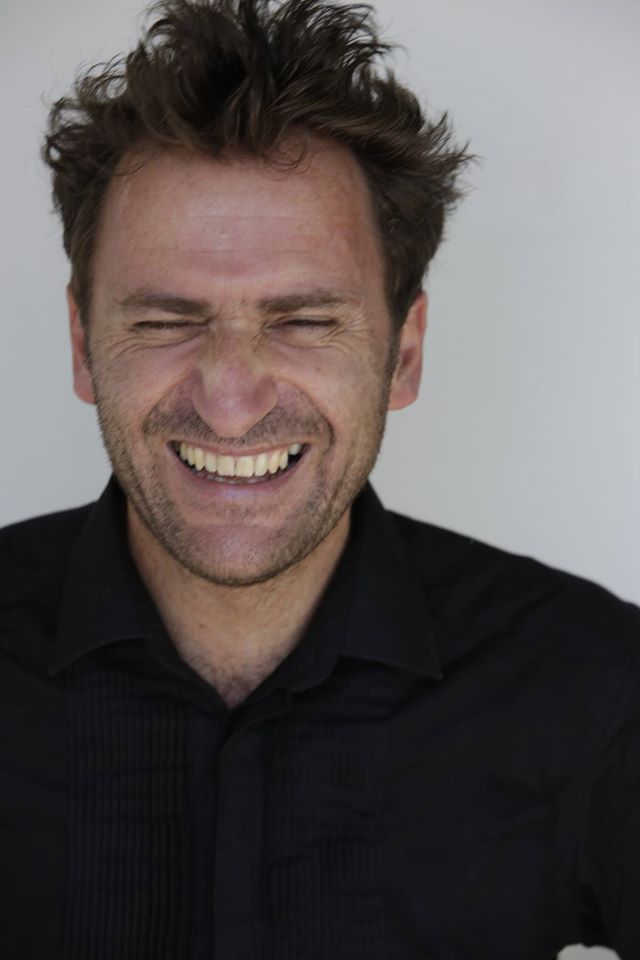
JacksThen on to information. New people, but no one knows anything about bomb damage. So out I go again. On the street outside two more employees of the museum, one, a young woman, Jane, deputy assistant manager, brown hair, about 5’ 2” and a very pleasant British smile, and Jack (pictured) a young man who is around my height. Couldn’t have been kinder the pair of them. So I ask them same question. They know nothing about bomb damage to the Science Museum. But Jack raises a forefinger and points south, down towards the Victoria and Albert Museum and says: “If you’re looking for signs of bomb damage, that’s the place.” I take his picture, thank him and head off to the V & A, pausing en route to take photos of the really extensive scars to this national institution caused by our German neighbours (I know it’s over, no hard feelings).

I then walk round to the main entrance and approach Information. Helen is on the desk. White blouse, short silver hair, blue nails, petite, 5’2”, around 27 years old and very cute: no wedding ring, and a huge smile and British, very helpful, shows me the page on the Internet relating to bomb damage and together we locate when it happened. November 1940. Another woman on the desk adds that the museum made a policy decision not to repair the marks left by the shrapnel. “Quite right too,” I say. “It’s a museum. Should have a sense of history.”

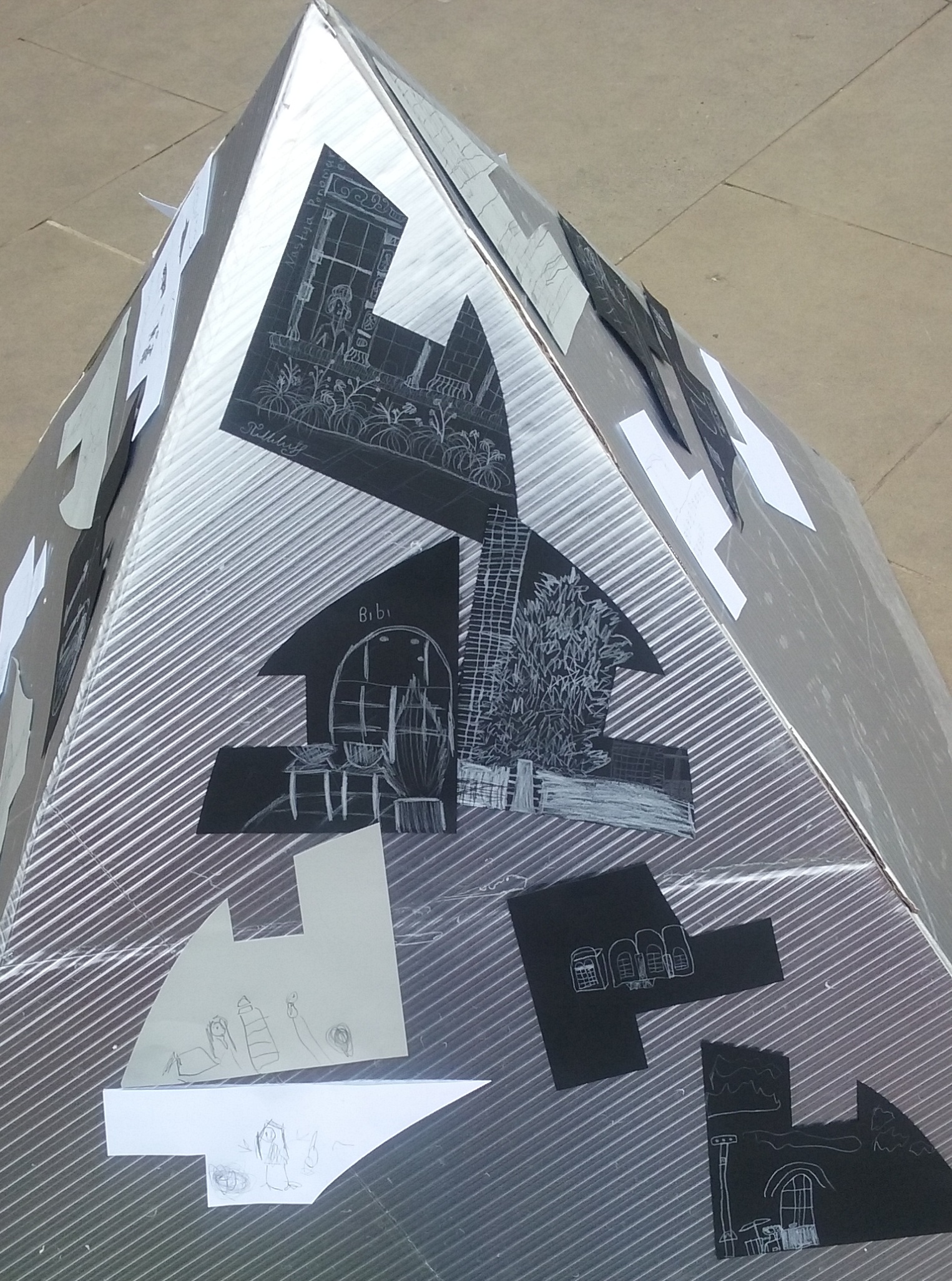
KIds_drawingBefore I leave, I pop outside into the museum garden and there’s a very pretty young woman, olive skin, long brown hair and big smile. White blouse, black apron and black jeans. She’s in charge of the paper and pens for the children who want to draw a picture of the museum. “Where you from,” I ask. “Portugal,” she says. “You live here?” “No, but I come in the summer to work in London.” “Eu falo português,” I tell her. “Oh you speak Brazilian Portuguese.” Her name is Rosa and yes, she’s 5’ 2”. She asks me if I want to draw a picture. “No, but I’ll take a photo of some of the art work if you don’t mind. “Be my guest,” she says. And that’s it. The lengths I go to!

Footnote: Saw Jimmy Page from Led Zeppelin on the steps to the men’s facilities in Victoria Station on Sunday: he descending, me ascending the stairway. We were wearing almost identical black leather jackets. He clocked mine, I clocked his, but not a word was spoken.

Heron


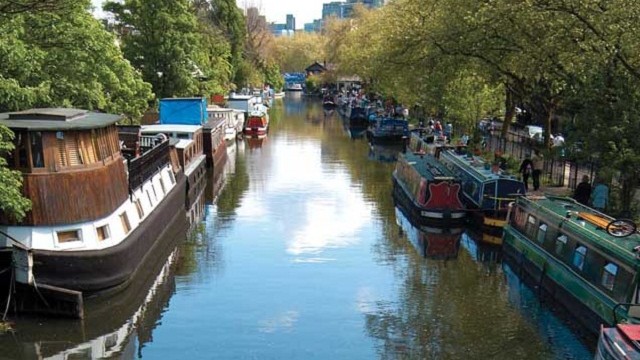
little veniceOne of the joys of life, when I lived in North Kensington in the 1980s, was to be near the Grand Union Canal. I would usually join the path close to Kensal Green cemetery, and walk under the bridge by Portobello Dock and continue on down to Westbourne Park. Occasionally I would push on as far as Little Venice (pictured) in Paddington, where the waterway becomes the Regent Canal. For those who don’t know it, Little Venice is an utterly charming oasis of tranquility: here you will see all the prettiest, best-kept barges, many of them teeming with fresh flowers.

The heron mentioned in The Cross (the story posted earlier today) is the same bird that features in the poem below. I saw the heron sitting in the undergrowth on the north side of the canal, that is, the side opposite the towpath, close to the cemetery wall. What struck me most at the time was how rare it is to see ageing wildlife. I know that cats when they are about to die often run away or go into hiding so that they can end their days discreetly and in dignity. On the day in question, the sadness of this bird’s fate really touched me and I felt that the least I could do was to make a space for it in my poetry. In later years, I must confess, I have also worried that the heron might have been an omen. I hope not!


Heronheron

That heron I saw
        on the canal bank
half-hidden in the bushes
        standing in nettles,
all confidence gone
        looking old and bedraggled,
it’s long slender legs
        begrimed, its feathers
clogged with oil
        doubtless released
from a careless barge.
        And yet
you don’t expect
        to see a heron
looking old
        and defeated,
once vigorous wings
        as though clipped.
It barely raised
        its head
as I passed,
        its opaque eyes
half-heartedly scanning
        the opaque,
stagnant waters
        for some
lithe living form
        to devour.
A crestfallen heron
        as though lost
as though displaced
        as though homeless,
a heron fallen
        on hard times
in old age,
        a creature of
beauty trashed
        by time and
circumstance.

None of these things
        is to be expected
in a heron.

John Lyons
1995

The Cross – A North Kensington Tale

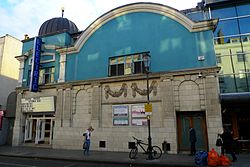
250px-Electric_Cinema_Notting_Hill_2009For the whole of the 1980s I lived in Ladbroke Grove, just up by Harrow Road and close to the Grand Union Canal. This was in the days before the catastrophe of gentrification. I was working at the time as a teacher in Holland Park School, and on Saturdays I would do my grocery shopping in the market at Portobello Road, often meeting pupils of mine who had Saturday jobs on the fruit and vegetable stalls. In the evenings or perhaps for a Saturday matinee, I might go to see a film at the Electric Cinema (pictured) which first opened in Portobello Road in 1910. Nowadays it’s a very smart place, but back then the seats were rickety and mice would be running between your feet as you sat and watched Bob Dylan and Sam Shepard in the crazy film, Reynaldo and Clara, which also featured Allen Ginsberg; or Elliot Gould playing Philip Marlowe in The Long Goodbye. But did I care?

I loved to ferret through the stalls looking for CDs or second-hand books, anything that took my fancy. It was there that I discovered two sensational CDs featuring Joe Arroyo, possibly Colombia’s greatest salsero, bought them for a couple of quid each. And before that, back in the days of vinyl, I bought four of John Lennon’s solo albums in a pop-up shop opposite Tesco, also for a couple of quid each. There was a family butcher’s in the Golborne Road where the meat and the service were always excellent; and I would sometimes go into the Cañada Blanch Spanish School at the very top of Portobello for lunch in the canteen there, where two of my Spanish friends taught: calamares a la romana, delicious! Above all, I loved the colour and the buzz on the streets and loved being part of that community. There were the Rastas smoking ganja on the corners, and the Spanish and the Morrocans and the Portuguese, and so many other nationalities, and everywhere heaved to the sound of Bob Marley. Get up, stand up, stand up for your rights!

Among the many characters in the area, and believe me there were many, there was a black man who used to carry a white cross. I would see him frequently in different parts of the borough but mostly in Ladbroke Grove, and on one occasion I even met him in the big supermarket up by the canal. He had put his cross down just behind one of the check-outs and was paying for his goods.

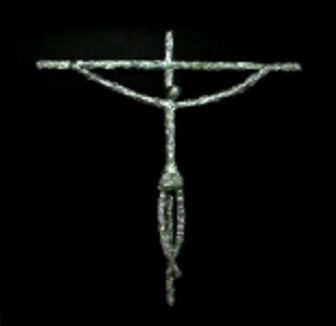
So the story below is actually a true story and it was published in my translation some years later in Managua, in the Saturday supplement of El Nuevo Diario along with the picture of a cross sculpted by the poet, Ernesto Cardenal. 


The Cross

ernesto crossLaminated white wood. An oak cross with white panels. The size of a man. A tall man, almost six foot six. A man with broad shoulders and a long neck. A man with short black hair. A black man, carrying a white cross. He says nothing as he walks along the street. Says nothing to anyone, but talks constantly to himself. Maybe he’s praying. Maybe not. He wears black trousers, worn at the knees. His trousers are tucked inside Wellington boots. His jacket is not black, but dark blue, the cuffs frayed. Under the jacket he wears a polo neck sweater, thin black wool. He goes up the street muttering under his breath and people gape at him as he goes. No one laughs in his face, but behind his back, people roll their eyes and a smile appears on their lips. An eccentric, carrying a huge white cross. Was a time in Virginia, a man could be crucified for less. The Klan would have told him what to do with that cross, that’s for sure. . . .

Le Pont Mirabeau – Guillaume Apollinaire

apollinaire Metzinger

The poem below by Guillaume Apollinaire (1880 –1918) is taken from Alcools, one of the first great modernist texts, published in 1913. A young Samuel Beckett, recognising the importance of this landmark collection, translated the first of its poems, entitled ‘Zone,’ which establishes, as its title suggests, a brave new, modern territory for writing in the 20th century.

‘Le Pont Mirabeau,’ however, is a rather more traditional lament to the passing of time and the fading of love. The bitter-sweet, melancholy tone was inspired by the poet’s troubled and ultimately doomed relationship with Marie Laurencin.

In addition to writing poetry, Apollinaire was a journalist and an art critic and is credited with having invented the terms ‘surrealism’ and ‘cubism’ He was a very close friend of Picasso and also of Gertrude Stein.

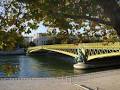
‘Le Pont Mirabeau’ has become one of the best-loved and most famous poems of French literature, and the first lines of the poem appear on a metal plaque on the Paris bridge in memory of this great poet.

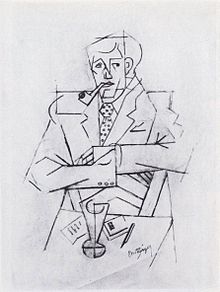
The illustration is Étude pour le portrait de Guillaume Apollinaire, by Jean Metzinger, and it dates from 1911.


Under the Mirabeau Bridgemirabeau

Under the Mirabeau Bridge flows the Seine
            Just like our loves
      Must I recall
The joy that always followed pain

            Night falls the bell tolls
            The days fade but here I remain

Hand in hand let’s stand face to face
            While beneath the bridge
      Of our arms the waves
Of eternal longing flow languidly by

            Night falls the bell tolls
            The days fade but here I remain

Love fades away like the water that flows
            Love fades away
      How slow is life
And how aggressive is Hope

            Night falls the bell tolls
            The days fade but here I remain

Days pass the weeks pass too
            Neither time gone by
      Nor our loves will return
Under the Mirabeau Bridge flows the Seine

            Night falls the bell tolls
            The days fade but here I remain

Guillaume Apollinaire (translation, John Lyons)

Gertrude Stein, Hemingway and the Lost Generation – a fiction

stein

“I remember very well the impression I had of Hemingway that first afternoon. He was an extraordinarily good-looking young man, twenty-three years old. It was not long after that that everybody was twenty-six. It became the period of being twenty-six. During the next two or three years all the young men were twenty-six years old. It was the right age apparently for that time and place.”

“So Hemingway was twenty-three, rather foreign looking, with passionately interested, rather than interesting eyes. He sat in front of Gertrude Stein and listened and looked.”

“Gertrude Stein and Ernest Hemingway talked then, and more and more, a great deal together. He asked her to come and spend an evening in their apartment and look at his work. Hemingway had then and has always a very good instinct for finding apartments in strange but pleasing localities and good femmes de ménage and good food. This his first apartment was just off the place du Tertre.”

“We spent the evening there and he and Gertrude Stein went over all the writing he had done up to that time. He had begun the novel that it was inevitable he would begin and there were the little poems afterwards printed by McAlmon in the Contract Edition. Gertrude Stein rather liked the poems, they were direct, Kiplingesque, but the novel she found wanting. There is a great deal of description in this, she said, and not particularly good description. Begin over again and concentrate, she said.”

Extracts from Gertrude Stein, The Autobiography of Alice B. Toklas.


I became fascinated by the writings of Gertrude Stein after reading The Autobiography of Alice B. Toklas, in which she assumed the persona of her partner, Alice, to tell her own life story. There is nothing straightforward about Stein’s writings, many of which represent an insurmountable challenge to most readers, not excluding, at times, myself. Nevertheless, it is always worth persisting with genius.

Over the years I have learnt to read her texts and discovered that to do so, one really has to read them out aloud to capture her breath, much as one has to do with Joyce’s Finnegans Wake. Stein was a very close friend of Picasso and Matisse and Cézanne and other artist contemporaries in the early part of the 20th century, and the salon which she held at her home, 27 rue de Fleurus, in Paris, was frequented by many of the leading avant garde writers from Europe and the United States. It was supposedly Gertrude Stein who coined the term ‘the Lost Generation’ referring to Scott Fitzgerald and Ernest Hemingway, among others.

The story I am posting today, although entirely fictitious, was inspired by my reading of the relationship Gertrude Stein had with Ernest Hemingway as hinted at in the quotations above.

At one point in the Autobiography, she speaks of her agreement with the writer, Sherwood Anderson in these terms: “But what a book, they both agreed, would be the real story of Hemingway, not those he writes but the confessions of the real Ernest Hemingway. It would be for another audience than the audience Hemingway now has but it would be very wonderful.”


Blackberries – a seasonal poem

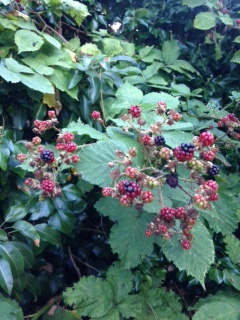
blackberriesThe Japanese haiku is a poem which replaces a few simple brushstrokes of the painter with a few simple words. It is a style of observational poetry built from short strokes of language.

Art is about observation and consciousness and the transference of that consciousness into an expressive form to create an aesthetic object. Sounds complicated, but it can be as simple as the representation of a bison on a cave wall, or as a poem by Molly Rosenberg, inspired by the picking of seasonal fruit.


Blackberries

mary_berry

Tearing skin
on sharpest thorns,
spots of crimson
stained on white shorts.
Deep green leaves,
folded, curled,
hiding the treasure
embedded within.
        A glint
of purple blackness,
first a single berry
then a cluster,
more and yet more
appear amid the cruelty
of the thorns
and the gentleness
of the leaves.
After the stabbing
and the pain
the sweetness
of the reward.

Molly Rosenberg

The Old Man and the Sea

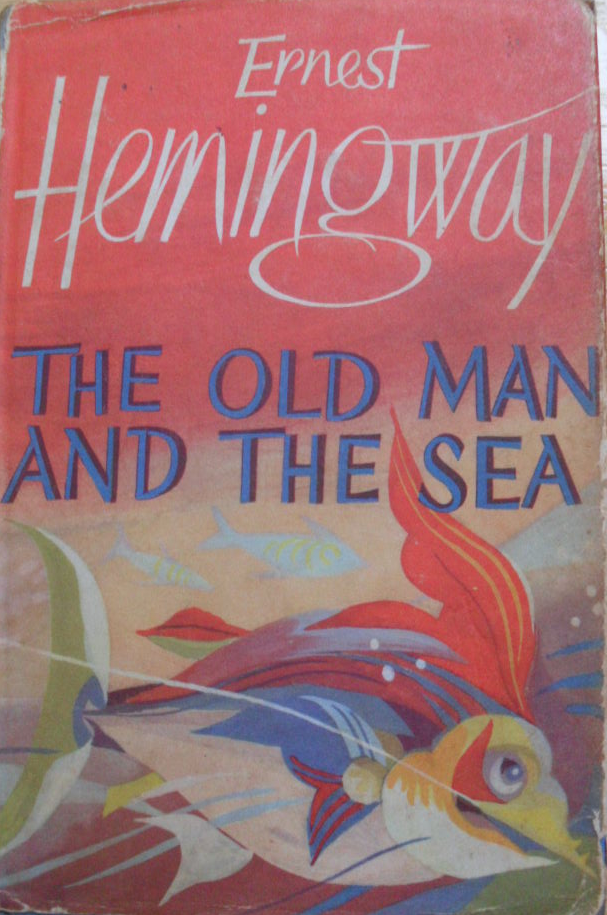
Hemingway_book“He was an old man who fished alone in a skiff in the Gulf Stream and he had gone eighty-four days now without taking a fish.”

I first read the opening lines from Ernest Hemingway’s novel, The Old Man and the Sea, in 1963. My father had come home from the school where he taught English and handed me a brand new copy of the book. He said: “John, I think you’re going to like this. Give it a read.” I still have that book (pictured) and have read it many times since, and it is a text that never ceases to bring me great pleasure. It is the last book Hemingway wrote and quite different from any of his previous work. It has the stature of a book from the Bible.

Hemingway tells the tale of Santiago, an aging fisherman who, having gone for such a long time without landing a big fish, has lost all credibility in his community and all faith in himself. Fishing all alone one day, he does finally hook a huge marlin. After a fierce struggle, he defeats the fish and lashes it to the side of his boat, but he then has to battle the elements and ward off the attacks from predatory sharks that wish to feed off the fish. By the time Santiago reaches the harbour, little more than a carcass survives, though the head, the backbone and the tail remain as testimony to the immensity of his catch. The following day, Santiago’s fellow fishermen congregate around the skiff to applaud his achievement.

There are many ways to interpret this parable of persistence, but to me the novel has always been about Hemingway’s struggle as a writer, the struggle against writer’s block, the struggle to defeat the blank page and to land a big book that could stand alongside his earlier successes.tribe

By coincidence, in August 2003 I was invited to give a lecture at the University of Passo Fundo in the south of Brazil during a weeklong literary festival. I chose to talk about the inclusion of women in literature, focusing briefly on the writings of Emily Dickinson, Charlotte Bronte and Jean Rhys. On the coach trip taking various participants in the festival from the city of Porto Alegre to Passo Fundo, a Brazilian academic came up to me and introduced me to the writer, John Hemingway, grandson of Ernest. In the course of the week we spoke very little, but on the return coach trip we sat together and in a journey of three hours, we became very good friends and have remained so to this day. John wrote a magnificent memoir of his relationship with his father, Gregory, entitled Strange Tribe. This is essential reading for anyone interested in the Hemingway clan.

Following our first encounter, I did not see John again until I caught up with him in the first week of July this year when I travelled to the San Fermín festivities in Pamplona. But more of that further down the line.

Tomorrow I will post a story I wrote in 1996, centred on the relationship between Gertrude Stein and Ernest Hemingway.

So, is he a healthy eater? Lunch on a plate!

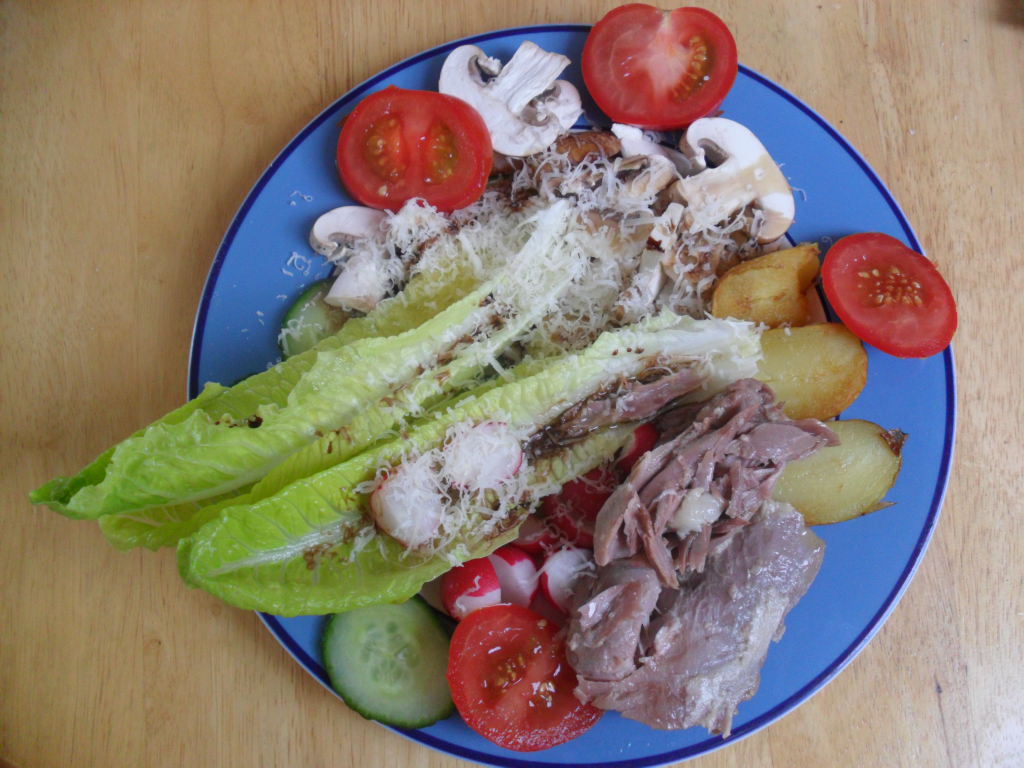
See for yourselves! On the plate (as illustrated):salad

1.5 new potatoes
5 fresh radishes
3.5 cm of cucumber, sliced
3 chestnut mushrooms, raw and thinly sliced
1 salad tomato
6 small Romaine lettuce leaves
1 confit duck leg, skinned and boned
All this topped with finely grated Manchego cheese, and drizzled with a fine balsamic vinegar and Spanish extra virgin olive oil.
Salt and pepper.

So what do you think? Our blogsworth has always found that when the heart is under tremendous emotional stress (you have no idea!), the heart requires the utmost dietary care, and he applies this knowledge meticulously.

Keep on pumping!

Click on image for mouth-watering enlargement!