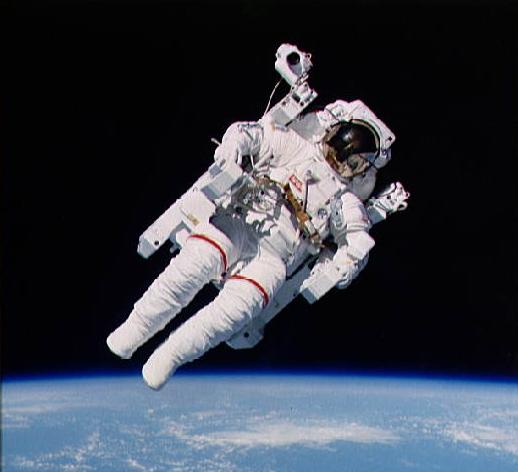
We are so they say the stuff of stars and in the warmth of our bodies there is a remembrance in our eyes a glow and in our hearts an ambition that we may once again travel a galactic distance
We are so they say the stuff of love not the music of it but the dance the perpetual movement see how we cover the floor space how we invest in our intimate choreographies how we twist and turn but always guided by the beam of light that comes from our lover’s eye
We are so they say language words that fuel our journey that send signals to and from mission control words that hone our actions and winnow our thoughts words that ferry our feelings from one soul to the other hopelessly romantic first drafts longing to be shaped into final texts
We are so they say the elaboration of solar energy driven here on the crest of cosmic waves bound in a code of complex simplicities time passing through the mesh of time adventurers of the heart and mind
We are so they say astronauts on a mission to discover a path to find our way to rediscover ourselves in our own dark night
What it is to introduce a new text into the world free from the fret of fear and hate I have seen the sycamore the beech and silver birch stripped to their boughs as a wind blew in from the East and a flurry of tiny birds caught in a sudden gust before their final departure
This is autumnal abandonment the first shivers of the year end plumes of smoke rising above the houses as every step hastens one would hope homeward to a smile and a warm supper
In the woodlands the last chromatic burst has been neutralized and expectation now rests on the buried seed that will rise to pierce the transparent air in spring
And yet the withered rose it would seem has outstayed its welcome as nature reinvents itself in the guise of the poor of the dispossessed of those by force of circumstance obliged to live colourless thankless lives
What currency rules this bitter world of inequalities ? What canker lies at the heart of communities that disown their own ? And where are we to find the necessary angels of the earth those not stiffened by the pangs of greed those with uncurdled hearts who believe in the reality of harsh realities ?
Nature is the great leveller and months of austerity will yield in time to the bliss of abundance the speech of truth will thrive and the peace of intelligence will dismount the stars and share the fruits of their energy among one and all and nothing will be lost
Across the whole of England rain is falling falling upon the towns and the fields falling upon the highways and the byeways falling upon the rich and the poor
falling upon young and old alike falling upon the fit and the infirm upon our schools and hospitals Across the whole of England
the sky is dark and rain is falling falling upon those who love and upon those whose lives are consumed with sorrow or hatred
or bitterness or disappointment falling upon those who will struggle to survive and upon those who retain a spring in their step the rain is falling
on buses and cars and trains and planes through the polluted city air across the whole of England the rain is falling everywhere upon the present and the past and upon
the dreams we hope will last the rain rains down on the living and the dead
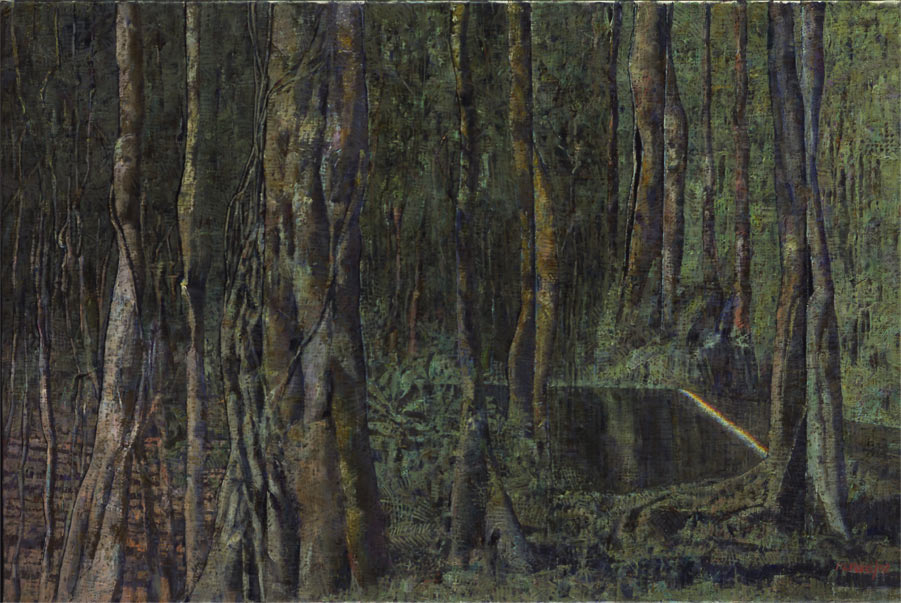
Armando Morales (1927–2011) was an internationally renowned Nicaraguan artist, a contemporary and friend of the poets, Ernesto Cardenal and Carlos Martínez Rivas.
Morales was famous for his voluptuous still lives, in particular, sensual studies of apples and pears that evoked the softness of human skin. He later moved on to the painting of the female form, and in 1971, at the Galeria Bonino in New York, he showed a series of stunning nudes in which the fine detail of every muscle, of every inch of skin, reveals an unsurpassed sensuality.
I visited Armando at his studio in Vauxhall many years ago during a brief period he spent in London. On that day he was preparing a huge canvas, and in the course of our conversation many times he climbed a ladder to access the top of the canvas. In one hand he held a magnifying glass and in the other a razor blade, poring over the surface in search of the most minute imperfections, meticulous to a fault.
I have chosen his beautiful woodland study to illustrate the poem below, the title of which is based on the opening line of Dante’s Inferno.
In the midst of a great forest
What treasures I have amassed are immune to fire and theft though I have indeed known loss loss of the body and loss of the soul and live now in a quiet space catching the drift of birdsong of the splenetic spider that plays upon its frosty web I can resist all things better than my own changeability I breathe the air but do not breathe it all I am not proud and know my place : the moth and the fish-eggs are in their place too so too the bright suns and the wide golden moon that shone last night so too the phantom dawn that creeps through the mist to smother dreams What is palpable is in its place What is impalpable is in its place Whether we fall by ambition blood or lust like diamonds we are cut with our own dust I seek the grail of laughter a life that will turn upon the axle of devotion a kiss not singed by the eventual flame
These are the lanes of death where our footfall falls Here love is a moment and pain another and our mutual friends are ash and dust moth and termite here time runs amok wields a thirsty blade cuts to the very bone
Flying by day this spineless boneless innately venomous creature is a paragon of brash invertebrate beauty but beauty comes at such a price Native only to Madagascar it flits from bloom to bloom its long proboscis supping by preference on the nectar of white flowers More choosy still are the larvae that that feed only on plants from the toxic Omphalea family They hatch from eggs laid on the underside of the leaves of these plants The white or pale yellow larvae with bright red feet will once they emerge mercilessly devour the entire plant leaf flower stems and all before moving on to decimate another of the same family From tip to tip their wings span a good three inches and boast shades of black and blue and red and yellow and emerald green Patterns of kaleidoscopic effect are produced by the wings’ curved scales creating optical interference as light is reflected at sharply different angles Toxicity is their defence for though the caterpillars eat the poisonous plants the toxins are not digested : these remain in their bodies through pupation into adulthood To most predators a most noxious foul-tasting moth— the iridescence of their wings a salutary warning
It’s that time of the year again. Clocks have gone back, the temperature is beginning to drop and we are all bracing ourselves for winter. The landscape is unrecognisable from the bright summer days, yet every season has its magic and its mood. Autumn, a sensitive time for nostalgia, for poring over memories by an open fire, for meditation; a season which John Keats has indelibly marked forever as a time for poetry. And so we are pleased today to present a new poem by our dear friend, Molly Rosenberg.
Autumn Thoughts
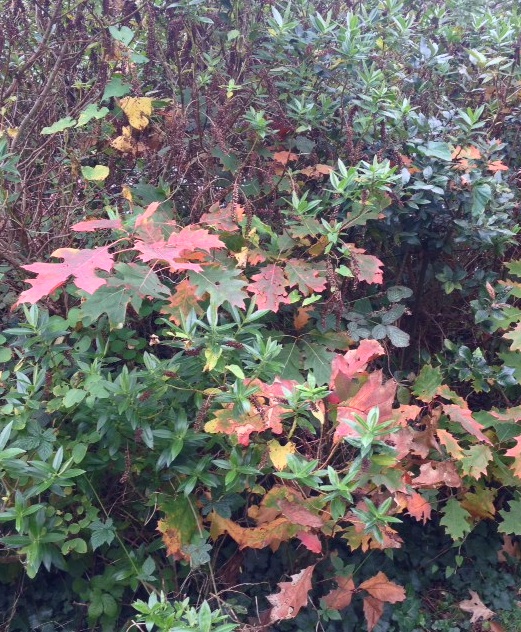
Through gold Through ruby red Burnt orange Amber glow
Like us the magnificence of beauty reaches its crescendo, as the array of colours overwhelms the Ravensbourne Valley. It takes my breath away. So short a time like our youth so fleeting.
Fluttering Drifting Crunching underfoot
Beauty turned to nuisance now like us when our purpose is served, all will be swept away.
The sharpness of the air pricks my cheeks. I wrap myself in the softness of cashmere. Relish the feeling of summer feet now clad in suede as I tread lightly through these golden autumn days.
Ernesto Castillo Salaverry (1957-1978) was born in Managua, Nicaragua; he died barely two months before his 21st birthday, fighting against Somoza’s National Guard on the streets of Leon. His poetry reads like a diary of the daily struggle against the dictatorship, interwoven with love and nostalgia. Days before his death he wrote a letter to his parents:
Sunday, August 27, 1978.
To all those who love me, and among them, especially you.
I had thought not to write these lines, because you know I do not like goodbyes, I believe that every separation is temporary because when several people are together, when they love each other in the way that we love each other, it is impossible to forget each other, and at happy times, in the sad moments, we are together, sharing, as we have done so often. You are always with me. You are in the rain, you are on the streets mingling with the people, accompanying me every time I go to work. When I talk with colleagues, and we touch on family matters, matters of love, I just smile, because I have the good fortune to have your support; I am happy to know that you understand the need to fight; happy because the training I received made me aware of the need for change, for the revolutionary transformation of an unjust society.
In addition to having you, I am not alone; colleagues who work with me are very fraternal, we live together in danger, we share the same ideology, and our Sandinista convictions make us brothers. The people, the workers, the taxi driver, the newspaper seller, the cornershop keeper, they all accompany me. They trust me, without even knowing me, they love me, they have great faith in me, in us.
For you, for them, for Nicaragua, I am willing to fight to the end.
I cannot say that I don’t miss you, that would be a lie. I’d like to be with you, sharing every moment, enjoying every word, every gesture, every look. Today it’s not possible, but we must sacrifice ourselves, and I confess that I find it hard, we must fight in these conditions so that thousands of families can come together, so that Nicaraguan mothers do not continue to see their children murdered by the National Guard.
I’m not afraid, I know I’m going to brush with death, and I’m not afraid. You, and an entire nation, are with me. I love you.
Ernesto.
4 poems by Ernesto Castillo
The list of revolutionary martyrs is long; I know that the road to Liberation is painful; but if I fall, another will take my place and maybe fight longer than me, and his work combined with what has been done, may finally achieve victory.
* The streets wet with rain reflect the night. I crawl along the path as though trying to prolong the steps that must take me to my death.
*
September 1978
Some are for your sister; let her enjoy them if she likes them , if not, let her accept them, because it was she who created them; not all, just some. The others are scattered in women’s names I’d already have forgotten, had I not written them in my poems. The last ones, the most recent, are yours, I wasn’t sure before. These poems and these feelings are yours because you earned them.
* Thanks for having given me your kisses, your moments of joy and loneliness thanks for sharing my problems.
I can only leave you my poems and my memories, the memory of the silent nights with my hands running across your body and my eyes glistening as our mouths met.
I see you rereading my letters and poems, remembering the why of each sentence, trying to revive my love in every one of those pages.
I’ll leave my sensation of loneliness, because where I’m going you cannot reach me; and in your sleepless nights you’ll remember that I can never come running to you, that you’ll no longer even have my distant presence, because my body will be eaten by worms that will erase every trace of your kisses on my neck.
Time will turn my bones to dust, everyone will forget me, but you will sometimes feel the urge to cry; a veil of sadness will overwhelm you and my memory will reappear in your eyes.
Translations by John Lyons
Following the United States occupation of Nicaragua from 1912 to 1933, during the so-called Banana Wars, the Somoza family political dynasty was installed, and, with US backing, would rule the country until the final dictator was ousted in the 1979 Nicaraguan Sandinista Revolution.
In the 1970s the Sandinista National Liberation Front (FSLN) had begun a guerrilla campaign with isolated attacks which led to national recognition of the group in the Nicaraguan media and solidification of the group as a force in opposition to the dictatorship. The Somoza regime, was defended by the National Guard, a force highly trained by the U.S. military, that used torture, and extra-judicial killing, intimidation and censorship of the press in order to combat the FSLN attacks. In 1977, mounting international condemnation of the regime’s human rights violations led the Carter Administration to cut off aid to the Somoza regime. By the end of January 1978, civil disobedience had turned into a full-scale popular uprising throughout the country, ending in July 1979 when Somoza abandoned Nicaragua and the first Sandinista government was installed.
The silkworm is the larva or caterpillar of the domesticated silkmoth, Bombyx mori. A silkworm’s preferred food is white mulberry leaves, but it may also eat the leaves of any other mulberry tree. It is entirely dependent on humans for its reproduction and does not occur naturally in the wild.
Sericulture, the practice of breeding silkworms for the production of raw silk, has been underway for at least 5,000 years in China, from where it spread to Korea and Japan, and later to India and the West.
The poem below was inspired by these verses from the Rubaiyat of Omar Khayyam:
You have formed me of earth and of water, What can I do? Whether I be wool or silk, it is You that have woven me, and what can I do? The good that I do, the evil that I am guilty of, Were alike predestined by you; what can I do?
Here we go round the mulberry
silkworm cocoons
The low branches of morus alba, with its wide spreading crown and scaly orange-brown bark pocked with lenticels to oxygenate and
expel toxic gases, and lush orbicular-shaped leaves with serrate margin: dioecious flowers–the narrow male, one to two inches long, the plumper
female at barely an inch–boys and girls in slender zigzag come out to play. Twigs with silvery white filaments draped with fleshy multiples of drupes,
cylindrical fruit, akin to the blackberry, from June to August maturing. The larva fed on this foliage, its spittle passing through spinneret lips so hardening to tensile-as-steel silk,
each cocoon wound with a single mile-long thread, the oven- baked pupas, soaked in boiling water, whence five strands spun on wooden bobbins, the yarn woven into the cloth of kings. So do not
hasten to consign Emily Dickinson’s breath to dust, nor the intemperate slobber of Walt Whitman’s leaves of grass to the furnace, in all modesty our poetry too is nothing less than solidified saliva.
Suddenly the mild weather returns bringing with it grey skies and a rising wind that rattles the eaves
Lethargy abounds on this annual day but I sit at my desk I read I write I think or at least attempt
to gather my thoughts feeling my way
through the day For so much of my life
I have been a dissident a rebel
held strong opinions refused to swim with the tide Persist in the face I tell myself
In every space a hint of more though more is often less a bouquet of roses for example : too many is to miss the point
My life has not been a single line but many strands woven into many lives some but not all at odds
In the dark night I am consumed by memories of the many lips to which I paid service perhaps pointlessly but always lovingly and eager always for redemption Henceforth I shall act so that there is no centre no borders or edges to my life become an agglomerated existence a condensation of selves with no hierarchy of moments or archeologies all change all transformations contained within a single singularity
Time is change of colour difference refracted in the quality in the aspect of light Time is temperature oysters consumed at Whitstable or in Trancoso Time is shadow that brings relief Time is syllable formed in the throat shaped between tooth and tongue Time is here and now a weight that slips from my shoulders
Time is many particles of self of selves held in suspension
Time is the river at Henley the trees shutting down shedding leaves to weather the winter : the purity of the white swans on the water herons perched on wooden beams the cackle of geese dogs racing along the towpath all in a world of their own
worlds within worlds within worlds
The slow float of the evening light descends to the sound of birdsong : nature in all its innocence disdains the mockery of human ambition even as moths feed on our fabric
How will this beauty be preserved : by what breath between the high cloud and the hill ?
So to the frail dust of success life’s bitter-sweetness
the tenderness of love the despair of failure
and inevitable loss Dusty Springfield
lies solo in the graveyard of St Mary’s Church I only want to be You don’t have to say To be with you. . . Just be close at hand
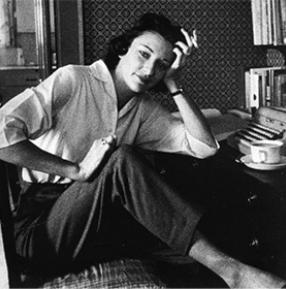
The Pulitzer Prize-winning American poet, Anne Sexton (1928–1974), struggled with depression throughout most of her life. Her poetry is the heart she wore constantly on her sleeve, and it deals with every aspect of her private life, including her relationships with her husband and her children and indeed with the intimate relationship with her own body.
She began to write poetry as a young girl, and when she first showed her work to her mother, she felt humiliated when her mother, who also wrote poetry, accused her of plagiarism. The fact is that her mother could not believe that her daughter could be so talented. But Sexton constantly sought approval from both her parents, and in later life from her peers. In Anne Sexton, A Self-Portrait in Letters, edited by Anne’s daughter, Linda Gray Sexton and Lois Ames, there is a very touching letter written by Anne to her mother on Christmas Day 1957:
Dear Mother,
Here are some forty-odd pages of the first year of Anne Sexton, Poet. You may remember my first sonnet written just after Christmas one year ago. I do not think all of these are good. However, I am not ashamed of them. They are not in chronological order, but I have arranged them in a sort of way in a sort of a story. But not too much or too well. I have tried to give a breather between the more difficult ones that use a more modern idiom. A few are obscure. I do not apologize for them. I like them. Mood can be as important as sense. Music doesn’t make sense and I am not so sure the words have to, always.
Below are three poems from Sexton’s adolescent period not included in her Complete Poems. Anne married when she was very young and her husband dropped out of medical school in order to get a job as a travelling salesman to support her. The poems offer an early indication of the themes of insecurity that would dominate her mature poetry. Sexton studied poetry under the renowned poet, Robert Lowell, alongside Sylvia Plath: and all three had serious mental health issues. For those interested in a deeper understanding of Anne Sexton’s work, the biographical edition of her letters is essential reading.
ON THE DUNES
If there is any life when death is over, These tawny beaches will know of me. I shall come back, as constant and as changeful As the unchanging, many-colored sea. If life was small, if it had made me scornful, Forgive me; I shall straighten like a flame In the great calm of death, and if you want me Stand on the seaward dunes and call my name.
*
SPIRIT’S HOUSE
From naked stones of agony I build a house for me; as a mason all alone I will raise it stone by stone, And every stone where I have bled Will show a sign of dusty red. I have not gone away in vain, For I have good of all my pain; My spirit’s quiet house will be Built of naked stones I trod On roads where I lost sight of God.
*
TRAVELER’S WIFE
Although I lie pressed close to your warm side, I know you find me vacant and preoccupied. If my thoughts could find one safe walled home Then I would let them out to strut and roam. I would, indeed pour me out for you to see, a wanton soul, somehow delicate and free. But instead I have a cup of pain to drink, or I might weed out an old pain to think. Perhaps old wounds have an easy sorrow, easier than knowing you leave me tomorrow. The mind twists and turns within the choice of some sagging pain, or your departing voice. In the last hour I’ve tried images and things, and even illusion breaks its filament wings on the raw skin of all I wouldn’t know about the waiting dawn when you smile and go. You must not find, in quick surprise, one startled ache within my vacant eyes.






 johnjosephlyons