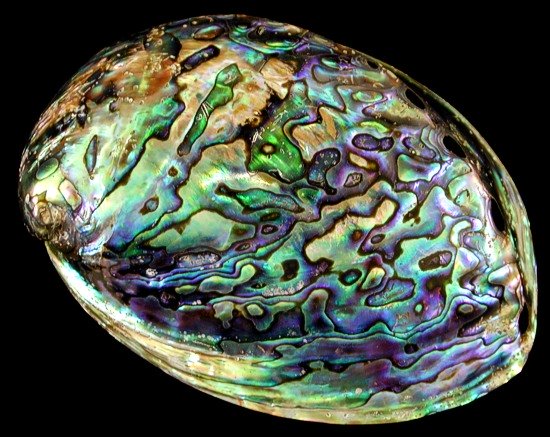
There is much to be learned from the simplicity of the abalone, an edible mollusc, housed in an ear-shaped, mother-of-pearl
shell in which there are up to nine respiratory pores. Its muscular foot has strong suction power permitting it
to clamp tightly to rocky surfaces. The abalone lives and breathes sex since its eggs and sperm are broadcast into the water
through its pores, along with its respiratory current. Crabs, lobsters, gastropods, octopuses, sea stars, and sundry fish all prey on juvenile abalones.
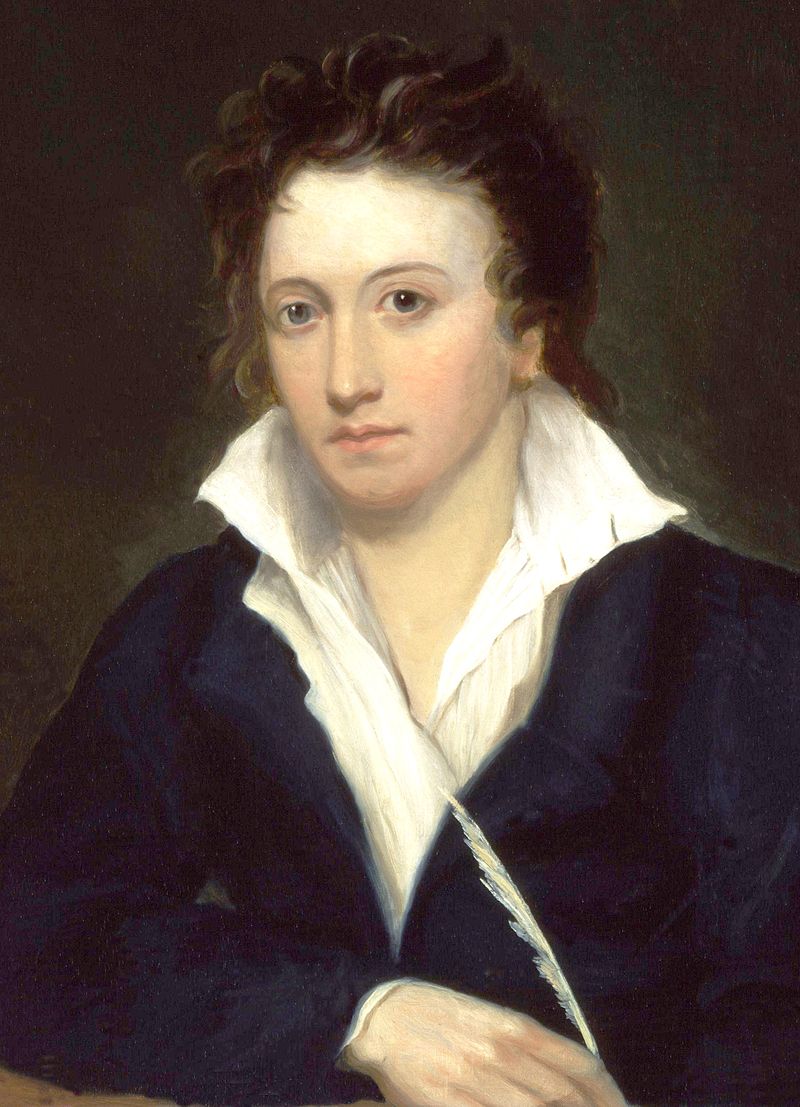
The British Romantic poet, Percy Bysshe Shelley (1792-1822) wrote his celebrated essay, A Defence of Poetry, in 1821. It was published posthumously in 1840. It is not difficult to perceive in the tone and content of Shelley’s eloquent and passionate thesis, a reflection of the civic values of the French Revolution (Liberty, Equality and Fraternity) which so fired the imagination of the Romantic poets in England.
In the wake of the terrible atrocities perpetrated in Paris on 13 November, it is important to remain vigilant and to defend the core human, cultural values to which Shelley alludes in his defence of poetry. These universal, life-affirming values are enshrined in the liberties of the great French cultural tradition that has enriched the world’s heritage with timeless works across the whole range of the arts from poetry to painting to music to dance, liberties that should never be surrendered.
A Defence of Poetry (an adapted extract)
Poetry is indeed something divine it is the centre and circumference of knowledge it comprehends all science it is the root and blossom of all other systems of thought it is that from which all spring and that which adorns all and that which if blighted, denies the fruit and the seed and withholds from the barren world the nourishment and the succession of the scions of the tree of life It is the perfect and consummate surface and bloom of all things it is as the odour and the colour of the rose to the texture of the elements which compose it as the form and splendor of unfaded beauty to the secrets of anatomy and corruption What were virtue lovepatriotismfriendship what were the scenery of this beautiful universe which we inhabit what were our consolations on this side of the grave and what were our aspirations beyond it if poetry did not ascend to bring light and fire from those eternal regions where the owl-winged faculty of calculation dare not ever soar ? Poetry is not like reasoning a power to be exerted according to the determination of the will A man cannot say « I will compose poetry » the greatest poet even cannot say it for the mind in creation is as a fading coal which some invisible influence like an inconstant wind awakens to transitory brightness this power arises from within like the colour of a flower which fades and changes as it is developed and the conscious portions of our natures are unprophetic either of its approach or its departure
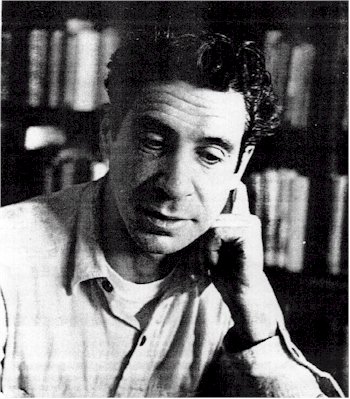
Memories. Reading this poem to Carlos Martínez Rivas in the lobby of the Sheraton Hotel in San José, Costa Rica in 1977. Directness and extreme simplicity. Yeats. Ezra Pound, William Carlos Williams. The poem is a machine. The sad rose of all my days: the poetry in that simple metaphor. I remember a face and a gesture, a dress; long flowing hair, a smile, a kiss, none of which are in the poem below. That was another poem, adjacent to the one reprinted today, a couple of frames on in the stream. Wisdom out of the old days. Wisdom sometimes, not always, not often. Self-distrusting, despite the affirmations. Style. Self-conquest, reining in the tendency to be sentimental, striving for that sensual silence: passion but without thought. The expression of conviction, and how words can set a moment in stone, for all time. A moonless, wordless night. All my days. The sad rose. Self-distrusting. Word against word. Golden sunlight on the leaves. November. Berries still ripe for the picking. A black cat slips down from the garden wall, moves stealthily across the lawn. Time’s light footfall.
Near the Loire
River running without sound, cutting into the banks. On the far side cattle are grazing, near side an old man hunched over a rod, fishing. Long path leading up to the house, past a plot of vegetables, all looking dry, neglected. Outside staircase to reach the bedrooms; below, the dark kitchen, no hot water, a primitive stove, low chairs, well polished tiles; an old woman sitting beside a radio, her face sunken into her body, groping for the past. A dog barks in the yard, stops, begins again and then wanders off down the path towards the river, the man fishing.
Here is a poem written many years ago when I was travelling in Central America researching my doctoral thesis. I remember showing it to Ernesto Cardenal while I was staying in his commune in Solentiname, on one of the islands in the south of Nicaragua’s Great Lake. He told me then that it reminded him of Ezra Pound’s poem “Provincia deserta” and that indeed – in addition to my own experience – was the inspiration.
Le Minier is a very small village close to Le Viala du Tarn and not too far from the town of Roquefort, famous for its sheep’s cheese. Once a thriving mining community, nowadays the principal activity in the region is rearing sheep. In the time when I used to visit the village, many of the houses were in disrepair or in the process of being renovated as second homes for families who lived in Montpellier or other cities in the Languedoc.
Ezra Pound’s poem begins:
AT Rochecoart, Where the hills part in three ways, And three valleys, full of winding roads, Fork out to south and north, There is a place of trees … gray with lichen. I have walked there thinking of old days.
This morning I awoke thinking of old days, and of the days that lie ahead. I still remember the sound of the sheep bells at dusk when the shepherd would drive the flock down the hill, through a narrow street, past the house where I was staying. The form of my poem was intended in part to suggest that descent.
Le Minier, L’Aveyron
The river flows beneath the old bridge, swollen by recent storm rains, polishing the stepping stones in the bed, racing down the weir. In the square a memorial stone 1914-1918 Le Minier at war with Germany. On the slopes that run up from the square are their deserted houses, some still with roof, but mainly caved in, windowless, doorless By the memorial the little chapel built by the names on the stone, perhaps helped by their fathers. Room for sixty or more on the worn benches though now at eight o’clock, before the sun has broken the hill top, only a handful of women dressed in black hear a mass said by the frail priest who cannot shave so early in the morning. Few returned to the village and their young soon left for the cities where they could bury themselves in life. Now a few come back in retirement, back to the village so suited for dying. At night the sheep come down from the hills for shelter, the shepherd’s stick keeping the pace steady, the anxious dog guarding the rear: through the narrow paths for shelter. The copper mine is finished, no work. Perhaps a few women making gloves at home, making lace for tourists. Summer visitors arrive like a transfusion, but the blood seeps out through the cracked walls, gushes from broken window frames. You may see a young couple kissing passionately by the river, pledging a life of love together. How can you tell if the next year will not see them miles apart lives apart.
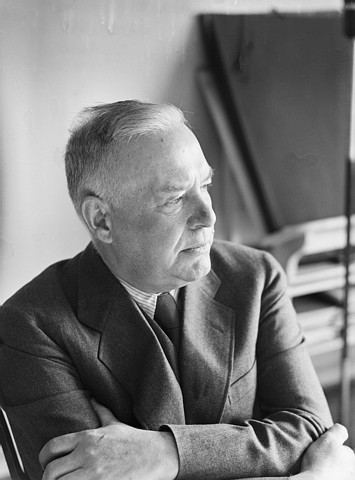
Often when I am faced with the challenge of writing a poem in the moment, I will turn for inspiration to the poetry of the great American poet, Wallace Stevens, whom I featured in an earlier post on this blog, (see, “A study of two pears”).
This morning has been no different. Initially I considered writing a few lines on the painting, “Studies for a portrait of T.S. Eliot,” by Patrick Heron, which I saw recently in the National Portrait Gallery, but I decided against this as it would require further re-reading of Eliot’s poetry and would therefore take too much time. Instead I turned to the Collected Poetry of Wallace Stevens and read two short poems. The first, “Adult Epigram,” is copied below: the second, “Men Made Out of Words,” is available on the internet.
What one learns from the work of Stevens is that poetry is many things and that no single definition can do it justice. Today he reminds me that poetry is often human revery, propositions which come to us as we meditate on our experiences, propositions torn by our dreams amid the clash of sparring realities: nevertheless he concludes that the whole human race is a poet, the whole race being made out of words, adding that poetry may not always make immediate sense but that this is not the fault of poetry and it is a strength rather than a weakness.
ADULT EPIGRAM
The romance of the precise is not the elision Of the tired romance of imprecision. It is the ever-never-changing same, An appearance of Again, the diva-dame.
Wallace Stevens
What Lies Beneath
What lies beneath the veneer of words what thoughts what feelings what expectations ? I read myself I have become my own book my own text my autumn and my winter months my future and my past all wrapped into this present These are mere words and yet I feel them at times as caresses at times as mortal wounds the casket of my body wracked with discomforts : and yet hope flowers still desire and love well up within me
Life and its propositions all in the mind I hear the wood-doves sing against the backdrop of waters
that rushover the weir I hear the howl of the wind lashing against my skin
If there is justice in the world where is it concealed ? If there is peace who has purloined it ? If there is love who will reveal it and live it to the hilt untainted by niggard judgments and petty jealousies ?
Poetry is the sensethat the world does not always make : it cuts
to the quickand is of the essence I once glimpsed in the shallow book of her affections the facsimile of a smile the feigned beauty of a gesture sensed the sullen softness of a kissnever meant to be given beheld a bed of perfumed lace and Egyptian linen made ready for the maze of love
only for that love to be denied
John Lyons
Note: this poem is slightly revised from the text posted earlier this morning.
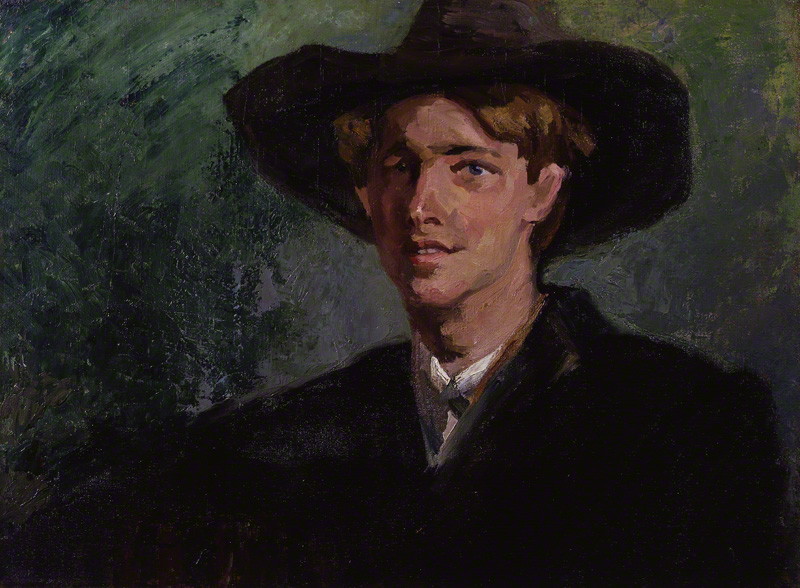
Rupert Brooke, by Clara Ewald, oil on canvas, 1911
The bitter ironies of war! In the spring of 1911, a young Rupert Brooke sat for the German artist, Clara Ewald, while on an extended visit to Munich. Brooke was accepted by the Ewalds as a family friend and was a frequent visitor to the artist’s home.
Brooke had been associated with the Bloomsbury group of writers, including Virginia Woolf and Lytton Strachey, but he fell out with them and suffered a nervous collapse. His trips to Germany were in part to enable him to recover from his emotional problems.
In this beautiful, sensitive portrait – part of the permanent collection at the National Portrait Gallery – Ewald captured the handsome features of the young poet, who with his broad-brimmed hat and optimistic gaze, strongly resembled the great Irish poet, William Butler Yeats.
Having enlisted in the Royal Naval Reserve at the outbreak of the First World War, Rupert Brooke saw action at Antwerp in 1914 which inspired the writing of five passionately patriotic sonnets, the last of them being “The Soldier”, reprinted below.
Brooke died in 1915 from the consequences of an infected mosquito bite while en route to the catastrophic Gallipoli landing in the Dardenelles.
He is buried in an olive grove on the Greek island of Skyros.
The Soldier
If I should die, think only this of me: That there’s some corner of a foreign field That is for ever England. There shall be In that rich earth a richer dust concealed; A dust whom England bore, shaped, made aware, Gave, once, her flowers to love, her ways to roam, A body of England’s, breathing English air, Washed by the rivers, blest by suns of home.
And think, this heart, all evil shed away, A pulse in the eternal mind, no less Gives somewhere back the thoughts by England given; Her sights and sounds; dreams happy as her day; And laughter, learnt of friends; and gentleness, In hearts at peace, under an English heaven.
Dawn breaks to the idle chatter of birds and in the distance the hum of traffic slowly builds Life is on the move once more
What challenges will it bring today ? What fleeting pleasures ?
I have slept through the tired night peaceful in my dust Bone by bone life lays us all to rest Love is the only reprieve the ruffled rose the dimpled beauty
We are the flesh of moans our bodies mindfully twisted in schemes of passion our defenceless dreams raised to the heavens Without love life is shapeless a journey without destination
Our breath is our greatest possession no stone or metal congealed can ever measure up to the warm chafe of skin on skin – we were born for this
Dead leaves scurry across the conservatory roof driven by an artless wind under an oyster-grey sky In time we too will tumble scattered flakes of gold
turned into the damp soil on a drab winter’s day :
change is permanent all beauty migrates
Until then dear reader while we remain paused on the threshold let us celebrate the unerring pulse
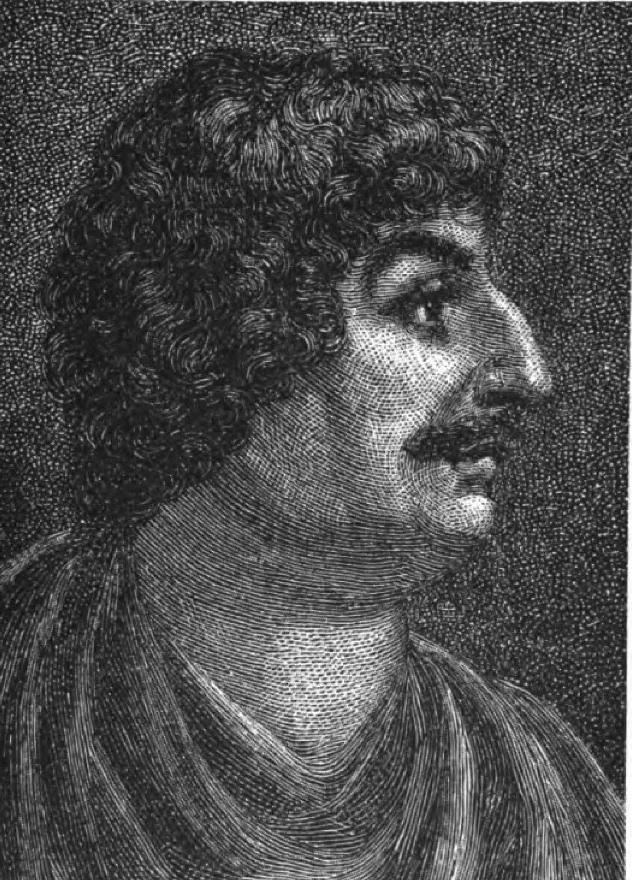
The great 17th century lyric poet, Robert Herrick (1591–1674), an admirer of the even greater British poet, Ben Jonson, is best known for his first book of poems, Hesperides, which was published in 1647. This includes the famous poem “To the Virgins, to Make Much of Time,” with its opening lines:
Gather ye rosebuds while ye may, Old Time is still a-flying; And this same flower that smiles today, Tomorrow will be dying.
As was the custom of those days, Hesperides opens with a number of short poems in the form of dedications to noble sponsors and warnings to the readers.
One of the more direct cautions reads as follows:
Who with these leaves shall wipe (at need) The place where swelling Piles do breed: May every Ill that bites or smarts Perplexe him in his hinder parts.
Keeping this blog going on a daily basis has proved to be a challenge. This morning, for example, I was tempted to post a poem written when I was still at school, around the age of sixteen. Sweet little sixteen! Those years are long gone. On the other hand, I am always loath to use up material which is there on file and could be used on a rainy day. Sometimes this desire leads me to improvise new poems, and most of the poems on this blog have been written on the spur of the moment on the day, with an imaginary deadline of nine a.m. to help me focus.
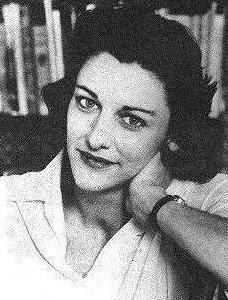
The poem below, more of a haiku really, was inspired by a line I read last night in a letter Anne Sexton sent to fellow poet, Anthony Hecht, in 1961. I’ve mentioned the book Anne Sexton: A Self-Portrait in Letters in a previous post. I cannot recommend it highly enough for those interested in her poetry but also as a glimpse into a remarkably open, creative soul, gifted with tremendous self-knowledge, albeit tragically peppered with self-doubt. To those reading her Complete Poems, the letters are indispensable. My poem is an imagined response from Hecht to the line in that letter.
Anne Sexton
Being with you
Being with you is just like your face said it would be your hair your ears your eyes your lips your smile your kiss your chin your shoulders your breasts your waist your hips your sex your thighs your knees your ankles your feet your words your love
Being with you is just like your love said it would be being with you
Tear-feeding moths and butterflies in Africa and Asia and South America feed on large placid animals deer antelope crocodiles which cannot readily brush them away
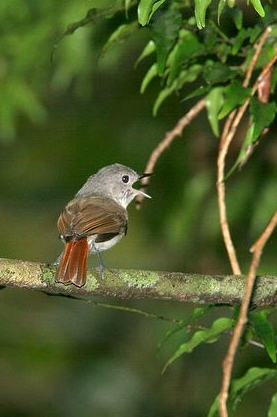
In Madagascar there are no such large animals Birds can fly away but not when sleeping The Madagascan moths can be seen on the necks of sleeping magpie robins and red-tailed newtonia the tip of their proboscis inserted under the bird’s eyelid avidly supping for the sodium in the tears
As the birds have two eyelids both closed instead of the soft straw-like mouthpart found on tear-drinking moths elsewhere the Madagascan moth has a harpoon-shaped proboscis with hooks and barbs which it inserts and secures under the bird’s eyelids without disturbing the bird
The Madagascan tear-drinkers all male derive most of their nutrition from tears : take from this observation what you will

 johnjosephlyons