Columbus Day – The Panels of Hell

Coronel_Urtecho
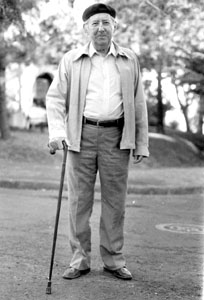
José Coronel Urtecho

The poem below was written by José Coronel Urtecho (1906-1994) in the months following the July 1979 Sandinista Revolution in Nicaragua. These were the days of innocence and euphoria, the likes of which had never before been known in that very poor Central American country. In those early days of the revolution the whole country was undergoing a radical transformation; the young, educated few were going out in brigades into the countryside and the poor urban neighbourhoods bringing the gift of literacy to the hundreds of thousands who had been denied any sort of education under the successive governments of the US-backed Somoza dictatorship. Alongside, there were brigades of doctors and nurses and health workers taking healthcare, for the first time ever, to the same marginalized sectors of the population in order to vaccinate, to provide antenatal and perinatal care and to conduct an all-out offensive against infant mortality and preventable disease.

Coronel Urtecho, one of Nicaragua’s greatest poets, had earlier in his life been a supporter of the Somoza dictatorship but he was gradually radicalized through contact with members of the Sandinista National Liberation front, and Panels of Hell was written as an act of contrition for the sins of his earlier ideological beliefs.

My translation of the poem was eventually published by Harold Pinter in 1989 at the height of the illegal Contra war against the people of Nicaragua, instigated by Ronald Reagan and spearheaded by the Oliver North.

It is salutary, on this Columbus Day 2015, to reflect on the significance of today’s commemorations, to ask exactly who in the Amercias has anything to commemorate, to speculate how the native American peoples, for example, might be taking Christopher Columbus to their hearts, how the poor and dispossessed of the Americas might like to remember that fateful day, 12 October 1492, when according to his log, Columbus, in his search for a new route to the spice lands of the East, first sighted land in the West.

The two avatars of that discovery were (and remain to this day) wealth and poverty, or as they are known euphemistically: North and South! Happy Columbus Day!


PANELS OF HELL (extract)

Who remembers the octogenarian swine in his sedan chair the one who
          first stole Nicaragua the country the government the land for himself
                   and for his family
          the first one who saw Nicaragua as a business his own business
          the first one who in Nicaragua established the business of slaves the
                   exploitation and selling of slaves
          the first of the usurious foreign bankers and financiers in Nicaragua
          the one who first brought to Nicaragua his genocidal dogs
                   to guard over his minerals
          the one who first killed in Nicaragua ‘two million’ Indians (2,000,000)
          the first one who installed his dynasty in Nicaragua
          the first of the first dynasty in Nicaragua continued by his daughter and
          his son-in-law and his grandchildren tyrant usufructuaries of the Empire
who in Nicaragua today remembers the worst of all the Spanish
          conquerors of America and his murderous descendants?

All of them are submerged in the dung heap of History

What became of the cold paranoid filibuster robber of countries
          the ill-famed adventurer from Tennessee gone bust in Sonora
          ill-adapted in California who very nearly stole Nicaragua
          from the democrats and legitimists or Liberals and Conservatives
          who amongst themselves were killing each other to exploit
                   the Nicaraguan people
the first North American to see Nicaragua the country the
          government the land as a subsidiary business to
                   North American business
the first imperialist racist North American pro-slaver who tried
          in Nicaragua to introduce the black slave trade importing the
          slavery of the slave States of the South of North America
          through the elimination of Nicaragua’s Indians and mestizos
          but could get nowhere with the people of Nicaragua
          Costa Rica Honduras El Salvador and Guatemala

the first North American of the South or the North the East or
          the West who brought his dogs to Nicaragua and thugs or
          mercenary animals enlisted in New York and New Orleans
                   and San Francisco California

the first agent of the thieving bankers of Frisco competitors of
          the usurious bankers of Manhattan concessionaires of the
          inter-oceanic Transit of foreign passengers through Nicaragua

the first North American arsonist destroyer of Nicaraguan
          cities who would have reduced them all to ashes and left them
          in ruins and sown the land with wooden crosses and scattered
          cemeteries and common graves before handing it over empty
          to his pro-slaver filibusters but could get nowhere with the
          resistance of the people of Nicaragua Costa Rica Honduras El Salvador
                   and Guatemala

the first for us of the models of North American imperialism
          without a mask or with a mask in person or if not through an
          intermediary but in any case the model for the North American
          invaders interveners ambassadors swindlers mediators and
          for the North Americanizing dealers and businessmen and
          traffickers of the Nicaraguan patrimony-peddling bourgeoisie

the first of the first North American military occupation
          of Nicaragua never really discontinued rather immediately continued
          by the Conservative and Liberal oligarchies and from 1936 to the
         19th of July 1979 by the proconsular family of the pentagonal dynasty
          enthroned on Tiscapa Hill by the Yankee Empire
who today is aware in Nicaragua of the worst of all the filibusters of
          America—admired by Truman—and of his murderous successors?

All of them are at the bottom of the latrines of History

February 1980

Translation by John Lyons

Dead Fingers Talk

HuneferDead fingers talk. Our language comes from community, from those present and from those who have gone before us. Keep it simple! Charles Olson wrote that the breath is the unit of composition in poetry. Our texts are echoes of other texts, others have breathed before us. Truth is the raw material of poetry and has been recognised as such since the earliest days of the alphabet, the alpha and omega of writing.

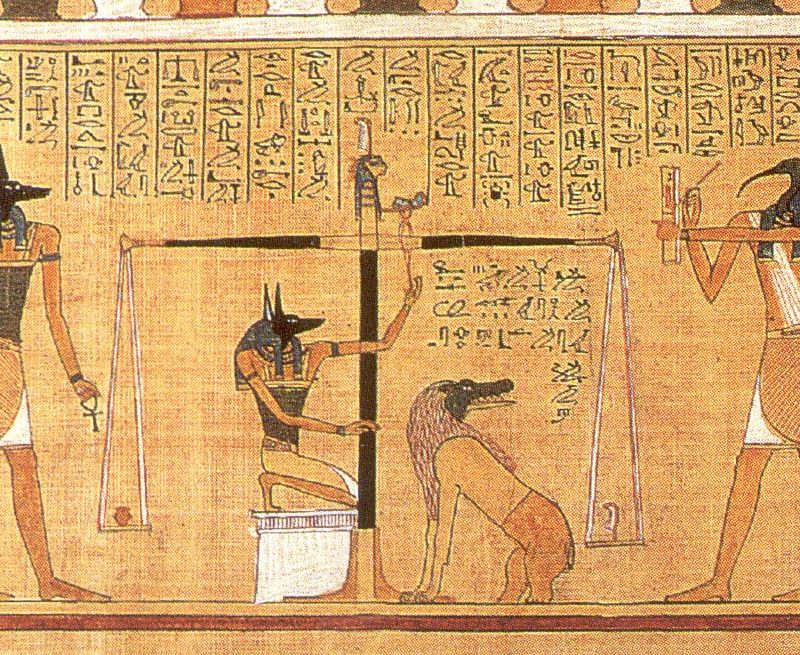
In the accompaning illustration from the Egyptian Book of the Dead, the scene, from the Papyrus of Hunefer (c. 1275 BC), shows the scribe Hunefer’s heart being weighed on the scale of Maat against the feather of truth, by the jackal-headed Anubis. The ibis-headed Thoth, scribe of the gods, records the result. If his heart equals exactly the weight of the feather, Hunefer is allowed to pass into the afterlife. If not, he is eaten by the waiting chimeric devouring creature Ammit composed of the deadly crocodile, lion, and hippopotamus. 


Meanderings

dawnSaturday seems to me to be the day for philosophical thought. Although outwardly awake, I wake slowly in my deeper mind, turning things over, meditating, wondering about the past and what the coming day will hold.

This morning, for example, I had the image in my mind of all the days of my life lined up outside my door, as though they had come for an interview, as though they expected to be questioned, and perhaps be asked to justified themselves, to justify actions taken or not taken, words said or not said, the sins of commission and omission. Imagine this long line of every day of my life stretching down the street and around the corner all the way back to the place where I was born, to the small maternity clinic located in a patch or remnant of ancient woodland. Imagine all the characters I have played in those years, all the different styles of clothes I wore and all the hopes and dreams and ambitions that I carried with me.

The poem below is a stab at understanding that image, although I am aware that more energy needs to be applied if I am to get to the heart of any matter. As a poet, I have good days and bad days, the words flow or they struggle, depending on so many factors. But I am alive, and irrespective of anything else, that is something to be celebrated, any breath being better than none.


Meanderings

There is a sense
      in which we are all orphans
wanderers on the face of the earth
      looking for origins
looking for purpose
      striving for achievement
and hoping for love
      The years are lined up
at my door
      a procession of dates
times and encounters
      and in my mind
the echo of words
      that have never left me
Sometimes it seems
      that dust and ashes
is all that there is
      beauty is such a rare thing
but then comes the dawn light
      and breath by breath
I am revived
      charmed by bird song
delighted by the rose
      that has yet to fall
enticed by the kisses
      yet to be given
the hand yet to be held
      Today I will walk in the woods
I will hear the deathless voice
      of all the world
and shake off
      the pangs of dust
I will surrender
      the lease I hold
on time and disgrace
      and I will wallow
in the instant :
      step after step
I will draw closer
      to that ultimate nativity
and look beyond
      my mortal eyes
Now the fields lie bare
      the trees stripped
to their silhouettes
      panic among the creatures
that must bide
      the winter months
in warm reclusion
      The brittle bones of love
will carry me through
      I will dispute
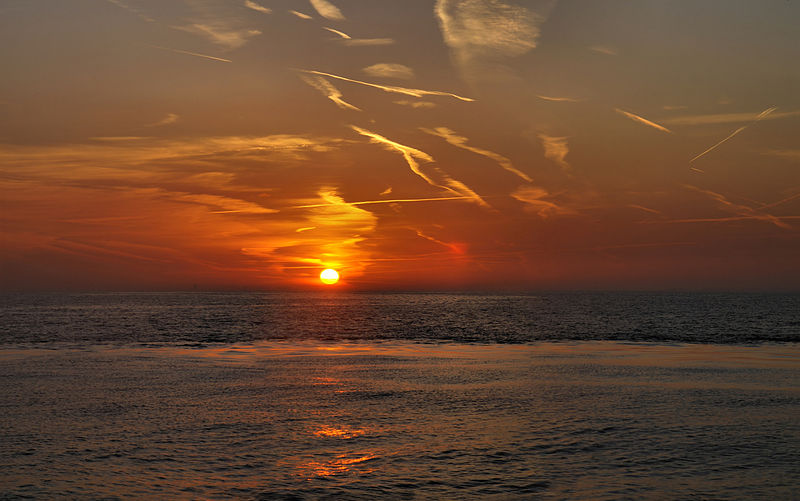
the sombre sunsets
      and at night
I will usher in the stars
      number them as pearls
in my own private firmament
      whatever blessing there are
they are there
      to be counted

John Lyons


Vinicius de Moraes – the poet from Ipanema


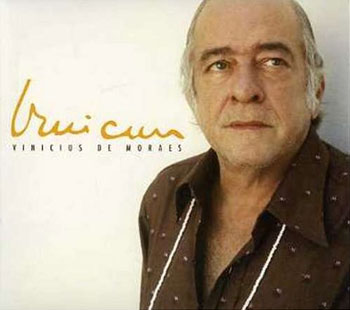
vinicius-de-moraesVinicius de Moraes, (1913-1980) was a Brazilian dramatist, journalist, poet and composer. He is most famous for having written the words to the immortal bossa nova song, “Girl from Ipanema”, with music by Tom Jobim.

In 1938 Vinicius was an undergraduate at Magdalen College, Oxford, where he studied English Literature. There he also wrote a series of playful and amorous sonnets, one of which is translated below.

His success as a lyricist has overshadowed his reputation as a very fine poet but perhaps in years to come the balance will be redressed. The Chilean poet, Pablo Neruda, was a great friend of Vinicius and an admirer of his poetry.


SONNET OF GREATEST LOVE

No greater nor no stranger love than mine
exists, that seeks not to soothe the beloved
And on sensing she is happy, grows sad
Yet seeing her distressed, rejoices.

For it only finds peace if the beloved’s heart
resists it, and so takes more pleasure
from the perpetual adventure it pursues
than from an ill-adventured life.

My crazy love, which wounds with its caress
And quivers when it wounds, but would rather
Wound than die – and lives randomly

True to its law of living for the moment
Fearless, crazy, delirious – wrapt
In a passion for all and for itself.

Oxford, 1938

Translation by John Lyons


Here is the original Portuguese text:

SONETO DO MAIOR AMOR

Maior amor nem mais estranho existe
Que o meu, que não sossega a coisa amada
E quando a sente alegre, fica triste
E se a vê descontente, dá risada.

E que só fica em paz se lhe resiste
O amado coração, e que se agrada
Mais da eterna aventura em que persiste
Que de uma vida mal-aventurada.

Louco amor meu, que quando toca, fere
E quando fere vibra, mas prefere
Ferir a fenecer – e vive a esmo

Fiel à sua lei de cada instante
Desassombrado, doido, delirante
Numa paixão de tudo e de si mesmo.

Oxford, 1938


In memoriam

Mum
Mary Teresa Ann Lyons

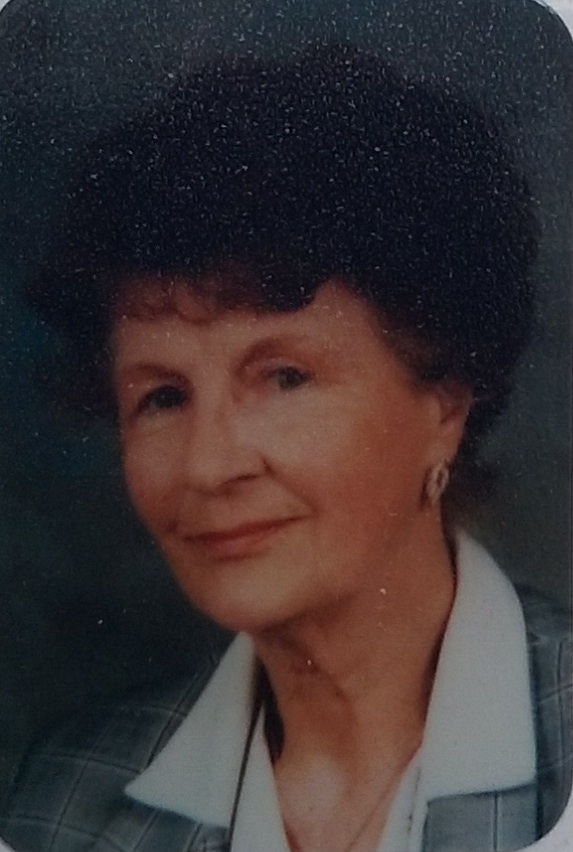
These cold frosty mornings, such as the one I awoke to today, always remind me of the days my mother spent in the Brook hospital in Shooters Hill, towards the end of her life. The poem below was written immediately after visiting her one day in the hospital when I, like all her children, had been stunned by her sudden decline. The accompanying photo was taken two years earlier, around the time of her seventieth birthday and that is how I like to remember her. She was born in Tralee, Co. Kerry in 1922, and her family emigrated to Welling in 1937, for reasons I never fully understood. From the photo it can be seen that even at her age then, she had lost none of the beauty that led my father to call her his Rose of Tralee throughout their life together. But the radiance of her physical beauty was nothing compared to the inner beauty that glowed within her and was manifest in her eternal smile. She was blessed with the tough genes of the Kerry people and she worked tirelessly throughout her life as a proud wife and a mother of six and as a teacher of primary school infants. In so many respects she was the life and soul of the family, and if I had to sum up in one word what drove her to embrace life with such inexhaustible energy, I would have to say love.


Your final resting

Half-moon over November night:
      snow on the ground and icy dusting
of snow in the boughs of trees
      in the ancient woodlands by your last bed.
A barn owl sits motionless in the darkness,
      in the half-light of the half-moon.
A lone cry in the woodlands,
      the lone cry of the November owl
under the half-moon. And then silence.
      And then peace. A final flurry of snow.

That you should love and be loved.
      nothing more. That you should love
and be lived by that love. The two-way gift,
      the life-gift and the love-gift,
and not the one without the other.
      All life is two-way just as all love
is all life
      in the giving and receiving.
And so Divina asks me where was she
      before she was born,
because living and loving cannot understand
      the state of non-being.
And I say to her:
      You were there in our love
where you will always be,
      there
            in our love.

And you, my mother—
      I gave birth to you
just as you brought me out of yourself
      and into the light,
barely a half-moon from now,
      barely three and forty years from here.
You born again in the moment of my birth
      into that deep love-gift of motherhood;
And I have loved you
      as the father of your motherhood of me,
son and father to you
      as the mother and daughter of my love.

And your dying — this two-way sadness
      which we call your death
is also a kind of lying in,
      is also a kind of new maternity,
a fresh maternity as you lie here now
      in peace and at peace,
nurturing us into that new life,
      that life with and without you,
that never-losing-you life of your death.
      Your six children
around your last bed,
      at the breast of your love.

November sun — and magpies soaring
      in the chill air,
seen through the window of your last resting
      A sadness yes, a grief
undeniably. And yet an overwhelming
      sense of love undying.
Not of ashes to ashes
      but of life to life
             through love.

23 November 1993

No meaning where none intended

atumn2Having commenced this daily blog towards the end of July, and given the response of readers on a day-by-day basis, I have come to one conclusion, (there will be others), namely, that the poetry posts are far and away more popular than anything else, and certainly far more popular than the short stories. I believe that there is a very simple explanation for this. Readers respond to poetry because it touches them in a way that very little prose can match.

Prose tends to be rational, often following a clear thread or narrative and in some cases so much is signposted that the reader just has to sit back and absorb the story almost on automatic pilot. Poetry touches different strings, it intimates and invites the reader to participate actively in the event, and by that I mean participate in the moment at which the mind meets the emotions encapsulated in the text. Poetry stirs the soul as music does, and certain words in a poetic context have the power of big piano chords. Think of the simplicity of striking a low G on the piano, listen to it resonating: the energies of poetry can stimulate a similar effect, creating, with the listener’s or reader’s collaboration, a meaningful emotion. This is further evidenced, I believe, by the often perfect marriage of words and music in song. Emotion above meaning!


October

October comes wrapped
      in mellow dreams
and morning mists
      gulls coast on the horizon
gardens are stripped back
      to their essentials
and all human endeavours
      are humbled
by the force of nature
      The contrivances of love
will get us nowhere
      nor reckless ambition
Who would be
      the moon’s best lover
will soon enough
      know the taste of dust
as their lease on life expires
      Our flesh recalls
the schooled innocence
      of children who skip
their early days away
      the taut tango
of magpie and crow
      the scavenging of squirrel
and the aimless amble
      of foxes that parade
their shadows
      through our darkness
From each their fruits :
      we are conscripts
called to serve
      a higher law
we who were once
      a mound of undelivered life
must nurture the time
      of those around us
slay the dragons of need
      and abandonment
In the early hours
       I have touched
her flesh of moans
      heard the soft murmur
of breath on her lips
      the shapeless words
that struggle
      to rise up from sleep
folded her in the warm
      cocoon of my arms
shared seed and song
      and pierced her heart
beyond pain

John Lyons

White echoes

A gentle cascade of thoughts and words to fill a Sunday morning in which the world is struggling to awake from its deep sleep. The sound of traffic in the distance but otherwise little movement. Silence almost complete. A perfect dream-state. A time to make love and little else.


White echoes

red kite

How many lush green fields
      and slender silver streams
how many gold-rimmed sunsets
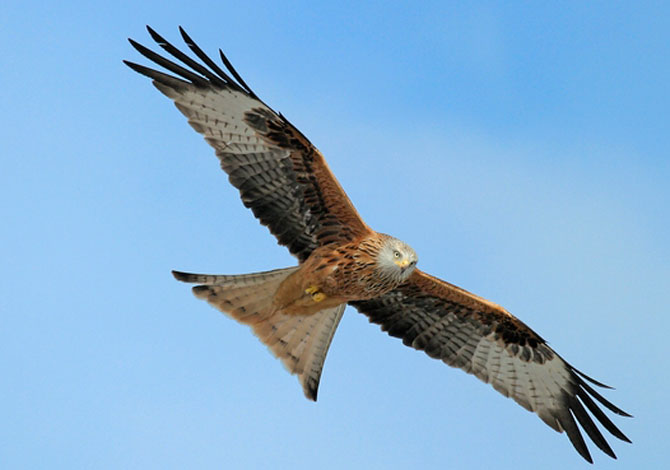
      how many spiralling kites
will fit into this endless silence ?
      Who heard our footsteps
as we walked through the park
      who saw us climb the hill
as squirrels jumped
      from tree to tree
as children filled
      their lives with play ?
Dreams and hope and desire
      grew within us
and time offered us
      its pledges which
we did not dare to believe
      Who saw as the curtains
were drawn
      as you laid down beside me
laid in my arms
      laid in my heart ?
The wind was still
      through the night
as spiders wove
      and the roses
took their rest
      Today birds will swoop
and feast on the berries
      the chestnuts will swell
on the branches
      and leaves will form
a carpet to take us
      into winter
and to a landscape
      sketched by frost
modelled by snow
      and draped in silence
Where will love be then
      and hope and dreams ?
Where will our shadows lie
      what scenes will be staged
within the theatre
      of our blind ecstasies
what life will be left
      to be led
by our bartered blood ?

John Lyons

Live for the moment

hummingbird

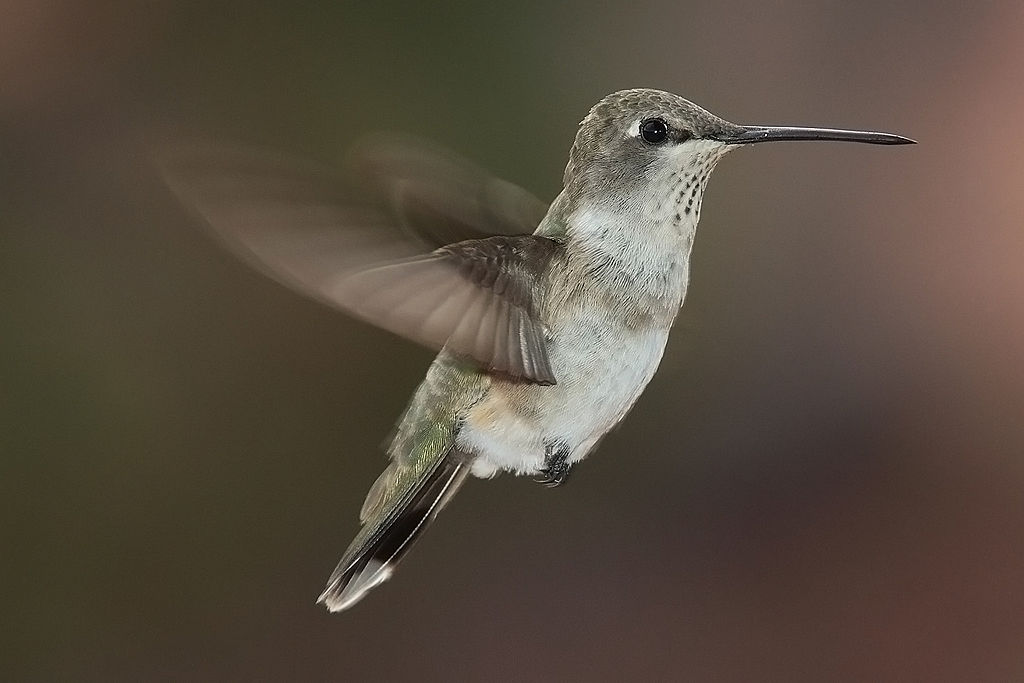
Everything passes in time: the theme of so much poetry because that is the abiding sensation in life. We learnt the Latin tag as children: carpe diem, live for today. And as we get older, the truth of that statement becomes ever more evident. Poetry and song take us out of the moment briefly and they celebrate the fact that we can turn the passage of time into something beautiful, into something dynamic. Hence the frequency with which the rose appears in poetry, as a metaphor for beauty and fragility, the intensity of the beauty heightened by its ephemeral nature. Nothing lasts for ever, but life is a seemingly endless sequence of things or activities which do not last forever. Poetry records the moment and the feelings of the moment and it savours the moment paradoxically forever.


John Lyons

William John Lyons – 3 poems

WJLyons
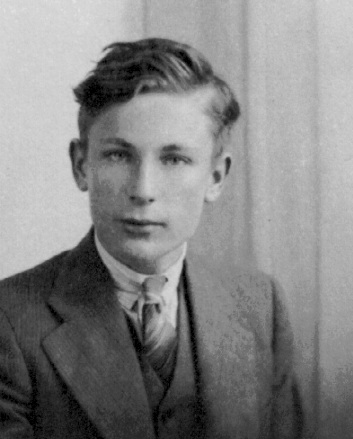
W J Lyons as a schoolboy

After my father died, it was quite a surprise to discover a very large trove of poems he had written over a number of years. I knew that he occasionally wrote poetry, and from time to time he would share some of his poems with me, particularly if they were on topical subjects, such as the 1968 invasion of Czechoslovakia.

Of the three poems below, the nature poems speak for themselves. In addition to being an accomplished musician and artist, my father’s other great passion was gardening and he took it very seriously. We had a very large, sloping garden attached to the house where we grew up and my father was constantly modifying its features, adding a water course and a pond, relocating flower beds, setting aside a small area which he used as an allotment to grow vegetables, trimming the box hedge that ran alongside the lower lawn so that it resembled a steam engine. He had a rich imagination and he could turn it to anything.

The third poem, is about his marriage to my mother and the risk she took by agreeing to share her life with him; and he recognizes the trust that her decision involved. It was, in the end, a marriage that lasted a lifetime, and only death eventually separated them. And it was a marriage that made them, that defined their adults lives. And it was the absolute cornerstone of their emotional lives. They were both schoolteachers, my father a graduate and my mother virtually self-educated. But in their day, people perceived them as a couple, as an inseparable, loving couple. The union was strong, the family unit was strong and every other aspect of life appeared to be subordinate to the love that had brought them together.

It has to be said that my father was a dreamer, and in the photo accompanying this piece, taken when he was still at St Joseph’s Academy in Blackheath, I believe it is possible to see the dream in his eyes. Nothing wrong with being a dreamer or a poet! My father’s dream was realized in his marriage to my mother and in the six children they had. All his other endeavours, professionally or artistically, were a celebration of the love he gave and the love he received.


Hesperides

Late autumn sunset
Humped copper-coloured cloud, like billowing canvas
Ponderously sailing over tree tops towards the dark,
Attended by a fleet of widely scattered skiffs.
Sun-tinted filmy sails against a sea-blue sky.
Scarcely a movement of twig or leaf below
Save a rustle in the high top elms
And saffron fronds of silver birch
Draped around its pianola-music bole
Standing on uncut emerald grass
Green-spiked like springing wheat.
Caught by the western glow
Two apples hang upon a topmost branch
Unplundered reassure of Hesperides.

*

This river

I stood upon a river bank
Whose current carried tumbling leaves.
The water moved but I was still.
It passed, to merge into the sea.
Travelling in rippling rapid speed
Over rocks it foamed its urgent pace,
Then slackened, scything cuts at bends,
Its path confined to journey’s end.

And then I knew it carried me:
For as I gazed upon its flow
Time had gone upon its stream,
Seconds, like bubbles, here, then gone –
A paradox of life itself.
For while, at times, we are quite still
Or feel increase in our life’s motion
The seconds ever bear us on
To lose ourselves within the ocean.

*

Till death do us part

When first they met the sea was calm
He told her tales of wonder and delight
That lay beyond the harbour walls
She longed to put to sea : they two alone,
Sailing among enchanted isles.
It was a prospect that entranced
Intoxicated and allured.
And yet she feared the deep.
He was no master mariner,
But once before had lost a ship
(And, near his skin, so bronzed and muscled)

What if it should . . .

She looked into his eyes
And cast aside her fears.
She knew that she would go.

They only took what each would need
He told her what; they jettisoned the rest.
And so they sailed into the deep water:
Where they had berthed the currents swirled,
Carrying to and fro, among the eddies,
The flotsam, so lately and so lightly tossed away,
Drifting till it was cast up stranded on the beach –
Brief witness where a ship was tied;
Up-anchored, they sailed, and left it all behind.


Sex and drugs – Charles Baudelaire

Baudelaire Gustave_Courbet_033
Portrait of Baudelaire by Gustave Courbet (1848)

Charles Baudelaire  (1821-1867) was a French poet, translator, and literary and art critic whose reputation rests primarily on Les Fleurs du mal [The Flowers of Evil], published in 1857, which was undoubtedly the most important and influential poetry collection to appear in Europe in the 19th century. When it was first printed, the book was prosecuted for alleged obscenity.

Addicted to sex and drugs, Baudelaire eventually succumbed to syphilis, but in his famous preface to Les Fleurs du mal entitled “Au lecteur” [To the reader] he listed all manner of vice and accused his contemporary society of monstrous hypocrisy, stating in effect ‘none of you are any better than me, my brothers.’. A number of versions of this scathing text can be read at: http://fleursdumal.org/poem/099, but here are the first two verses in a translation by the American poet, Robert Lowell:

To the Reader

Folly and error, sin and avarice, 

Labor our minds and bodies in their course, 

Blithely we nourish pleasurable remorse 

As beggars feed their parasitic lice.

Our sins are stubborn, our repentance faint, 

We sell our weak confessions at high price, 

Returning gaily to the bogs of vice, 

Thinking base tears can cleanse our every taint.

The prose poem I have translated below is taken from the posthumously published Petits poèmes en prose (1869): the most successful and innovative early experiment in prose poetry of the time. Here the mood is that of world-weariness, ennui, or spleen and the title is borrowed from a poem by the English poet, Thomas Hood.


Anywhere Out of the World

This life’s a hospital in which every patient is possessed with the desire to change beds; one would like to suffer in front of the stove, and another believes he’d recover his health by the window.

It always seems to me that I’d feel well wherever I am not, and this question of displacement is one I’m forever discussing with my soul.

« Tell me, my soul, my poor frozen soul, what do you think of going to live in Lisbon? Must be warm there, and there you’d liven up like a lizard. That city’s on the coast; they say that it’s built of marble and that the people there so hate vegetation that they tear down all the trees. There you have a landscape to your taste! a landscape made of light and mineral, and liquid to reflect them! »

My soul says nothing.

« Since you’re so fond of taking it easy, while observing the bustle, would you like to live in Holland, that beatifying country? Maybe you’d have some fun in that land the image of which you’ve so often admired in the art galleries. What do you think of Rotterdam, you who love forests of masts, and ships moored at the foot of houses? »

My soul remains silent.

« Perhaps Batavia would appeal more? There, of course, we’d find the spirit of Europe married to tropical beauty. »

Not a word. « Could my soul be dead ? »

« Have you reached such a degree of lethargy that you’re only content to be ill? If so, let’s flee to those countries that are analogues of Death. I know what we need, my poor soul! We’ll pack our trunks for Tornio. Let’s go farther still to the far end of the Baltic; or farther still from life, if that’s possible; let’s settle at the Pole. There the sun only grazes the earth obliquely, and the slow alternation of light and darkness suppresses variety and increases monotony, that semi-nothingness. There we’ll be able to take long baths of darkness, while to amuse us, the aurora borealis will from time to time send us its pink sprays, like a display of fireworks from Hell! »

Finally, my soul blows it top, and wisely cries out to me: « Anywhere! anywhere! as long as it’s out of the world! »

Translation by John Lyons