21 Grams – Eugenio Montejo, 3 poems

eugenio
Eugenio Montejo

In March 1977 I arrived in Caracas and was immediately contracted by the Venezuelan Ministry of Culture to select and translate an anthology of modern Venezuelan poetry. Among the poets I chose to include was Eugenio Montejo (1938-2008) whom I met shortly after starting the project. I met many poets in the course of the next three months, but none more gentle and unassuming than Eugenio.

Years later Eugenio was to become famous when Sean Penn spoke some of the words from a poem he had written in the film 21 Grams, directed by the Mexican, Alejandro González Iñárritu.

The earth turned to bring us closer
it turned on itself and within us
until it finally brought us together in this dream
as written in the Symposium.

I completed my work in Caracas in May 1977. Since that time I have not looked at the translations below, nor have I revised them. At the time I had shown my versions to Eugenio and he had been pleased with them and that was enough for me. Outwardly, Eugenio was the stereotypical professor of literature: yet his poetic voice was the most original of his generation.


Earthness

      To be here, for years, on the earth,
with the clouds that arrive, with the birds,
suspended in fragile hours.
On board, almost adrift,
closer to Saturn, more distant,
while the sun goes round and pulls us
and the blood runs on in its ephemeral universe
more sacred than all the stars.

      To be here on the earth: no further
than a tree, no more unexplainable,
lithe in autumn, bloated in summer,
with what we are or are not, with the shadow,
the memory, the desire, till the end
(if there is an end) voice to voice
house after house,
whether who gains the earth, if they gain it,
or who hopes for it, if they wait for it,
sharing at each table the bread
between two, between three, between four,
without forgetting the leftovers of the ant
that always travels from remote stars
to be present at the hour of our supper
although the crumbs are always bitter.

*

The table

      What can a table do by itself
against the roundness of the earth?
It already has enough to do allowing nothing to tumble,
allowing the chairs to converse softly
and in turn to come together on time.

      If time blunts the knives,
dismisses and brings diners,
varies the topics, the words,
what can the pain of its wood do?

      What can it do about the cost of things,
about the atheism of the supper,
of the last supper?

      If the wine is spilt, if bread is wanting
and people grow absent,
what can it do but remain motionless, rooted
between hunger and the hours,
with what intervenes though it should wish?

*

The stones

      The stones intact in the river
absorbed in the bank,
sitting alone, in conversation.
The stones deeper than childhood
and of more solid scenery.
When they see us they lift their faces
now cracked and they do not recognise us,
you have to speak to them so loudly!

      They have no notion of masks and journeys,
they perceive time through touch,
they believe that our image in the water
was erased in the sands
downriver.

      In the afternoons the shadow of an aeroplane
passes over them
and they are unaware that they go in the suitcases
on board, that they are our only luggage,
so tightly have they shut their eyelids.

Translations by John Lyons


Be a butterfly!

Speckled Wood
Speckled Wood

Not all poetry yields its meaning immediately, and why should it? Just as you can stare for hours at an abstract painting, so too, a poem can be a source of meditation. What does it actually mean? And what does it matter what it means? That is not to say that the words do not matter. But often the conscious logical mind is too earth-bound, too stuck in the trivia or fatigue of daily life to be able to get to the heart of a feeling. It is important sometimes to let the mind go with the flow, to detach from the rational Cartesian world with its arid formula of I think, therefore I am. Clearly Descartes had scant understanding of the role and the power of the unconscious mind!

Adonis Blue
Adonis Blue

Notice when we are happy, when we play, when we frolic, when we are in love, when we have experienced a sense of achievement, whenever we are overcome by any powerful emotion, it takes us out of the moment, releases us from the tyranny of time. So we might wonder why these parallel forms of existence occur. Who has never wished that a moment could go on for ever? Who has never prayed for a seemingly endless state of discomfort or pain or sorrow to pass? In which realm do we live our true, authentic, fully human life? So many poets down the ages have observed the innocence of nature, the instinctive forms of life that appear to know no suffering, and longed to live likewise, free from the yoke of mortality. I believe that that is the function of art, to lift us out of the pedestrian, to lift us up into the spirit so that for a moment we drift above ourselves as though in an out-of-body experience and allow ourselves to be carried along in a different flow, to be timeless for a time. Be a butterfly!


John Lyons


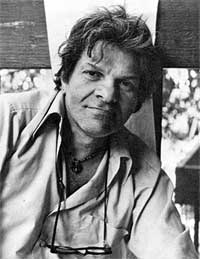
Gregory Corso

Gregory_Corso
Gregory Corso

Gregory Corso was a key member of the Beat movement, a group of convention-breaking writers, including William S. Burroughs, Jack Kerouac and Allen Ginsberg, who were credited with sparking much of the social and political change that transformed the United States in the 1960s. Corso’s spontaneous, insightful, and inspirational verse once prompted Ginsberg to describe him as an “awakener of youth.” Although Corso enjoyed his greatest level of popularity during the 1960s and 1970s, he has continued to influence contemporary readers and critics.

Writing in the American Book Review, Dennis Barone remarked that Corso’s 1989 volume of new and selected poems, Mindfield, was a sign that “despite doubt, uncertainty, the American way, death all around, Gregory Corso will continue, and I am glad he will.”

My own poem was inspired by a short poem (“For Lisa 2”) written by Corso and dedicated to Lisa Brinker, his eventual wife and surrogate mother to his son, Max. I used this wonderfully evocative text many times while teaching creative writing in Brazil.


For Lisa 2

I saw an angel today
without wings
with human smile
and nothing to say


Gregory Corso

Imagine
       a poetic gift of such intensity
          that his wolfish eyes were capable of
       penetrating the core of a palm tree so as
          to observe infinitesimally its actual

growth.
       That brooding, not-guilty gaze he acquired
          in the years when barely out of adolescence
       he served a jail sentence, there learnt to read,
          learnt there to write poems. Yet prison was no

place
       for the angels he would later catch sight of,
          in diners, on street corners, sometimes with
       an unlit cigarette in their mouth, sometimes
          not, but always a beauty to behold. He made

no secret
       of love, but truly believed in the coming
          together of two bodies as a celebration
       of being. Friendship was second nature
          to him: poetry was his first.

John Lyons

20 September 2004


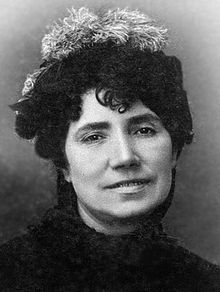
Rosalía de Castro

Rosalía_Castro
Rosalía de Castro

Two poems for this season of mists and mellow fruitfulness, written by the renowned Galician poet, Rosalía de Castro (1837-1885). Rosalía was born in Santiago de Compostela, in the Spanish province of Galicia and wrote both in Spanish and Galician. At the time the Galician language was considered to be inferior, a language to be used by the peasantry and not in polite, sophisticated society. However, the highly educated Rosalía de Castro, an advocate of women’s rights, was also a key figure in the Galician romantic movement, known today as the Rexurdimento, or renaissance.

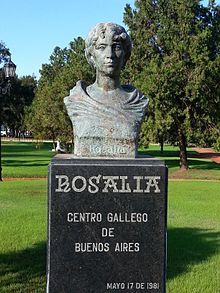
The poetry is inevitably marked by the romantic mood of the day in which expressions of saudade (nostalgia) and melancholy were dominant. Nevertheless, it is for her great poetic gift in the Galician language that she is most remembered today and for that reason I have included the Galician text of the second poem translated below. Galician is a language in its own right, though closer to Portuguese than to Spanish, and the Galician people are as proud of their cultural and linguistic heritage as the Catalans of Catalonia are of theirs. Such is the enduring fame of Rosalía de Castro that a monument to her was erected in the Paseo de los poetas in a park in Buenos Aires in 1981.


Busto_de_Rosalía_de_Castro
Bust of Rosalía de Castro in the Parque 3 de febrero, Buenos Aires

I don’t know what I’m forever seeking

I don’t know what I’m forever seeking
On earth, in the air, or the heavens above;
I don’t know what I’m seeking;
But it’s something 
I’ve lost,
I don’t know when,
 and cannot find,
Although in dreams invisibly

It dwells within all I touch and see.
Happiness, I can never recapture you

On earth, in the air, or the heavens above

Although I know you are real
And no mere futile dream!

*

Cold Winter Months

Cold winter months 

That I love with all my heart;
Months of brim-full rivers

And the sweet love of the hearth
Months of storms,
Image of the pain
That afflicts young hearts
Cuts short the lives in bloom.
Comes after the autumn
That makes the leaves fall
Among them let me sleep
The sleep of not being.
And when the beautiful
April sun smiles once again
Let it shine upon my rest
No more upon my pain.

Meses do inverno fríos

Meses do inverno fríos,
Que eu amo a todo amar;

Meses dos fartos ríos

I o dóce amor do lar.

Meses das tempestades,

Imaxen da delor

Que afrixe as mocedades

I as vidas corta en frol.

Chegade e, tras do outono

Que as follas fai caer,

Nelas deixá que o sono

Eu durma do non ser.

E cando o sol fermoso

De abril torne a sorrir,

Que alume o meu reposo,

Xa non o meu sofrir.

Translations by John Lyons

For Saturday

Ever since I began to write poetry, back in my teens, Saturday has always been a very special day: a day of reflection on the events of the week that went before and a taking stock of my life in general. It is my favourite day of the week for that reason. I have also found that whatever situation I am going through at any particular time, whether challenging or not, the writing of poetry never fails to raise my mood. My habits have become ingrained. I wake at six each morning and write before I do anything else, except perhaps make a coffee. Those first few moments before the bustle of the day begins are very precious, and I prefer not to dissipate them.

Just to add a note on the blog: the readership is slowly building, and it is now being read in Canada and the USA, in India and Israel, in Puerto Rico and Brazil, in Argentina and Japan and throughout Europe. If you read something which you appreciate, please share it with your contacts. Happy Saturdays!


For Saturday

Morning Sunlight shines into Forest, slightly misty Atmosphere

Wake at first light
       to the sound of trains
in the distance
       to the thrum of jets overhead
and to birdsong muted
       by the rippling breeze :
the slow tyranny of moonlight
       has faded
into this grey dawn
       in which all my dreams
have run aground
        Shall I look back on these times
with kindly eyes ?
       Others have destinations
but these streets
       these urban woodlands
have become my exile
       Others’ lives have movement
mine has been to ascend
       the barren calvaries of love
burdened by the solitary rose
       that would not yield its petals :
the soul has moments of escape
       the body never—
this body bound
       to the dust of its dust
Wisdom tells us
       that there are two heavens :
one for the body
       one for the soul
I have attained neither
       to date
though I have listened
       with all my heart
to the breath of butterflies
       and once held
the intricacies of love
       within my grasp

John Lyons


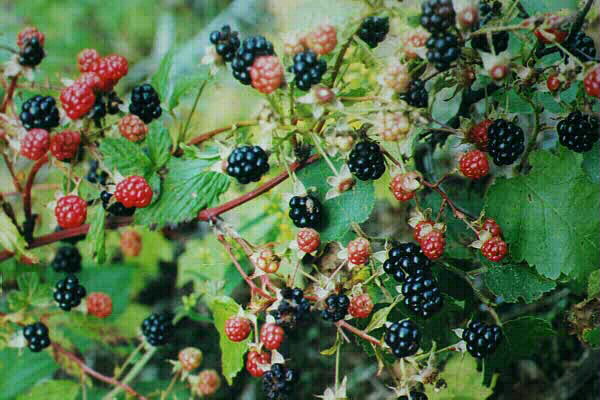
Wild blackberries

blackberries_wildThis week I have been revising a book of poetry that has been 18 months in the writing. Sections of the poem have been read by a very good friend of mine, Paul Taylor. I asked him as he was reading to mark the text wherever he found the lines confusing or simply dull. I am now working my way through the pages, sometimes rewriting passages he has marked as uninteresting or simply cutting them out if they no longer seem relevant to me.

It is always useful to have an editor, someone who can be trusted and whose judgment is based on wide reading and long years of experience. On this page I would like to express my gratitude to Paul for the task he undertook with great enthusiasm and completed with great professionalism. The lines  below, written over a year ago, nevertheless echo a poem submitted to the blog mid-August by Molly Rosenberg. According to Paul Taylor, my short poem is actually a metaphor for love. Who knows?


Wild blackberries

Wild blackberry canes
                   barbed brambles
heavy with fruit
                   thrive on the steep banks
of the railway cutting
                   goodness that grows
innocently
                   out of the soil :
but easy access to them is barred
                   by dense patches of nettles
so the berries gather dust
                   ripen and then fall back
into the undergrowth
                   to be eaten by birds
and by the large colonies of fox families
                   that have pitched their tents
at various stations
                   along the line

John Lyons


Pablo Neruda – The saddest lines

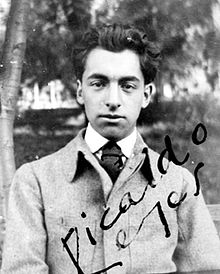
young neruda
A young Pablo Neruda

 A couple of years ago, one of my students was in Panama participating in an international tennis tournament. In order for him not to fall behind, we agreed to continue classes over Skype during the period of his absence. One night we studied three love poems by the Chilean poet, Pablo Neruda, one of which I have translated below. When the class was over, I asked Patrick to go down to the hotel lobby and find one of the Spanish-speaking girls who was also taking part in the tournament and to read the poems to her. Always game for anything, Patrick found a Venezuelan girl, Valeria, and read the poems to her. She was extremely moved by the experience. My intention was to show my student that poetry was not written for the academic environment but was intended to be read as a normal everyday activity, and that love poetry could be extremely effective, particularly in the context of relationships with the opposite sex. He certainly got the message and so did Valeria. 

The poem translated below was taken from Veinte poemas de amor y una canción desesperada [Twenty Love Poems and a Song of Despair] a collection which was first published in 1924 when Neruda was only nineteen. It has since become the Chilean poet’s best known work and has sold more than a million copies and been widely translated. Neruda was awarded the Nobel Prize for Literature in 1969.


Poem 20

Tonight I could write the saddest lines.

Write, for example: “The night is shattered,
and blue stars shimmer, far away.”

The night wind veers in the sky and sings.

Tonight I could write the saddest lines.
I loved her, and sometimes she loved me too.

On nights like this I held her in my arms.
I kissed her so many times under the infinite sky.

She loved me, sometimes I loved her too.
How not to have loved her big staring eyes.

Tonight I could write the saddest lines.
To think I do not have her. To feel I’ve lost her.

To hear the inmense night, more immense without her.
And that line settles upon the soul as dew upon the grass.

What does it matter that my love could not retain her.
The night is full of stars and she’s not with me.

That’s all. Far away someone is singing. Far away.
My soul is not content to have lost her.

As though to bring her close my eyes look for her.
My heart looks for her, and she’s not with me.

The same night chills the same trees with frost.
We, the ones we were then, are not the same.

I don’t love her, it’s true, but how I loved her.
I sought the wind to carry my voice to her ear.

Someone elses’s. She’ll belong to another. Like before my kisses.
Her voice, her bright body. Her infinite eyes.

I no longer love her, it’s true, but maybe I do.
Love’s so short, and the memory so long to fade.

Because on nights like this I held her in my arms,
My soul is not content to have lost her.

Though this may be the last pain she causes me,
and these the last lines that I write.

Translation by John Lyons


Postscript: When teaching this particular poem in class I would often link it to a Bob Dylan song “Most of the time” which can be heard on Youtube https://www.youtube.com/watch?v=SQbr4ISrjII. There are also excellent cover versions by Sophie Zelmani https://www.youtube.com/watch?v=Ts6gZFEiMkM and Bettye Lavette https://www.youtube.com/watch?v=n8Q5Mrokqfc. Enjoy!


The last waltz in Buenos Aires

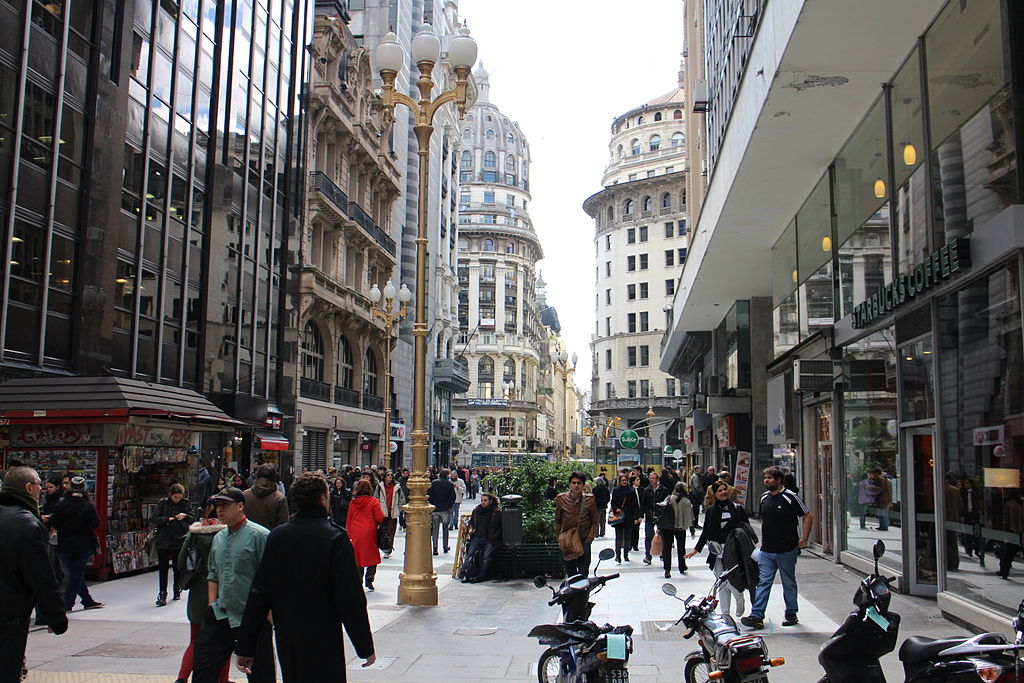
Calle_Florida,_Buenos_Aires
Calle Florida, Buenos Aires

During the ten years I lived in Brazil, I visited Argentina on five occasions, spending at least two weeks in Buenos Aires each time. I loved the city, and I loved the people, the long-suffering people of Argentina, who had endured the most savage and macabre of military dictatorships of all the dictatorships of South America.

Within a few years of returning to democracy in 1983, the country was yet to suffer further at the hands of the dictatorship of international capital, which led ultimately to a virtual overnight devaluation of the country’s currency in 2002 and stripped the value of millions of people’s savings. Despite the terrible years of political and economic attrition, the population remained dignified and proud of its cultural heritage, proud of the tango and of its immensely rich artistic culture and its love affair with books. While it was rare in Brazil to see people on the public transport system reading a book, in Argentina the opposite was true, and in Buenos Aires, at least, there was a bookshop on every street corner.

I wrote the poem below in my hotel room one afternoon and it was inspired more by the crisis in my relationship at the time than by the problems of the Argentinean economy. The hotel, ironically, was called Casa calma (the calm house) but for me it was anything but calm. I knew that that particular visit to the country was going to be my last, certainly, my last with that particular partner.

As to the form of the poem, inspiration came from two sources. The concept of ‘the first of the last times’ I borrowed from a poem by an elderly Nicaraguan poet, José Coronel Urtecho, whom I had met some years previously in his home, a few months before his death. The poem was called Panels of Hell, and my translation of that text was commissioned and published by Harold Pinter. The second source was from the catechism lesson I was taught as a child in primary school:

Q. Which are the four last things to be always remembered?

A. The four last things to be always remembered are: Death, Judgment, Hell, and Heaven.


 The Last Waltz

What will be the first of the last things
The first word of the last words
The first day of the last days
The first kiss of the last kisses;
What will be the first breath
Of the last breaths, the first sigh
And the first of the long goodbyes?
Here in Buenos Aires the streets
Are haunted by those who have
Gone before, by those who have walked
These noble streets that fell in recent years
Upon such hard times, a sad dreary elegance
Now clinging to so many crumbling façades.
This clear blue sky and crisp ocean air
Known to Borges, known to Cortázar,
Which weathers the skin in the daily bounty
Of those who survive. This may be the first
Of the last memories, the first taste
Of the last tastes to tantalize my palate
The first of the last loves to be made
In the first of the last beds. And as I wake
And dress in the first of the last clothes
Put on the shoes that may be blessed
To take the first of the last steps,
I recall the sibilance of Emily’s valley-licking train,
A vector of sound in the long speechless distance
A vector of thought, a rugged nugget of words
Condensed around an ecstasy of emotion:
From distance, the sensation of intimacy,
From a silence broken, the tactile meaning of words
Of love, the first of the last words of love,
The first of the last brushes of skin against skin,
Of lip against lip. This is, and always was a merry
Macabre dance, whether upon a lush city stage,
A retarded Calvary or in the empty heart of the pampas:
Our steps are numbered, even as the band is poised
To strike up the very first chords of our very last waltz.

John Lyons

Buenos Aires 31 October 2011

Herman Melville – all cut up

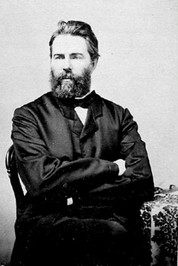
melville
Herman Melville

In the 1960s, encouraged by the American poet and painter Brion Gysin, William Burroughs began to experiment with a cut-up technique of writing. He would take a page from a novel by Graham Greene, for example, and cut it into four columns A, B, C and D. He would then rearrange the columns in an order such as C, A, D, B. and glue them to a sheet of paper so that he was able to read the text across the lines of the page CADB as though the words had been written in that order. What interested him was to see what new images and combinations were created in this new arrangement of words.

In an interview, Burroughs stated: “Any narrative passage or any passage, say, of poetic images is subject to any number of variations, all of which may be interesting and valid in their own right. A page of Rimbaud cut up and rearranged will give you quite new images. Rimbaud images—real Rimbaud images—but new ones.”

Some months ago I tried a variation of this technique. Instead of cutting up pages, I consulted a concordance to the work of the American writer, Herman Melville, author of Moby Dick. I searched for usages of the words, ‘bone’, ‘dust’, ‘love’, ‘dream’ and ‘rose’. The text below is a compilation of those references as they occurred in my research.


Dust on the moth’s wing

She was bone of his bone
and his very bones
are as whispering galleries
He laid her bones
upon some treacherous reef
with the bones of the drowned
Not dust to dust but dust to brine
he is dust where he stands
he had dead dust for ancestors
the penalty we pay for being
             what we are—fine dust

Did I dream a snow-white skin
firmament blue eyes :
this beautiful maiden
who thinking no harm
and rapt in a dream was a dream
We dream not ourselves
but the dream dreams within us
How the firefly illuminates its body 
for a beacon to love
Long he cannot be
for love is a fervent flagellant fire
love is all in all—all three : red rose
bright shore and soft heart
             are full of love

Loved one love on
who fell into the very snares of love
Love the living not the dead
great love is sad
             and heaven is love

Dreams dreams golden dreams
: noon dreams are day dreams
Are all our dreams then in vain?
What dream brought you hither Romeo
And sweet Juliet what dream is it
that ails your heart ?
We are but dolls of joy and grief :
breathe grow dream die
             —love not

This earth’s an urn
for flowers not for ashes
Brush your tears from the lilies
and howl in sackcloth and ashes
as thoughts of eternity thicken
Duration is not of the future
but the past : we must build with
the calendar of eternities
Sad rose of all my days : a song sung
             on lips of dust

He’s seized the helm
eternity was in his eyes
Dash of the waves against the bow
and deep the breath of dreaming
Such perils that lie
like a rose among thorns
Her delicate white skin
tinted with a faint rose hue
             like her lips
like rose pearls that once bruised
against my aching skin
             left love stains

Your rose, my sweet
I unfold its petals
and disclose a pearl
yet the full-blown rose
is nearer to withering
than the bud : and Emily asked
             how far is it to hell ?

John Lyons

Hilda Hilst – a Brazilian feminist legend

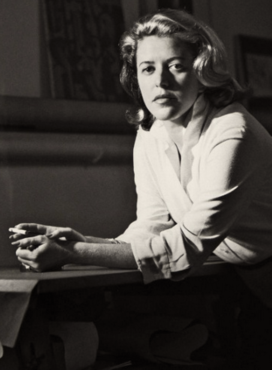
Hilda Hilst young
Hilda Hilst

Even today, the poet, playwright and novelist Hilda Hilst (1930–2004) is one of Brazil’s most important writers. In her fiction and poetry she tackled themes of sexual longing and intimacy that, in the days when she began her career, were often taboo, particularly for a woman writer; and she wrote with great delicacy and intelligence, but also with great courage. She did not deliberately court controversy, but she was always determined to be honest and frank, both in her written work and whenever she appeared in public. A strikingly beautiful woman in her younger years, she retained her good looks until the very end of her life, by which time she had become an imposing champion of the right of women to own their bodies and their desires.

The three poems translated below were taken from the book Do Desejo (About desire), first published in 1992. Hilst’s intention is never to shock but to get at the essence of her feelings without flinching. And the language of her poetry, in the original Portuguese at least, is exquisitely beautiful. Virtually unknown in this country, she deserves to be read widely.


To see you. Touch you

To see you. Touch you. What a blaze of masks.
What contortions, what a face you pull 
Like the passioned friezes of ancient rugs.
How gloomy you become if I resume 
The tortuous path I pursue : a desire
Unreined, a vibrant but liberal adoring of you.
And how dark I become if you wolf down 
My words and my residues. I’m ravished by hungers 
Immensely dense agonies, moons all-ablur 
Blades, a tempest. To see you. Touch you.
Wisdom.
Cruelty.

 * 

Try me again

And why would you want my soul
In your bed?
I spoke oozing, delicious, coarse
Obscene words, because that’s what we wanted.
But I didn’t fake climax pleasure lust
Nor did I deny that the soul is off elsewhere, seeking
The Other One. So I ask you again: why would
You want my soul in your bed?
Enjoy the memory of intercourse and what worked.
Or try me again. Oblige me.

 *

The night mares

I saw the night mares galloping among the vines
And in pursuit of my dreams. They were proud, erect.
Some had bluish patches
Their backs shone like the night
And the mornings died
Under their scarlet legs.  

I saw them chomp at the hanging grapes
And their lips were black and dew-covered.
In unison they snorted.

I saw the night mares amid the rubble
Of the landscape that was me. Saw shadows, elves and hidden traps.
Ribbons of rock and straw between the carpets
And a boundless pit that swallowed up my name and my portrait.

I saw tumultuous crowds. Intense.
And within one of them, wide awake, I saw myself.

Translations by John Lyons