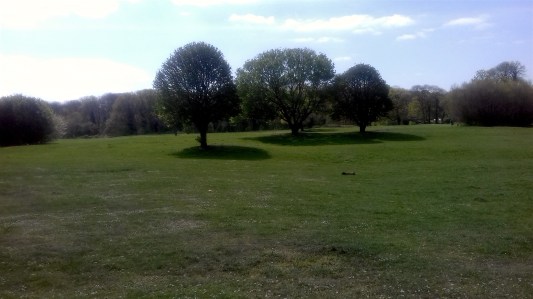
What is striking are the bare spaces the bare sky the bare streets the bare park hidden behind the thick summer foliage These are times of tenderness and grief times in which to care scrupulously for the body and let the devil take the soul
Company that is comfort has given way to avoidance and now more than ever distance separates us and love’s versatile touch is so out of reach
Yours was a name I once loved but in that name a space has grown larger than any I have ever known it tells me that though you are still here you are long gone long gone
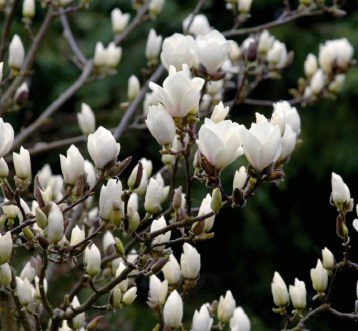
Lying in the dust the pure white petals of the magnolia are tossed this way and that as they catch the breeze
The tree with its naked branches stands forlorn : its blooms were ahead of their time and now their time has passed
Life has its debris and beauty its span perhaps love too but come spring the magnolia will bloom again— as for love tell me please when will love return ?
To what shall I hold a candle to love that passes by the hour or to the days and nights we have shared in the innocence of our affections
Say that we have travelled greatly in time and space and that day by day we have come to know our names and our bodies and our true selves as our movements mapped a unique constellation of light when darkness roamed the earth
To what shall I hold a candle but to the passing of passion to the fading of belief to the slow drip of our age into empty memories
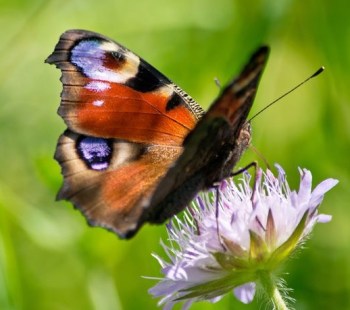
A peacock butterfly with its distinctive eyespots flittering above a broad green sea occasionally dipping down to alight on the dandelions that litter the unmown lawn its wingblades stored vertically as momentarily it feeds on the nectar
a born mimic the peacock is one of nature’s true lightweights— oblivious to the brevity of its life it cryptically protects itself whenever it sets itself down by displaying leaflike its dull brown underbelly so as to be to all intents and purposes invisible to the naked eye
From the great vortex comes harmony structure out of chaos energy that cools into matter and ultimately into flesh and blood
blood the colour of fire and of oxidised iron love that descends into the mouth of hell to retrieve love Orpheus armed only with a harp
reality is what we imagine it to be so too is love the love of one created in our image and likeness the whirl of emotions resisting the centrifugal pull of the universe
light is the colour of life it purifies the soul is music to our ears is food of love is pulsars of accelerated particles one pulse beating in time to another in time
A solitude of the self living on unmarked time adjusting to the differences of temper and belief these are the colours of spring the intensity of yellow daffodils blue skies and robins returning day after day to sing their song
here where our ancestors cast no shadow and love is a memory in the making I remember the geraniums on the sill of the shed window I remember the towers we climbed hand in hand and the moon that spread its light upon the surface of the lake I remember the colour of love in your eyes such beauty that I will never forget
How many dawns how many bridges draped in mist how many gulls gliding namelessly through the air how many thoughts and hopes and expectations as the sun rises into a panoramic crimson sky
Soon cinematic streets will fill with purpose the bustle of daily life the wheeling and dealing of commerce and work as across London Bridge a speechless caravan of souls drifts towards offices set in towering structures of steel and glass and from their windows the idly occupied will gaze down into the streets and dream of love as the hours leak away How many dawns how many bridges
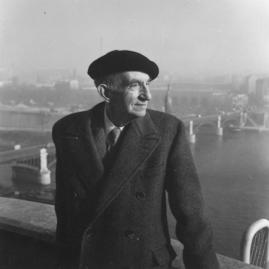
Jules Supervielle (1884-1960) was born into a French-Basque family living in Uruguay. Aged ten, he was sent to Paris, where he completed his education at the Sorbonne. For the rest of his life, he divided his time between Uruguay and France. He was friends with André Gide, Paul Valéry and Jacques Rivière, and in 1923, he met the Austrian poet, Rainer Maria Rilke, a crucial influence on his later work. The poem below is a fragment from La fable du monde, published in 1938. See also “I dream you from afar.”
Nocturne in broad daylight
The slowness around me Casts its net over the furniture Imprisoning the light And familiar objects. And Time, its legs crossed, Looks me in the eye And sometimes it stands up To examine me a little closer, Then it goes back to its place Like a satisfied prince. And here in my whole body The Feeling of Life, Red and white ants Composing a human being. And Space revolves around me In which everyone finds their place From the high stars To those who observe them. And every day that I endure Under my shadowy thoughts I live among these figures Layered around me Like between Pyramids.
Jules Supervielle
(translated by John Lyons)
Nocturne en plein jour
La Lenteur autour de moi Met son filet sur les meubles Emprisonnant la lumière Et les objets familiers. Et le Temps, jambes croisées, Me regarde dans les yeux Et quelquefois il se dresse Pour me voir d’un peu plus près, Puis il retourne à sa place Comme un prince satisfait. Et voici dans tout mon corps Le Sentiment de la Vie, Blanches et rouges fourmis Composant un être humain. Et l’Espace tourne autour de moi Où chacun trouve sa place Depuis les hautes étoiles Jusqu’à ceux qui les regardent. Et chaque jour que j’endure Sous mes ombreuses pensées Je vis parmi ces figures Comme entre des Pyramides Autour de moi étagées.
 johnjosephlyons