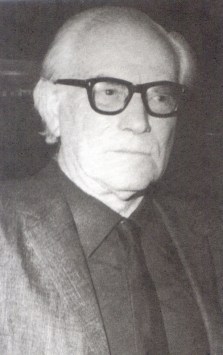
Paul Éluard – Courage

Paris is cold Paris is hungry
Paris no longer eats chestnuts in the street
Paris has put on old women’s old clothes
Paris sleeps on its feet airless in the metro
Still more misfortune is imposed on the poor
And the wisdom and folly
Of unhappy Paris
It’s pure air, it’s fire
It’s the beauty it’s the kindness
Of its starving workers
Don’t cry for help Paris
You are living a life beyond compare
And behind the nakedness
Of your pallor of your thinness
All that is human is revealed in your eyes
Paris my beautiful city
Fine as a needle strong as a sword
Ingenious and learned
You can’t stand injustice
For you it’s a real mess
You will free yourself Paris
Paris shimmering like a star
Our surviving hope
You will free yourself from the fatigue and mud
Brothers have courage
We who are not helmeted
Nor booted nor gloved nor well-behaved
A ray lights up in our veins
Our light returns to us
The best of us died for us
And now their blood reaches our heart
And it’s morning again a Paris morning
The point of deliverance
The space of the dawning spring
Brute force has the weaker hand
These slaves our enemies
If they’ve understood
If they’re capable of understanding
Will rise up.

Paul Éluard
(translation by John Lyons)

This poem, written in 1942 while Paris was under German occupation, circulated widely among member of the French Resistance.


Courage

Paris a froid Paris a faim
Paris ne mange plus de marrons dans la rue
Paris a mis de vieux vêtements de vieille
Paris dort tout debout sans air dans le métro
Plus de malheur encore est imposé aux pauvres
Et la sagesse et la folie
De Paris malheureux
C’est l’air pur c’est le feu
C’est la beauté c’est la bonté
De ses travailleurs affamés
Ne crie pas au secours Paris
Tu es vivant d’une vie sans égale
Et derrière la nudité
De ta pâleur de ta maigreur
Tout ce qui est humain se révèle en tes yeux
Paris ma belle ville
Fine comme une aiguille forte comme une épée
Ingénue et savante
Tu ne supportes pas l’injustice
Pour toi c’est le seul désordre
Tu vas te libérer Paris
Paris tremblant comme une étoile
Notre espoir survivant
Tu vas te libérer de la fatigue et de la boue
Frères ayons du courage
Nous qui ne sommes pas casqués
Ni bottés ni gantés ni bien élevés
Un rayon s’allume en nos veines
Notre lumière nous revient
Les meilleurs d’entre nous sont morts pour nous
Et voici que leur sang retrouve notre coeur
Et c’est de nouveau le matin un matin de Paris
La pointe de la délivrance
L’espace du printemps naissant
La force idiote a le dessous
Ces esclaves nos ennemis
S’ils ont compris
S’ils sont capables de comprendre
Vont se lever.
Schevchenko – The sun sets

Taras_Shevchenko

The sun sets, coal-black mountains;
a bird, the fields fall silent.
People enjoy their relaxation but
I watch . . . and from my heart I fly
through dark forests to Ukraine.
I fly on and on, with the poem I make,
and it seems my soul is set free.
Night falls over the land, woods and hills
and stars appear in the still blue sky.
O stars! star after star—and tears
fall. Have you risen in Ukraine yet?
Do brown eyes seek you out
against the sky? Or fail to do so?
If they forgot or fell asleep, at least
they’ll not hear about my sorry life.

Taras Shevchenko
Version by John Lyons


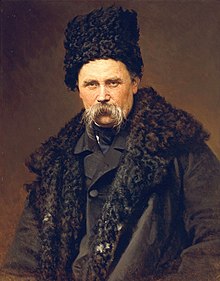
Taras Shevchenko was born into serfdom in 1814. A political dissident, an artist, he is now considered the national poet of Ukraine. He died in St. Petersburg in 1861 and is buried by the Dnipro River in Kaniv, Ukraine.

Julio Cortázar – If I have to live

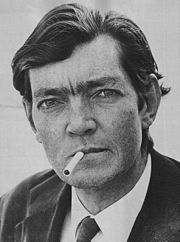
CortázarKnown as one of the most accomplished prose writers of the so-called Latin American Boom in fiction, Julio Cortázar was also a consummate poet. The poem translated below is taken from the last of his works to be published during his lifetime. Born in the Argentinian embassy in Brussels in 1926, Cortázar lived for most of his adult life in Paris, though he never lost his close identification with his homeland nor with Latin America in general. Famous for his wit and humour in his novels and short stories, Cortázar’s lyrical voice is endlessly inventive.

If I have to live

If I have to live without you, let it be hard and bloody,
the soup cold, my shoes tattered, or that in the midst of opulence
let the dry branch of the cough rise up, barking out to me
your misshapen name, a foam of vowels, tearing at my sheets
with its fingers, so that nothing brings me peace.
Not even from that will I learn to love you more,
but cast out from happiness
I’ll know how much joy you once gave me just by being near.
I believe I understand this, but I’m wrong:
it will require frost on the lintel
for the person sheltering in the doorway to understand
the light in the dining room, the milk-white tablecloths and the smell
of the bread thrusting its brown hand through the slit.

So far from you now
as one eye from the other,
from this assumed adversity
the look you deserve will finally be born.

Julio Cortázar

(translation by John Lyons)

Aldo Pellegrini

Aldo Pellegrini: The subversive effect of poetry

aldo-pellegrini_bwThe Argentinian poet, Aldo Pellegrini (1903-1973), was the founder of the first Surrealist group among Spanish-speaking writers. In his writing he called for a poetry “free from the schemes of reason, free from social norms, free from prohibitions, free from prejudice, free from canons, free from fear, a poetry free from its own preconceptions.” 
Below, along with two poems dating from 1952, I have translated the first two paragraphs of an essay he published in Buenos Aires in 1965 which outlines his poetic manifesto.


Aldo Pellegrini: The subversive effect of poetry (extract).

There is a force in man, that comes from the simple fact of living, it conditions his destiny fatally. This force is visible at every turn through the manifestations of love, which tends to transcend the individual in communion with the whole, has its own laws that are irreducible to rational schemes. Poetry appears as an expression of that impulse toward fulfilling a vital destiny, and the inevitability of that fate is revealed in poetry as an indisputable fact. Poetry is not, therefore, an amusement or luxury, but a necessity, just as love is. All other needs, even the most urgent, are subordinate to those two, which ultimately are the two aspects of the same primordial energy that gives true meaning to life. If we penetrate deeply into the meaning of the old saying “Man does not live by bread alone,” we will see that the lucidity of popular wisdom reaches a similar conviction. To go without poetry would be to renounce life.

Considered thus, the poetic exists not only in words; it is a way of acting, a way of being in the world and existing with people and things. Poetic language in its different forms (plastic form, verbal form, musical form) merely objectifies in a communicable manner through the appropriate signs of each particular language, the expansive force of the vital. As a result, the poetic world is in everyone, to the extent that every individual is an integral being. Lautreamont’s clear slogan, “Poetry should be made by everyone,” has no other meaning. Whoever ignores poetry is a mutilated being, as is whoever ignores love.


No subject

He who sings out of not knowing
he who saturated with ignorance
runs along the belly of the dark Fridays
he who throws fingernails into the street
and hides his life in corners
who enraged chews on silence
seeks his subject.

A subject
a subject that changes
a subject that changes with the steam of digestions
a subject illuminated by the glow of parched tongues
a subject pursued by the rumble of empty eyes
the subject of luminous hunger, the subject of the cry of ecstasy
the subject of resounding brows
the subject of ears where words are liquefied.

The eyes out of their sockets
a shaft of light that causes the gaze to bleed
staring in the direction of microscopic subjects
hands outstretched
that reach the final disintegration of subjects.

Subject that changes in a man who doesn’t change
in the cave of subjects, unchanging man
I am condemned by the time of times
to be myself.

*

The spiders’ feast

O so you’ve woken up?
a prodigious morning opens wide the windows
last night’s tree has left a mark
on the skin of your forehead.

Yes, you’ve woken up
shaking off your mantle of cobwebbed sleep
You’ve put to flight the crowd of blind rats
that gnawed at you as you slept.

You’re awake, where you off to now?
you abandon your night wealth for the great void of day
and with pale weakness you build your aimless march.

You’re awake, let’s mount
the narrow stairs to the end of time
there to surprise the lost minutes
life escapees.

No
a sudden discouragement holds you back
before a heavenless space where terrified mists
of inexplicable gentleness
transform those who advance into wind.

Marine algae of hope
pointless hours lurk behind the golden door
words chained to a deep secret
diamond discouragement shines inwardly
those who dare to smile lose their place in the world.

Where’re you off to without me? looking for your solitary feast
your drunkenness of signs and cataracts
your cage of freedom
where unknown friends sup your fluid gestures
and poison glares at you with phosphorescent eyes.
Prepare for your feast
the feast of hands that crush each other
the feast of creaking sweat
there where the lethargy of your flesh
throws itself into a dark dance.

Your feast is the feast of spiders
that ferociously devour your night wealth
to feed their endless misery
there submerged in boundless oblivion
you’ll buy reasons to laugh
You’ll purchase a roar to fill your silence

Aldo Pellegrini

(translation by John Lyons)

Sous la nuit

The absent ones blow greyly and the night is dense. The night’s the colour of the dead man’s eyelids.

All night I’m on the run, I channel the pursuit and flight, I sing a song for my misfortunes, black birds upon black shrouds.

I scream mentally, the demented wind rebuts me, I confine myself, I pull away from the twitching hand, I don’t want to know anything other than this clamor, this howl in the night, this wandering, this not being found.

All night I make the night.

All night you abandon me slowly as water falls slowly. All night I write to find who is looking for me.

Word by word I write the night.

Alejandra Pizarnik


Translation by John Lyons


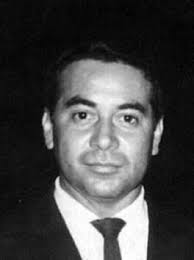
pizarnikAlejandra Pizarnik (April 29, 1936 – September 25, 1972), an Argentinian poet, greatly respected and supported by such writers as Octavio Paz and Julio Cortázar, had a long and ultimately unsuccessful struggle against depression. The intensity and intimacy of her poetry places her firmly in the tradition of Emily Dickinson, whose verse she greatly admired. In her “Notes for an article”, written in 1964, she states : “Intense need for poetic truth. It demands the freeing of visionary energies while maintaining, simultaneously an extraordinary aplomb in the handling of this energy. I’m not sure if I’m talking about poetic perfection, freedom, love or death.”
When you no longer love me

CMR        

When you no longer love me
and there’s nothing left for us to harm
because there’s nothing left living
worthy of our trust

When you have left
                                   and I have left
and the musicians have gone
and the doors have been closed
and the locks have been bolted
and the candles extinguished
though the wicks smoulder on

When you no longer love me
When in the social round your eyes
on meeting mine no longer say
« Be patient my dear
             you know my heart
                          belongs to you »  

When you no longer love me
and I no longer fear you

When in the next phase
of your incessant search
                              you love another
and bare your feet
             beneath the shadow
                           of another’s sceptre
and I cheerfully dismiss
the loneliness and the bitterness
I myself will have forgotten
when you who once loved me
no longer love me

We will say
              something has been lost
Not much
                   It’s never much

Though something essential
               a cult
                          a language
                                       a ritual
will have been lost
        when you no longer love me

Carlos Martínez  Rivas

Translated by John Lyons

Rilke – Offering

rilke

O how my body blooms from every vein
more fragrant since I met you;
behold, I grow thinner and straighter,
and you just stand by-: who are you then?

Behold: I feel as though I’m fading away
how leaf by leaf I shed my age.
Only your smile endures like stars
above you and soon above me too.

Everything that through my childhood
gleams nameless and water-like,
I’ll name for you at the altar,
that is inflamed by your hair
and gently enwreathed by your breasts.

Rainer Maria Rilke
(Revised translation by John Lyons)


Opfer

O wie blüht mein Leib aus jeder Ader
duftender, seitdem ich dich erkenn;
sieh, ich gehe schlanker und gerader,
und du wartest nur-: wer bist du denn?

Sieh: ich fühle, wie ich mich entferne,
wie ich Altes, Blatt um Blatt, verlier.
Nur dein Lächeln steht wie lauter Sterne
über dir und bald auch über mir.

Alles was durch meine Kinderjahre
namenlos noch und wie Wasser glänzt,
will ich nach dir nennen am Altare,
der entzündet ist von deinem Haare
und mit deinen Brüsten leicht bekränzt.

Vinícius de Moraes – Sonnet of love like a river

This infinite love of but a year
that is larger than time and all other things
This love that is real, and yet, notwithstanding
I scarcely believed existed still.

This love that appeared out of the blue
And that amid the drama became peace
This love that is the tomb wherein
My body lies buried forever.

This love of mine is like a river; an endless
And indolent nocturnal river,
Gliding gently through the wilderness…

And that carries me in its celestial course
aglow with passion in the darkness out
To the endless space of an endless sea.

Vinicius de Moraes
(translation by John Lyons)


Soneto do Amor Como Um Rio

Este infinito amor de um ano faz
Que é maior do que o tempo e do que tudo
Este amor que é real, e que, contudo
Eu já não cria que existisse mais.

Este amor que surgiu insuspeitado
E que dentro do drama fez-se em paz
Este amor que é o túmulo onde jaz
Meu corpo para sempre sepultado.

Este amor meu é como um rio; um rio
Noturno, interminável e tardio
A deslizar macio pelo ermo…

E que em seu curso sideral me leva
Iluminado de paixão na treva
Para o espaço sem fim de um mar sem termo.

Montevideo 1957

Paul Éluard – Portable woman

femme-portative
Of solemn effect in solitude

Earthly derision woman
When her heart’s elsewhere

If what I love’s granted to me
I’m saved

If what I love’s taken away
Annihilated
I’m lost

I dislike my dreams but I tell them
And like other people’s when they reveal them to me

Paul Éluard, Les mains libres (1937)

Drawing by Man Ray


FEMME PORTATIVE

D’un effet solennel dans la solitude

Terrestre dérision la femme
Quand son cœur est ailleurs

Si ce que j’aime m’est accordé
Je suis sauvé

Si ce que j’aime se retranche
S’anéantit
Je suis perdu

Je n’aime pas mes rêves mais je les raconte
Et j’aime ceux des autres quand on me les montre

Paul Éluard – Song

In love life still retains
The pure waters of its infant eyes
Its mouth is still a flower
Which blooms not knowing how

In love life still retains
The grip of a child’s hands
Its feet strike out from the light
And head off towards the light

In love life retains always
A blithe and renascent heart
Nothing can ever end there
Tomorrow allayed by yesterday

Paul Éluard

(translation by John Lyons)


Chanson

Dans l’amour la vie a encore
L’eau pure de ses yeux d’enfant
Sa bouche est encore une fleur
Qui s’ouvre sans savoir comment

Dans l’amour la vie a encore
Ses mains agrippantes d’enfant
Ses pieds partent de la lumière
Et ils s’en vont vers la lumière

Dans l’amour la vie a toujours
Un cœur léger et renaissant
Rien n’y pourra jamais finir
Demain s’y allège d’hier.