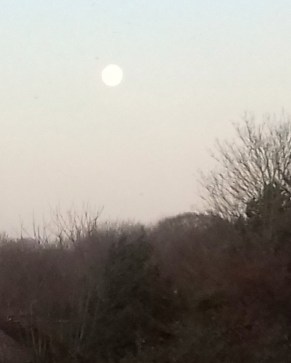
Morning moon

moon

Morning moon

The moon is an eye
           high above the horizon
it sees me
           it knows me
gales have blown
           but the moon is wholly
serene
           on this winter morning
birds cavorting
           in the strong breeze
my life continually
           ahead of me

This round disk of perfection

           with it shaded light
bountiful in its message
           of peace
geometries that lie
           at the heart of our being
are thrown into perspective
           and I go calmly
under its silent
           timeless gaze

John Lyons


Morgenmond

Der Mond ist ein Auge
           hoch über dem Horizont
es sieht mich
           es kennt mich
Stürme haben geblasen
           aber der Mond ist ganz
heiter
           an diesem Wintermorgen
Vögel tummeln sich
           in der starken Brise
mein Leben ständig
           vor mir

Diese runde Scheibe der Perfektion
           damit schattiertes Licht
reichlich in seiner Botschaft
           von Frieden
Geometrien die ruhen
           im Herzen unseres Seins
werden in Perspektive geworfen
           und ich gehe ruhig
unter seinem Schweigen
           zeitloser Blick
 

The squared universe

The squared universe

That eternal consolation
           that nothing is lost
in the universe
           every breath
just as every grain of sand
           accounted for
every sparrow
           every lily in the field
every sigh of love
           or lament
nothing is lost
           whether among the living
or the dead
           and we are all
of all ages and generations
           contemporaries

John Lyons


Das quadratische Universum

Dieser ewige Trost
           dass nichts verloren geht
im Universum
           jeder Atemzug
so wie jedes sandkorn
           entfielen
jeder Spatz
           jede Lilie auf dem Feld
jeder Seufzer der Liebe
           oder jede Klage
nichts ist verloren
           ob unter den Lebenden
oder die Toten
           und wir sind alle
aller Altersgruppen und Generationen
           Zeitgenossen

John Lyons

(Übersetzung von John Lyons)

Ainsi s’en va la vie

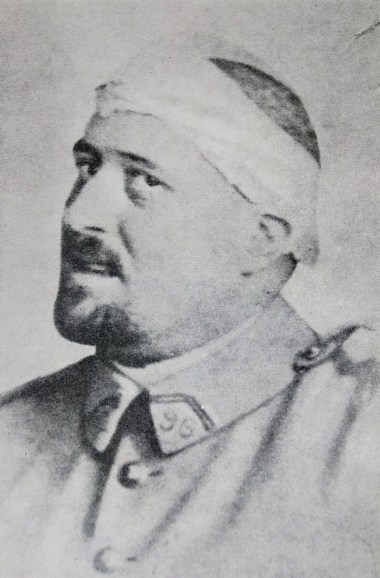
Guillaume_Apollinaire_foto
Apollinaire (1880-1918)

Ainsi s’en va la vie

That’s how life goes
Dear Fernand at the Front
We are delighted
And our spirits are sharp.
We shoot into the dark night,
The Boche fire at the day
We live on History
We dream of Love
And when the shell meows
We always laugh louder
All those in my coop
Make fun of death.

Guillaume Apollinaire

(translation by John Lyons)


Ainsi s’en va la vie
Mon Fernand sur le front
On a l’âme ravie
Et l’esprit méme est prompt.
On tire à la nuit noire,
Le Boche tire au jour
Nous vivons de l’Histoire
Nous rêvons de l’Amour
Et quand l’obus miaule
On rit toujours plus fort
Tous ceux de ma piaule
Se moquent de la mort.

Piano practice – Übung am Klavier

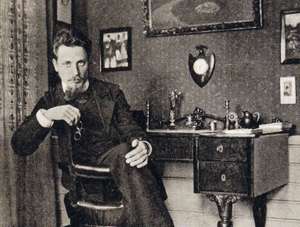
Rainer-Maria-Rilke
Rainer Maria Rilke

Piano practice

The summer drones. The afternoon drags;
confused she sensed the freshness of her dress
and put into the compelling étude
her impatience for something real

that might appear: tomorrow, that evening—,
that perhaps was already there, albeit hidden;
and through the high panoramic windows
suddenly she glimpsed the rain-soaked grounds.

Then she stopped playing; looked out, folded
her hands; longed for a thick book—
and abruptly dismissed the jasmine scent.
She found that it made her sick.

Rainer Maria Rilke (4 December 1875 – 29 December 1926)
(translation by John Lyons)


Übung am Klavier

Der Sommer summt. Der Nachmittag macht müde; 
sie atmete verwirrt ihr frisches Kleid 
und legte in die triftige Etüde 
die Ungeduld nach einer Wirklichkeit, 

die kommen konnte: morgen, heute abend—, 
die vielleicht da war, die man nur verbarg; 
und vor den Fenstern, hoch und alles habend, 
empfand sie plötzlich den verwöhnten Park. 

Da brach sie ab; schaute hinaus, verschränkte 
die Hände; wünschte sich ein langes Buch—
und schob auf einmal den Jasmingeruch 
erzürnt zurück. Sie fand, daß er sie kränkte. 

Rainer Maria Rilke
(translation by John Lyons)

Sonnets to Orpheus – sonnet 14

Sonnets to Orpheus – sonnet 14

We move among flowers, vine leaves, fruit.
They do not speak only of the years.
Out of the darkness a colourful display emerges
and perhaps bears the jealous glint

of those dead who invigorate the earth.
What do we know about their part in this?
It has long been their way to enrich
the clay with their generous marrow.

The only question now is: are they happy to do this? …
This fruit demands the arduous labour of slaves,
driven by us, by their masters?

Are these the souls who sleep at the roots
and favour us with their abundance,
this mingling of silent strength and kisses?

Rainer Maria Rilke
(translation by John Lyons)


Sonette 14

Wir gehen um mit Blume, Weinblatt, Frucht. 
Sie sprechen nicht die Sprache nur des Jahres. 
Aus Dunkel steigt ein buntes Offenbares 
und hat vielleicht den Glanz der Eifersucht

der Toten an sich, die die Erde stärken. 
Was wissen wir von ihren Teil an dem? 
Es ist seit langem ihre Art, den Lehm 
mit ihrem freiem Marke zu durchmärken.

Nun fragt sich nur : tun sie es gern? … 
Drängt diese Frucht, ein Werk von schweren Sklaven, 
geballt zu uns empor, zu ihren Herrn?

Sind sie die Herren , die bei den Wurzel schlafen, 
und gönnen uns aus ihren Überflüssen 
dies Zwischending aus stummer Kraft und Küssen?

Sonnets to Orpheus

Sonnets to Orpheus

Sonnet 4

O you gentle souls, every once in a while
confront the breath that disdains you,
let it part around your cheeks,
behind you it shudders, converges.

O you blessed ones, o you whole ones,

you who seem to be where the heart begins.
Bow of arrows and target of arrows,
your smile glistens eternally with tears. 

Don’t be afraid to shoulder the burden,

hand it back to earth’s weight:
the mountains are heavy, the oceans too. 

Even the trees you planted as children,  

long ago grew too heavy;  you couldn’t carry them.
But the breezes… but the spaces…

Rainer Maria Rilke
(translation by John Lyons)


O ihr Zärtlichen, tretet zuweilen
in den Atem, der euch nicht meint,
laßt ihn an eueren Wangen sich teilen,
hinter euch zittert er, wieder vereint.

O ihr Seligen, o ihr Heilen,
die ihr der Anfang der Herzen scheint
Bogen der Pfeile und Ziele von Pfeilen,
ewiger glänzt euer Lächeln verweint.

Fürchtet euch nicht zu leiden, die Schwere,
gebt sie zurück an der Erde Gewicht;
schwer sind die Berge, schwer sind die Meere.

Selbst die als Kinder ihr pflanztet, die Bäume,
wurden zu schwer längst; ihr trüget sie nicht.
Aber die Lüfte … aber die Räume….

The curve of your eyes – Paul Éluard

The curve of your eyes

The curve of your eyes winds around my heart,
A round of gentleness and dance,
Halo of time, night cradle and safe,
And if I no longer know all that I’ve lived
It’s that your eyes haven’t always seen me.

Leaves of day and foam of dew,
Reeds of the wind, scented smiles,
Wings shading the world of light,
Boats brimming with sky and sea,
Hunters of noise and sources of colour,

Scents bloomed from a brood of dawns
That still rests on a bed of stars,
As the day depends on innocence
The whole world depends on your pure eyes
And all my blood flows into their gaze.

Paul Éluard (from Capitale de la douleur, 1929)


Translation by John Lyons


La courbe de tes yeux

La courbe de tes yeux fait le tour de mon cœur, 
Un rond de danse et de douceur, 
Auréole du temps, berceau nocturne et sûr, 
Et si je ne sais plus tout ce que j’ai vécu 
C’est que tes yeux ne m’ont pas toujours vu.

Feuilles de jour et mousse de rosée, 
Roseaux du vent, sourires parfumés,
Ailes couvrant le monde de lumière, 
Bateaux chargés du ciel et de la mer, 
Chasseurs des bruits et sources des couleurs,

Parfums éclos d’une couvée d’aurores 
Qui gît toujours sur la paille des astres, 
Comme le jour dépend de l’innocence 
Le monde entier dépend de tes yeux purs 
Et tout mon sang coule dans leurs regards.

Paul Éluard (from Capitale de la douleur, 1929)

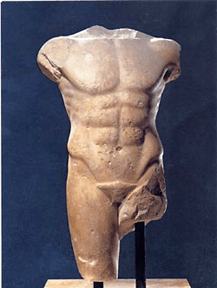
Rilke’s Apollo

Archaic torso of apollo
Archaic torso of Apollo

Rilke’s Apollo

Value shaped
           by the heart
and by the hand
           lends form to love
The torso that gleams
           the flicker of stone
seen in the eyes
           all the softness
of starlight
           caught in the lines
from which these
           my words
take their life
           gracefully
The artist a beast
           that preys upon
the timeless universe’s
           distance
movement
           and depth

John Lyons


Em português:

O Apolo de Rilke

Valor formado
            pelo coração
e pela mão
            dá forma ao amor
O torso que brilha
            o cintilar de pedra
visto nos olhos
            toda a suavidade
da luz das estrelas
            pego nas linhas
das quais
            minhas palavras
tiram a vida
            graciosamente
O artista uma fera
            que faz pilhagem
da distância
           do movimento
da profundidade
           do eterno universo

Poem, by Paul Verlaine

Paul Verlaine
              Verlaine

Above the roof, the sky’s
So blue, so calm!
Above the roof, a tree
Waves its leaves.  

The bell, in the sky we see,
Is softly ringing.
In the tree we see a bird
Singing its sad song.  

My God, my God, life is there,
Simple and tranquil.
This peaceful sound
Comes from the town.  

And you there, what have you done,
With your endless tears,
Tell me, you, what have you done,
With your younger years?

Paul-Marie Verlaine (1844 – 1896) 

Translation by John Lyons


Le ciel est, par-dessus le toit,
Si bleu, si calme!
Un arbre, par-dessus le toit,
Berce sa palme.

La cloche, dans le ciel qu’on voit,
Doucement tinte.
Un oiseau sur l’arbre qu’on voit,
Chante sa plainte.

Mon Dieu, mon Dieu, la vie est là
Simple et tranquille.
Cette paisible rumeur-là
Vient de la ville.

– Qu’as-tu fait, ô toi que voilà
Pleurant sans cesse,
Dis, qu’as-tu fait, toi que voilà,
De ta jeunesse ?

I dream you from afar – Jules Supervielle

supervielleJules Supervielle (1884-1960) was born into a French-Basque family living in Uruguay. Aged ten, he was sent to Paris, where he completed his education at the Sorbonne. For the rest of his life, he divided his time between Uruguay and France. He was friends with André Gide, Paul Valéry and Jacques Rivière, and in 1923, he met the Austrian poet, Rainer Maria Rilke, a crucial influence on his later work. The poem below is from Oublieuse mémoire, published in 1949.


I dream you from afar

I dream you from afar, and, close by, it’s all the same,
But always you remain precise, without response,
Under my calm eyes you become music,
As with the glance, I catch you by ear.

You know how to be in me as though before my eyes,
So much your heart is tendered, melodious,
And I hear you pounding at my secret temples
As you flow into me and so disappear.

Translation by John Lyons

Je vous rêve de loin

Je vous rêve de loin, et, de près, c’est pareil,
Mais toujours vous restez précise, sans réplique,
Sous mes tranquilles yeux vous devenez musique,
Comme par le regard, je vous vois par l’oreille.

Vous savez être en moi comme devant mes yeux,
Tant vous avez le cœur offert, mélodieux,
Et je vous entend battre à mes tempes secrètes
Lorsque vous vous coulez en moi pour disparaître.